Leave Your Message
-
Phone
-
E-mail
-
Whatsapp
-
Wechat

Choosing the right Tube Mill isn’t just about picking the fastest machine listed on a brochure. For global buyers, it’s more about making sure the equipment actually fits their specific needs—considering things like the type of material, the product range, labor conditions, and what kind of support they expect. For example, a mill designed to produce 25-millimeter carbon-steel tubes might not work so well if you’re dealing with stainless steel, thicker walls, or if you need to change sizes often. Small differences really matter here—things like roll tooling, weld stability, drive control, and cooling systems can impact every single meter of tube you produce.
Robert Sladky, a tube-forming expert with Roll-Kraft, once said, “The quality of the tooling is only as good as the mill producing the tube.” That’s a pretty practical way to look at it, and it’s worth paying attention to. A good tube mill should consistently produce stable forming, smooth weld seams, accurate sizing, and be straightforward to maintain. When shopping around, don’t be shy—ask for production trials, check measurable tolerances, review energy consumption data, and look for references from factories working with similar materials. Be sure to inquire about spare parts, remote support options, how quickly technicians can respond, and what kind of training operators will get. These details really become crucial when your plant’s located thousands of miles from the supplier.
Now, speed might grab your attention, but uptime—that’s what really keeps the lights on and the bills paid.
Of course, no machine is perfect. An automated line might cut down on labor costs, but it could also make diagnosing issues a lot more complicated. And a cheaper mill might seem like a good deal initially, but if you Factor in costs from tooling replacements, shipping delays, or rejected tubes, you might find it adds up pretty quickly. Plus, keep in mind that what a supplier claims isn’t always equal to what you’ll see in actual factory performance. So, the best Tube Mill isn’t necessarily the one with the highest power specs. It’s the one that keeps delivering good, saleable tubes, keeps operating costs manageable, and offers dependable support—especially in the real world of your own production environment.
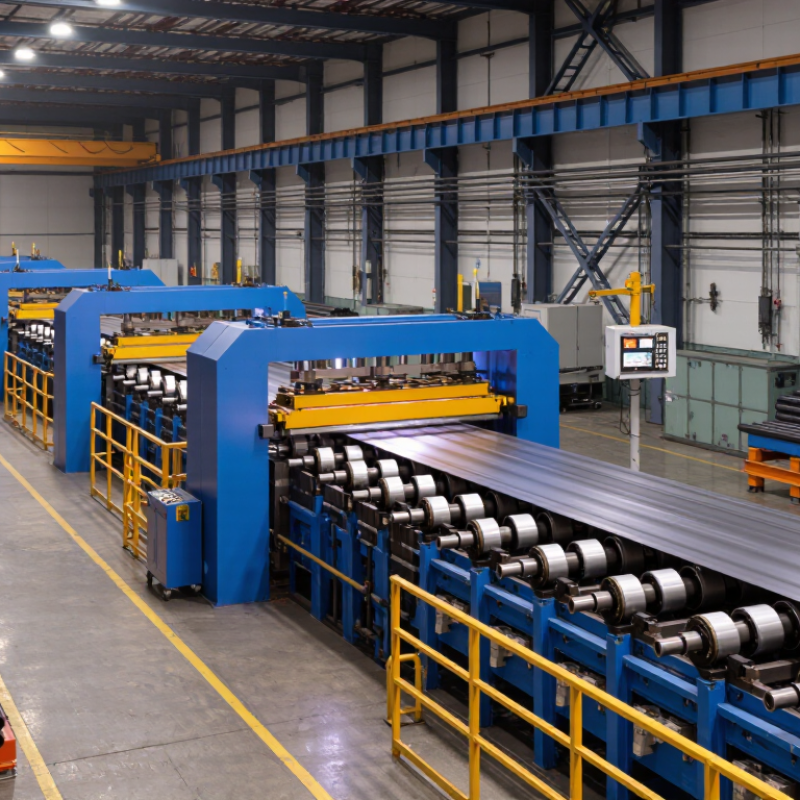
Global buyers should define a tube mill by its forming process, not by attractive sales language. An ERW mill shapes steel strip into a round tube, then welds the edges through electrical resistance. It suits many structural, furniture, and general engineering applications. A High Frequency Tube Mill uses high-frequency current to heat the strip edges quickly. The process supports faster production and cleaner weld control when operators manage pressure, alignment, and temperature carefully.
Laser tube mills create narrow, precise welds with limited heat exposure. They can reduce distortion and support demanding applications requiring consistent dimensions. However, laser systems often need tighter material preparation and higher technical investment. Seamless mills produce tubes without a welded seam. They use piercing, elongation, and sizing processes, making them suitable for high-pressure, high-temperature, or safety-critical service. The cost is usually higher. Production can also be less flexible.
The right choice depends on steel grade, diameter range, wall thickness, tolerance, output, and local maintenance skills. Ask suppliers for weld samples, dimensional records, energy data, and a clear commissioning plan. Inspect the mill layout before purchase. A polished brochure cannot reveal vibration, unstable strip feeding, or difficult tool changes. I have seen buyers focus on maximum speed and overlook setup time. That decision can weaken real productivity. Even experienced teams should challenge their assumptions. A reliable mill is not always the most advanced one; it is the one that consistently matches the product, workforce, and market requirements.
| Evaluation Dimension | ERW Tube Mill | HF-ERW Tube Mill | Laser Welded Tube Mill | Seamless Tube Production Line |
|---|---|---|---|---|
| Basic Process | A continuous strip is formed into a round shape and joined by electrical resistance heating and pressure. Resistance welding | Uses high-frequency current, commonly in the 100–500 kHz range, to heat the strip edges before pressure welding. High-frequency welding | A focused laser beam melts and fuses the strip edges with a narrow, controlled weld zone. Laser welding | A solid billet is heated, pierced, elongated, and sized without a longitudinal welded seam. Hot or cold working |
| Typical Product Range | Commonly used for small- to medium-diameter round, square, rectangular, and special-profile tubes. Exact limits depend on forming stands, material grade, and line design. | Suitable for a broad range of carbon-steel, stainless-steel, and selected alloy-steel tubes, including structural, mechanical, and fluid-service products. | Best suited to precision, thin-wall, small- to medium-diameter tubing where a narrow heat-affected zone and low distortion are important. | Commonly selected for medium- to large-diameter pipe, heavy-wall products, high-pressure service, and applications requiring a seamless construction. |
| Typical Wall Thickness | Thin- to medium-wall products are common. The practical range depends on strip width, grade, welding power, forming capability, and diameter-to-wall ratio. | Commonly performs well with thin and medium wall thicknesses at high production speeds; thicker products require higher power and carefully controlled edge heating. | Particularly effective for thin-wall tubing because the laser concentrates energy in a narrow area, reducing overall heat input and distortion. | Suitable for thicker walls and demanding wall-to-diameter ratios, although production cost generally increases with wall thickness and downstream finishing requirements. |
| Production Speed | High for standardized products and long production runs. Speed decreases when frequent size changes, heavier gauges, or strict tolerances are required. | Very high for compatible strip sizes and grades because edge heating is rapid and continuous. It is widely used for high-volume tube production. | Moderate to high, depending on laser power, product size, material reflectivity, seam tracking, and required weld quality. | Generally lower and more process-intensive than continuous welded-tube lines, especially when piercing, elongation, heat treatment, and finishing are included. |
| Weld or Seam Characteristics | The longitudinal weld may require bead removal, heat treatment, sizing, testing, and surface finishing according to the product standard. | Produces a narrow, concentrated weld zone with high productivity. Weld quality depends on edge condition, frequency, power, squeeze pressure, and line speed. | Produces a narrow weld and small heat-affected zone with low external bead formation. Joint cleanliness, fit-up, focus, shielding, and seam tracking are critical. | Has no longitudinal weld seam, eliminating weld-related discontinuities; however, billet quality and control of piercing and deformation remain important. |
| Material Compatibility | Commonly processes low-carbon steel, galvanized steel, stainless steel, and other electrically weldable strip materials. | Works well with many carbon-steel and stainless-steel grades. Difficult-to-weld alloys require careful control of chemistry, edge preparation, and heat input. | Compatible with many steels and stainless steels, particularly when low heat input and precise welding control are valuable. Material reflectivity can affect laser efficiency. | Suitable for carbon, alloy, stainless, and selected high-alloy steels, provided the billet and thermal-mechanical process are appropriate. |
| Dimensional Accuracy | Good accuracy is achievable with precision forming, sizing, calibration, roll alignment, and effective process control. | High repeatability is possible on dedicated lines with stable strip quality, accurate forming, automatic control, and consistent welding conditions. | Very good potential for thin-wall precision products because of low heat input and limited weld-zone distortion. | Can provide excellent dimensional accuracy after sizing, drawing, pilgering, peeling, or other finishing operations, depending on the product specification. |
| Surface Finish | Typically requires suitable strip surface quality and may need weld-bead removal, polishing, coating, or additional finishing. | Can deliver a clean surface when strip preparation, weld-bead control, sizing, and finishing equipment are properly matched. | Usually offers a narrow and relatively clean weld profile, reducing the amount of post-weld finishing for suitable applications. | Surface condition depends on billet quality and finishing route; processes such as pickling, grinding, peeling, or polishing may be required. |
| Capital Investment | Low to medium compared with seamless production, depending on automation, diameter range, testing equipment, and changeover requirements. | Medium to high for a fully automated high-speed line with high-frequency power, online inspection, quick tooling changes, and advanced controls. | Medium to high because of the laser source, optics, protection systems, precision mechanics, cooling, and specialized control equipment. | High to very high because the line normally includes heating furnaces, piercing and elongation equipment, sizing, heat treatment, and extensive finishing. |
| Operating Cost | Generally economical for standardized products, with relatively efficient material use and manageable maintenance requirements. | Often economical at high utilization because of high throughput, although electrical power, tooling, coolant, and maintenance must be controlled. | Can reduce post-weld finishing and distortion correction, but laser optics, consumables, cooling, and skilled maintenance can increase operating costs. | Usually higher due to energy-intensive heating, multiple forming stages, billet consumption, process yield, and downstream treatment. |
| Changeover Flexibility | Good when the mill has quick-change tooling and automated roll adjustment. Manual tooling changes can significantly increase downtime. | Good on modern multi-size lines, but welding frequency, power settings, forming rolls, and sizing tools must be adjusted for each product. | Good for product families when digital recipes and flexible tooling are available; laser parameters must still be validated for each material and thickness. | Lower than many welded lines because billet size, tooling, piercing conditions, heat-treatment schedules, and finishing routes may need substantial changes. |
| Typical Applications | Furniture and general mechanical tubing, construction components, fencing, automotive parts, and low- to medium-pressure fluid service. | Structural tubes, line pipe, automotive components, heat-exchanger tubing, water and gas service products, and high-volume industrial tubing. | Precision automotive tubing, hydraulic and pneumatic components, stainless precision tubes, heat-sensitive products, and thin-wall assemblies. | Oil and gas service, boilers, pressure equipment, demanding mechanical parts, high-pressure fluid transport, and applications where a welded seam is unsuitable. |
| Main Advantages | Broad product flexibility, comparatively simple process flow, efficient material usage, and attractive economics for standard tube sizes. | Very high productivity, concentrated heating, strong automation potential, and efficient production of large volumes of welded tube. | Low heat input, narrow heat-affected zone, low distortion, clean seam appearance, and strong suitability for precision thin-wall products. | No longitudinal weld, strong performance in demanding service, and broad capability for heavy-wall and high-pressure products. |
| Main Limitations | Weld integrity and heat-affected-zone properties must be verified; product range and speed depend strongly on strip quality and tooling. | Requires precise control of edge preparation, welding parameters, alignment, and upset removal; not every alloy is equally suitable. | Higher equipment complexity, stricter fit-up requirements, sensitivity to contamination, and specialized maintenance needs. | Higher investment and energy consumption, more process stages, lower flexibility for small batches, and potentially higher material loss. |
| Best Choice for Global Buyers | Choose when the priority is a versatile and cost-effective mill for common structural, mechanical, and general-purpose tube sizes. | Choose when the priority is high-volume production, fast line speed, and repeatable welded-tube output across established product families. | Choose when thin walls, precision, low distortion, clean weld appearance, and reduced finishing are more important than the lowest initial cost. | Choose when the application requires seamless construction, heavy walls, high-pressure capability, or specifications that do not permit welded tube. |
Thick-wall, large-diameter pipe often runs at 30–60 m/min. Structural tubes commonly reach 40–80 m/min. Thin-wall, small-diameter tubes may reach 90–120 m/min.
Not always. Weld defects, sizing errors, and saw delays can reduce usable output. Plan 10–20% below maximum speed for steadier production.
Strip quality, steel grade, wall thickness, tube diameter, and welding stability affect output. Coil changes, maintenance, inspections, and material delays also consume time.
Compare rated, achievable, and guaranteed capacity separately. Request test records using similar sizes and steel grades. The spreadsheet may still be wrong.
A medium-capacity line may provide better control and lower idle costs. Confirm production hours, tooling changes, maintenance, and handling space before choosing.
Higher speed, automated handling, and careful production planning become more important. A smaller line may struggle when orders suddenly double.
It can, with suitable tooling and rigid equipment. Small tubes need precise strip guidance. Large tubes need controlled force and strong forming stands.
Confirm whether one tooling system covers the full range. Ask for tested data at both limits. A 0.5 mm wall exposes alignment errors quickly.
Allow for changing sizes, materials, and order patterns. Check cooling, weld monitoring, inspection access, and spare tooling. Future demand is uncertain. That deserves honest review.
Choosing the best tube mill for global buyers requires balancing product requirements, production volume, compliance, and long-term operating costs. ERW, HF-ERW, laser, and seamless mills each serve different applications, while ERW line speeds of approximately 30–120 m/min may suit varying product ranges. Buyers should match mill capacity with annual demand between 50,000 and 300,000 tons and confirm compatibility with tube sizes from 6 to 610 mm outside diameter and wall thicknesses of 0.5–25 mm.
A reliable evaluation should also verify compliance with ASTM A53, API 5L, EN 10219, and ISO 9001, while comparing energy consumption, tooling expenses, yield loss, maintenance needs, and projected 10-year operating costs. Global suppliers can be ranked by delivery time, technical support coverage, spare-parts availability, commissioning services, and overall return on investment. The ideal tube mill is therefore not simply the fastest option, but the one that provides stable quality, scalable capacity, efficient operation, and dependable support throughout its service life.