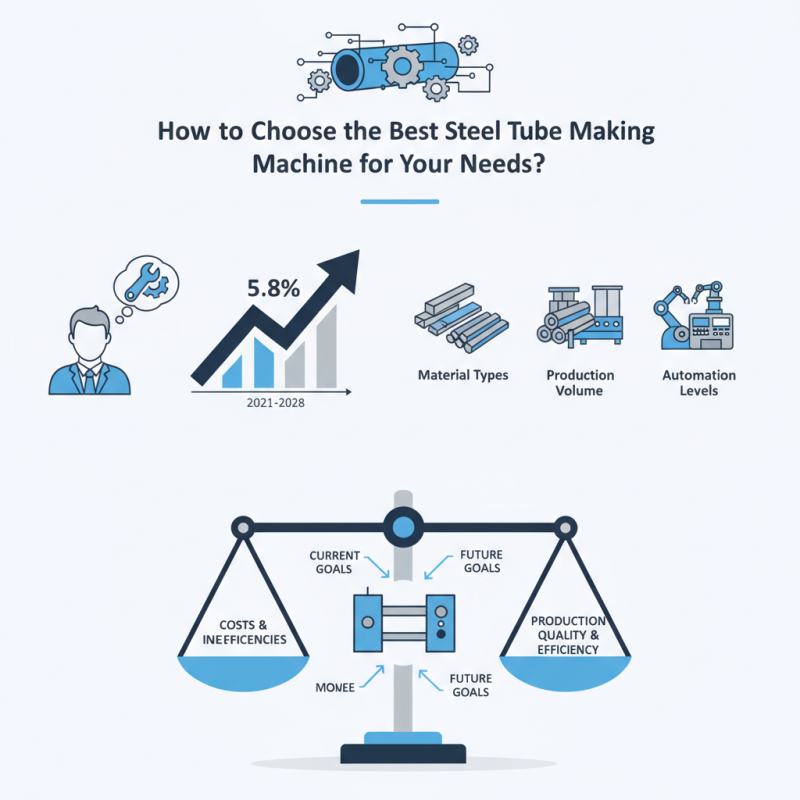
Picking the right Steel Tube Making Machine is super important if you want to optimize your production processes across different industries. I recently came across a report from Grand View Research, and it says that the global steel tube market is expected to grow by about 5.8% each year from 2021 to 2028. That really shows how much there’s a need for efficient, modern machinery that can keep up with those demands.
Industry veteran John Smith, who’s a senior engineer over at SteelTech Industries, mentioned something pretty relatable: “Choosing the right machine can seriously make a difference in both the quality of your product and how smoothly your operations run.” His insights highlight just how tricky it can be for manufacturers to sift through all the different machine options out there. Steel Tube Making Machines come in all shapes, sizes, and price points, so it’s really crucial for businesses to carefully consider their specific needs.
Going for the wrong equipment can actually end up costing you more in the long run, with added inefficiencies and expenses. Things like the types of materials you work with, how much output you need, and how much automation you want are all part of the puzzle. Finding that sweet spot where your machine matches both your current needs and future growth plans is key—kind of like a good fit for your business’s overall game plan.
Understanding Steel Tube Making Machine Types and Applications
When selecting a steel tube making machine, understanding different types is crucial. Commonly, machines are categorized based on manufacturing processes such as seamless, welded, or electric resistance welded (ERW) tubes. According to a recent industry report from MarketsandMarkets, the global tube and pipe manufacturing market is expected to reach $250 billion by 2025. This growth underlines the importance of choosing the right machine for specific applications.
Seamless tube machines are ideal for high-pressure applications, offering strength and durability. Meanwhile, welded tube machines are more suited for lightweight structures. Each type has advantages and challenges, often influenced by material specifications and production volume needs. Consider your end product. Are you making tubing for automotive or construction? This affects your choice.
**Tips:** Before purchasing, assess your production scale. Smaller operations might not need high-capacity machines. Additionally, research about machine efficiency and maintenance requirements. While some manufacturers advertise robust capabilities, not all machines perform as promised. Look for user reviews and actual performance data. This can prevent future operational frustrations.
How to Choose the Best Steel Tube Making Machine for Your Needs?
| Machine Type |
Production Capacity (pieces/min) |
Tube Diameter Range (mm) |
Material Compatibility |
Application Area |
| High-Frequency Welding Machine |
30 |
10 - 100 |
Carbon Steel, Stainless Steel |
Automotive, Furniture |
| ERW Tube Mill |
50 |
20 - 120 |
Mild Steel, Aluminum |
Construction, Energy |
| Seamless Tube Making Machine |
15 |
10 - 50 |
Alloy Steel, Stainless Steel |
Oil & Gas, Aerospace |
| Tube Forming Machine |
40 |
15 - 80 |
Copper, Brass |
Electronics, HVAC |
Key Factors to Consider When Selecting a Steel Tube Making Machine
Choosing the right steel tube making machine is vital for optimizing production processes. Key factors must guide your decision. First, consider the material specifications. The machine should handle your required steel grades effectively. According to a recent industry report, over 70% of manufacturers face challenges with material compatibility. An adequate machine should mitigate these issues.
Another element to evaluate is production capacity. Choose a machine that meets your throughput needs without excessive downtime. A machine with a capacity of at least 150 tons per month is often recommended for mid-sized operations. Additionally, think about the energy efficiency. Machinery with lower energy consumption can lead to cost savings over time. A study shows that energy-efficient machines reduce operating costs by up to 30%.
Tip: Always conduct a comprehensive cost analysis before purchase. Don't overlook maintenance expenses and operational simplicity. It's wise to assess how easily the machine can be integrated into existing systems.
Also, delve into the technological features. Automation and smart technology can enhance precision and reduce labor costs. However, a related report warns that overly complex systems might lead to operational hiccups. Finding the right balance is crucial for efficiency. Your investment in a Steel Pipe Making Machine will play a significant role in your company’s future success.
Evaluating Production Capacity and Efficiency Requirements
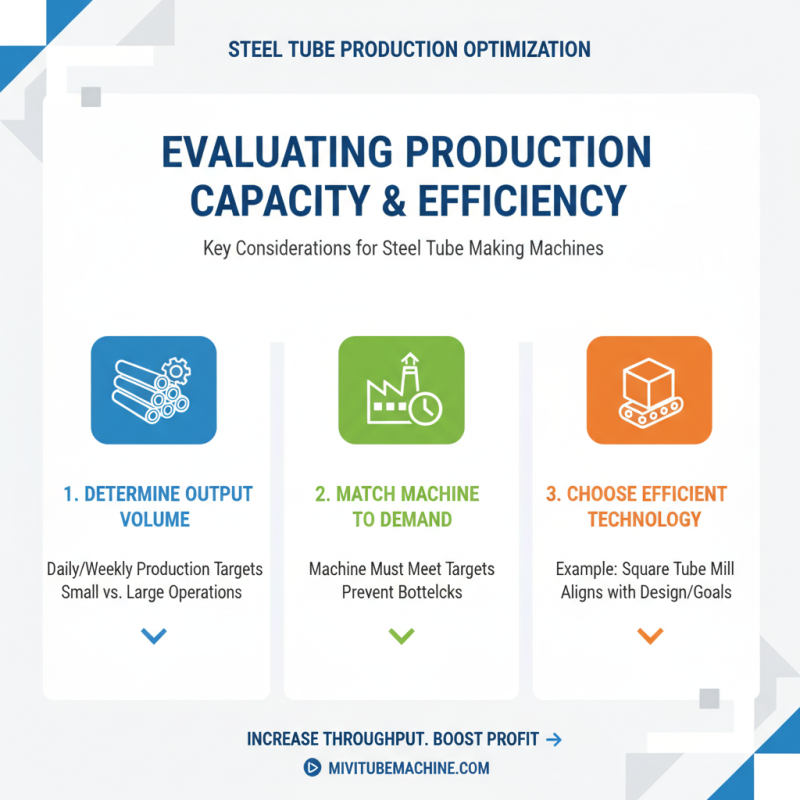
When evaluating production capacity and efficiency requirements for a steel tube making machine, start with the volume of output you need. Consider your daily and weekly targets. Whether it’s for a small or large operation, the chosen machine must meet these demands. For instance, a Square Tube Making Machine can significantly increase throughput if the design aligns with your production goals.
Efficiency also plays a crucial role in your decision. Look at how quickly and accurately the machine can operate. An efficient machine reduces waste and enhances productivity. Ask about the setup times and maintenance needs involved. Some machines may require more downtime than others. This can impact your overall efficiency.
Reflect on the types of projects you'll be handling. Different machines cater to specific specifications. A Square Tube Making Machine might offer distinct advantages over others, but does it fit your product range? Be wary of overestimating your production needs. Sometimes, a machine with lower capacity could suffice and be more cost-effective. Learn from industry examples to make more informed choices.
Assessing Material Compatibility and Specifications
When selecting a steel
Tube Making Machine,
understanding material compatibility is crucial. Different materials require specific machine settings for
optimal performance. A recent industry report noted that using the wrong material can increase downtime by 15%.
This highlights the importance of assessing material specifications in detail.
For instance, the type of steel, its thickness, and the desired finish all influence machine choice. Some machines efficiently handle
stainless steel, while others excel with carbon steel.
Failing to match the machine with these characteristics can lead to production inefficiencies. Proper analysis can reduce
scrap rates significantly.
Moreover, technical specifications such as wall thickness and diameter are paramount. The production process must accommodate these factors.
Underestimating or overlooking these specifications often results in costly adjustments later.
A thoughtful approach to understanding compatibility enhances the overall production quality.
Analyzing Technological Features and Automation Options
When selecting a steel tube making machine, you should consider various technological features. Automation options play a crucial role in modern manufacturing. Machines equipped with advanced automation can optimize the
Steel Pipe Making Process.
They reduce labor costs and improve efficiency. Look for machines that offer programmable controls. This allows for greater precision in production.
Tip: Evaluate the level of automation based on your production scale. High-volume production often benefits from fully automated systems. However, small-scale operations might find semi-automated machines more suitable.
Another aspect to contemplate is the machine's adaptability. Some machines can handle different tube sizes and materials. This flexibility can be essential for meeting diverse customer needs in the steel industry.
Ensure the equipment supports quick changeovers. Slow adjustments can lead to downtime, affecting your profits.
Tip: Check user reviews on machine adaptability. They can reveal real-world performance. Sometimes, an overly complex machine can become a burden rather than a benefit. Embrace options that balance automation with ease of use.
Budget Considerations: Pricing and Total Cost of Ownership
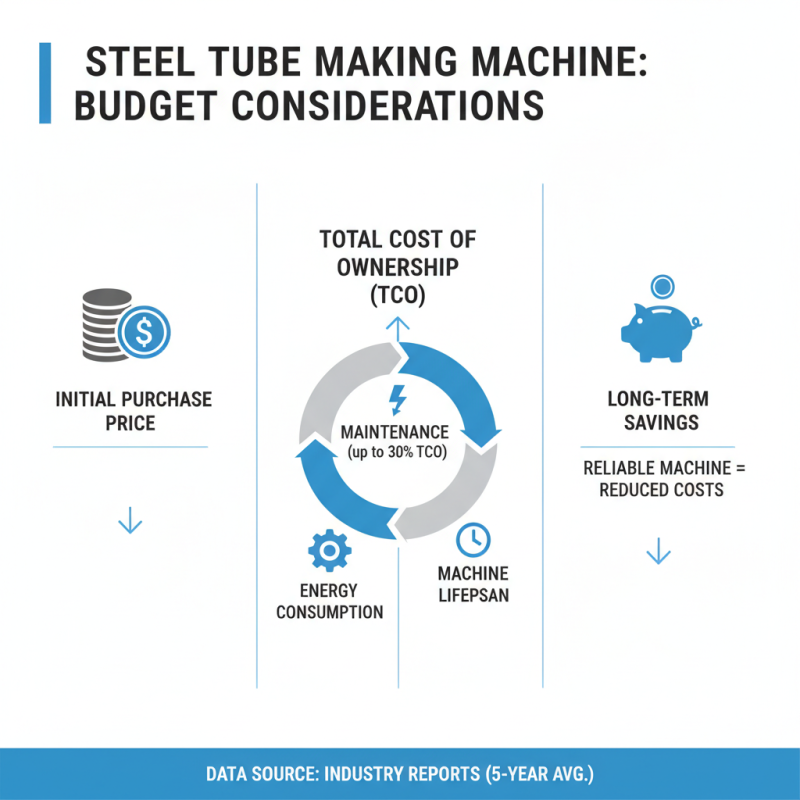
When selecting a steel tube making machine, budget considerations are crucial. The total cost of ownership (TCO) encompasses more than just the initial purchase price. It includes maintenance costs, energy consumption, and the machine’s lifespan. For instance, data from industry reports show that maintenance can account for up to 30% of the TCO over five years. Thus, investing in a reliable machine may yield long-term savings.
It's essential to evaluate the energy efficiency of these machines. According to the Energy Information Administration, manufacturing accounts for 23% of total energy consumption in the U.S. A more energy-efficient steel tube making machine can drastically reduce operational costs. This can result in significant savings, potentially exceeding thousands of dollars annually. However, some machines that offer lower upfront costs may consume more energy, increasing TCO over time.
Consider training and operational costs as well. Employees need adequate training to operate the machine optimally. Reports suggest that improper training can lead to a 20% decrease in productivity. Balancing upfront costs with anticipated operational efficiency is vital. Reflecting on all these factors can help make a more informed decision without oversimplifying the complexities involved.
Manufacturer Reputation and After-Sales Support Evaluation
When selecting a steel tube making machine, evaluating the manufacturer's reputation is crucial. A strong reputation often indicates years of experience and expertise. Research online reviews and industry reports. Occasionally, feedback may be overly positive or negative due to individual experiences. Balance these perspectives for an informed decision.
After-sales support can significantly affect your operational efficiency. Quality machines require maintenance and occasional repairs. A manufacturer with robust support can provide timely assistance and spare parts. Delays in getting help can result in lost production time. Consider the support channels offered. Phone, email, and on-site assistance should be readily available.
Do not overlook the importance of warranties and service agreements. A lengthy warranty can reflect confidence in their product. However, look closely at the terms. Sometimes, warranty clauses can be restrictive. It’s essential to understand what is covered and what isn’t. An honest evaluation of the manufacturer’s reliability can ultimately save you time and money.
Manufacturer Reputation and After-Sales Support Evaluation
This bar chart represents the evaluation of manufacturer reputation and after-sales support based on a scoring system. Each manufacturer has been rated out of 100, providing a comparison of their perceived reliability in the market.
Comprehensive Guide to High Frequency Welding Machines for Enhanced Tube Mill Efficiency
High frequency welding machines play a vital role in enhancing the efficiency of tube mills, making them an essential investment for manufacturers seeking to optimize their production processes. These machines utilize solid-state high-frequency tube welding power supplies, specifically designed for continuous operation. By employing cutting-edge technology, they ensure consistent weld quality, which is critical for structural integrity and overall performance of the welded tubes.
The backbone of these advanced systems is their integrated PLC system, which manages interlocking controls and facilitates fault diagnostics. This sophisticated design allows operators to quickly identify and resolve issues, minimizing downtime and maintaining productivity. Furthermore, the real-time operational status displayed on an LCD screen enables operators to monitor the welding process effectively, ensuring that every tube is produced to the highest standards of quality.
In addition to enhancing operational efficiency, these high-frequency welding machines contribute to reduced energy consumption and increased flexibility in production. As manufacturers continue to seek ways to improve their processes, the adoption of such technologies not only streamlines operations but also leads to significant cost savings in the long run. The implementation of high-frequency welding is, therefore, a crucial step towards achieving greater efficiency and competitiveness in the tube mill industry.
FAQS
: Focus on material specifications, production capacity, energy efficiency, and maintenance needs.
It's crucial. Ensure the machine meets daily and weekly output targets without excessive downtime.
A capacity of at least 150 tons per month is often suggested to maintain efficiency.
Energy-efficient machines can reduce operating costs by up to 30% over time.
Automation enhances precision and reduces labor costs, but too much complexity can cause issues.
Check if it can handle different tube sizes and materials for diverse customer needs.
Some machines require more downtime. This can impact your overall efficiency.
Yes, overestimating your needs might lead to unnecessary expenses. A lower-capacity machine could be cost-effective.
They provide insights into real-world performance and adaptability, helping avoid complex machines that create burdens.
Conduct a comprehensive cost analysis, including maintenance expenses and integration ease into existing systems.
Conclusion
When selecting the best Steel Tube Making Machine for your production needs, it's crucial to first understand the various types and applications of these machines. Consider key factors such as the required production capacity, efficiency needs, and the compatibility of materials with machine specifications. Additionally, evaluating technological features and automation options can significantly enhance operational effectiveness.
Budget considerations are also vital, as you should account for not just the initial pricing but also the total cost of ownership over time. Finally, the reputation of the manufacturer and the availability of after-sales support can greatly influence your long-term satisfaction and productivity. By carefully assessing these elements, you can choose a Steel Tube Making Machine that aligns perfectly with your operational goals.