request to quote
Leave Your Message
0%

Picking the right steel pipe making machines isn’t just about how much they can produce anymore — it’s more like weighing the risks involved. Did you know that the World Steel Association reported a massive 1,888.2 million tonnes of crude steel produced in 2023? Plus, the OECD Steel Outlook warns that global excess capacity might keep climbing. All this tension means that for every factory, efficiency, flexibility, and consistently good quality are more critical than ever.

Dr. Edwin Basson, the DG of the World Steel Association, once said, “Steel is vital to our everyday lives.” And honestly, that also rings true for the machines that turn raw steel into the products we rely on. It’s not just about machines working fast — they need to do their job reliably. When you’re shopping around, pay close attention to details like coil width, strip thickness, pipe diameter, welding type, forming stands, how precise the sizing is, and how well the cutoff performs. Skimp on alignment, and you’ll see visible defects stretch for meters along the pipe.

Experience in the factory makes a big difference. A high-frequency welded line might look like a winner during a quick demo, but the real test happens after long hours of work, changing materials, and tweaking tooling. Steel Rollforming Machines can handle flexible production setups — but only if the operators are properly trained. Don’t forget, energy use, spare parts availability, maintenance access, and local technical support are just as important.

Honestly, there’s no such thing as a perfect machine. That’s the tough part to swallow. A cheaper line might save you money upfront, but it could mean more downtime down the road. On the flip side, a more advanced machine might come with automation features, but that means your team needs to be pretty disciplined with the processes. So, instead of just looking at the price tag, think about the total cost of ownership. The machines should fit your factory’s product range, your team’s skills, your available space, and your growth plans. Reports from places like Grand View Research show that the demand for welded steel products isn’t slowing down, but nobody’s claiming future guarantees. The key is doing careful trials, checking references, and running measurable tests to be sure you’re making the right choice.
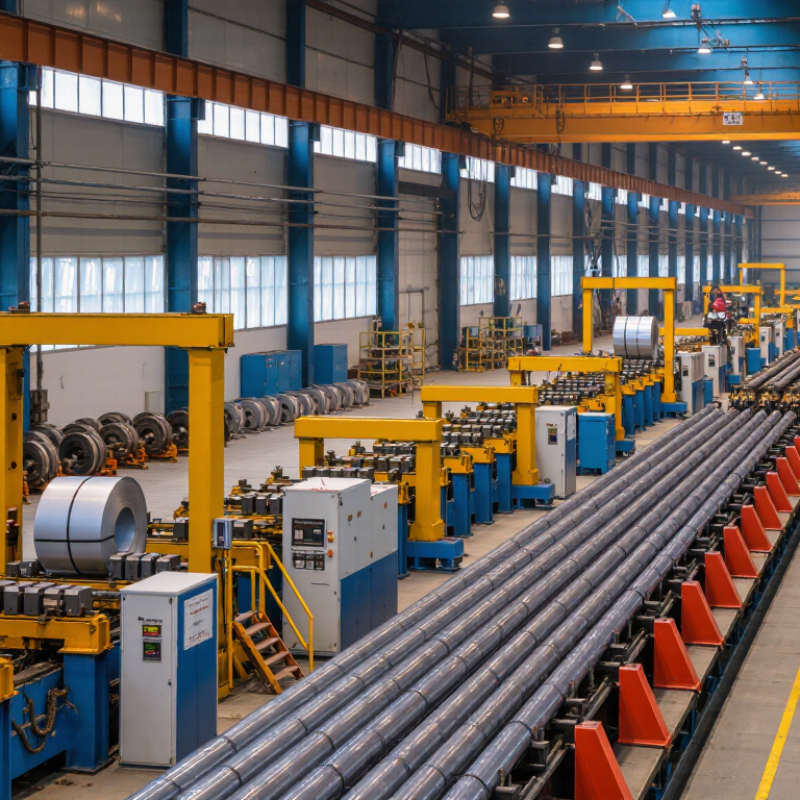
How to Choose Steel Pipe Making Machines for Your Factory?

Define Your Steel Pipe Production Goals and Product Range

Choosing steel pipe Manufacturing Machines starts with a production map, not a catalog. Define your target pipe diameters, wall thicknesses, lengths, and steel grades. A factory making 20 mm precision tubes needs different equipment from one producing large structural pipes. Write down monthly output and expected growth. Be specific.

Your product range should guide the forming method, welding system, sizing stands, and cutting equipment. Consider whether you need round, square, rectangular, or special-shaped pipes. Check the raw coil width, thickness tolerance, and surface condition before selecting machinery. These details affect forming stability and weld quality. In factory planning, small mismatches can create large maintenance costs.

Ask operators and maintenance technicians to review the proposed line. Their practical experience often reveals issues hidden in technical documents. Measure available floor space, power capacity, compressed air, cooling water, and material flow. Leave room for inspections and safe repairs. Production targets also require reliable testing equipment, including dimensional gauges and weld inspection tools. Do not trust impressive speed figures alone. Confirm output under your actual steel grade and thickness. Trial data matters.

Some plans will be wrong.

That is normal. A machine chosen for future products may reduce efficiency today. A narrow product range may also limit new orders. Recheck your goals with sales forecasts, customer specifications, and realistic staffing levels. Request documented performance evidence, service procedures, spare-part availability, and operator training details before approval. Reliable decisions come from measurable needs, not optimistic assumptions.

Match Machine Types to Your Pipe Materials and Specifications

Choosing a Steel Pipe Making Machine starts with the material, not the advertised production speed. Carbon steel, stainless steel, and galvanized strip behave differently during forming and welding. Carbon steel usually suits high-frequency welded lines for standard construction pipes. Stainless steel needs cleaner forming conditions, stable welding control, and careful surface protection.

Check the pipe diameter range and wall thickness before reviewing machine layouts. A line for 20–76 mm pipes cannot efficiently replace equipment designed for 219 mm products. Confirm the coil width, yield strength, strip thickness, and required tolerance. These figures determine the forming stands, welding unit, sizing section, and cutting system. A pipe with a 2 mm wall may require different pressure control than a 6 mm pipe.

Do not choose by output speed alone. Fast forming can create edge waves, weld instability, or uneven sizing when the material changes. In a factory trial, operators should inspect sample pipes at room temperature and after cutting. Measure diameter, ovality, wall thickness, and weld appearance. Small deviations often reveal poor setup. Leave space for roll changes and maintenance access. This is often underestimated. A modular design may cost more initially, but it can reduce downtime when specifications change. Still, no machine fits every product perfectly. Review actual production records, request material trials, and let an experienced engineer verify the final configuration.

Evaluate Forming, Welding, Sizing, and Cutting Capabilities

Choosing a steel pipe machine starts with the forming route, not the catalog price. A factory making ERW pipe needs stable strip entry, roll alignment, and fast diameter changes. For thick-wall pipe, check motor torque and pass design under continuous load. World Steel Association’s World Steel in Figures 2024 reports roughly 1.89 billion tonnes of crude steel production in 2023. That scale increases pressure for uptime and repeatability. Small errors become expensive scrap.

Inspect welding capability beside forming. Ask for weld-speed ranges, power control, seam tracking, and cooling performance. The weld should remain consistent when line speed changes. Request trials using your actual grade, thickness, and strip width. ISO 3183 and applicable ASTM specifications can guide testing requirements, but they cannot replace production trials. The OECD’s 2024 steel outlook identifies more than 150 million tonnes of capacity additions through 2026. New capacity will compete on stable output, not impressive peak speed. Peak speed is easy to advertise.

Sizing must hold outside diameter, wall geometry, and straightness after welding. Measure with calibrated gauges during startup and coil changes. Cutting equipment should match length tolerance, burr limits, and bundle handling. Flying saws suit continuous lines; stop-and-cut systems may suit shorter runs. Review blade life and changeover time, not only cutting speed. Not just speed. I would leave a margin below the claimed maximum. It feels cautious. It is also practical. A machine needing constant manual correction may pass a demonstration and fail on a night shift. Record trial data, reject rates, and recovery time before approving the line.

Compare Production Capacity, Automation, and Energy Efficiency

Choosing steel pipe making machines starts with your real production target, not a supplier’s maximum number. Measure daily orders, pipe diameter ranges, wall thickness, and changeover frequency. A line rated at 80 tons daily may deliver less during frequent tooling changes. In the Steel Pipe Making Process, forming, welding, sizing, cutting, and inspection must remain balanced. One fast section cannot repair a slow welding unit. Ask for verified output using material similar to yours. Request test records, reject rates, and stable running speeds. This evidence is more useful than a polished brochure.

Automation should reduce repetitive decisions without hiding essential controls. Automatic coil feeding, weld monitoring, length measurement, and fault alarms can improve consistency. However, complex systems may demand skilled maintenance and expensive spare parts. Check whether operators can adjust settings safely and record production data. Energy efficiency deserves a meter, not a promise. Compare motor efficiency, standby consumption, compressed-air use, and heating demand. A fast machine that wastes power can raise every metre’s cost. I have seen estimates change after idle periods were measured. That uncomfortable gap deserves attention.

Tips: Compare output per kilowatt-hour, not output alone. Run a sample coil before purchasing. Watch startup, steady production, and size changes. Calculate annual energy costs using actual operating hours. Leave capacity for growth, but avoid oversized equipment too early. A smaller, well-monitored line may suit a developing factory better. Still, this depends on confirmed orders, labor skills, and maintenance support.

Check Machine Quality, Safety Features, and Maintenance Requirements

How to Choose Steel Pipe Making Machines for Your Factory?

Machine quality should be judged during production, not only by a showroom demonstration. The World Steel Association reported about 1.89 billion tonnes of crude steel production in 2023. This scale makes stable pipe output essential. Check frame stiffness, forming accuracy, weld control, and the consistency of finished pipe dimensions. I once treated a low purchase price as a saving. It was not. Frequent sensor faults and difficult adjustments consumed valuable production hours.

Safety needs physical evidence. Guards should block access to moving rolls, while emergency stops must be reachable from operating positions. Review risk assessments against ISO 12100 and safety-control principles in ISO 13849-1. The International Labour Organization estimated 2.93 million work-related deaths globally each year in its 2023 report. A safer machine is not merely compliant. It protects people and reduces disruptive incidents. Still, certificates alone cannot prove practical safety. Watch a live trial.

Tips: Request maintenance records, wiring diagrams, spare-parts lists, and response times. Inspect lubrication points beside the line, not inside a brochure. Ask how quickly operators can replace rolls and sensors. The U.S. Department of Energy reports that motor-driven systems use about 69% of industrial electricity in the United States. Compare motor efficiency, idle power, and energy monitoring. Calculate maintenance labor honestly. Your estimate may be wrong at first. Recheck it after a supervised trial run.

How to Choose Steel Pipe Making Machines for Your Factory? - Check Machine Quality, Safety Features, and Maintenance Requirements

Evaluation Dimension Recommended Selection Criteria Practical Verification Method Why It Matters
Product Compatibility Select a forming range that covers the required outside diameter, wall thickness, steel grade, and pipe length. Do not choose a machine solely by its maximum diameter. Compare the supplier’s pass-line layout and tooling list with the factory’s actual product schedule, including the smallest and largest planned sizes. A machine that operates near the middle of its designed range generally provides more stable forming and easier setup changes.
Frame and Roll Quality Look for a rigid welded or cast frame, accurately machined roll stands, suitable roll materials, and documented heat treatment for wear-resistant components. Review material certificates, hardness reports, machining inspection records, and alignment measurements. Inspect sample rolls for surface finish and damage. Poor rigidity or misalignment can cause dimensional variation, edge damage, excessive vibration, and premature roll wear.
Welding System Choose a welding process and power capacity appropriate for the steel grade, wall thickness, production speed, and required weld quality. Include weld monitoring and cooling provisions where applicable. Request trial-production records, weld inspection results, power-consumption data, and details of electrode or contact-part replacement procedures. Stable welding parameters reduce leaks, rejected pipes, rework, and interruptions caused by overheating or consumable wear.
Dimensional Accuracy The machine should provide adjustable forming, sizing, straightening, and cutting controls suited to the required diameter and wall-thickness tolerances. Run representative material and measure outside diameter, wall thickness, ovality, length, straightness, and weld-bead condition using calibrated instruments. Consistent dimensions improve downstream threading, coupling, coating, testing, and customer acceptance.
Safety Guarding Moving rolls, rotating shafts, pinch points, cutting zones, and hot surfaces should have fixed guards, interlocked access doors, and clearly marked danger zones. Inspect the machine against the risk-assessment principles of ISO 12100 and verify that guards prevent access during hazardous motion. Effective guarding reduces the risk of crushing, entanglement, burns, and contact with moving equipment.
Emergency Stop and Control Safety Provide readily accessible emergency-stop devices, safe restart logic, fault indication, and control-system safety functions appropriate to the assessed risks. Test emergency stops, guard switches, restart prevention, and safety-related control functions during factory acceptance and commissioning. ISO 13850 addresses emergency-stop function principles, while ISO 13849-1 provides a framework for safety-related control systems.
Electrical and Thermal Protection The electrical system should include overload protection, short-circuit protection, grounding, suitable enclosure protection, cooling, and labeled wiring. Check wiring diagrams, protective-device ratings, grounding continuity, cabinet ventilation, and conformity with IEC 60204-1 requirements where applicable. Correct protection helps prevent electric shock, fires, unplanned downtime, and damage to motors or drives.
Maintenance Access Choose a layout with safe access to rolls, bearings, guides, lubrication points, weld components, filters, sensors, and electrical cabinets. Ask operators to demonstrate routine inspection and replacement tasks without removing unnecessary guards or dismantling major assemblies. Good access shortens planned maintenance time and reduces the temptation to bypass safety procedures.
Lubrication and Consumables Prefer clearly identified lubrication points, accessible grease fittings, oil-level indicators, filtration, and standardized wear parts where technically suitable. Review the lubrication chart, recommended lubricant specifications, replacement intervals, and the complete consumables list. Correct lubrication limits friction, heat, bearing damage, and unplanned stoppages.
Documentation and Training Require operating instructions, electrical and pneumatic diagrams, spare-parts lists, risk information, troubleshooting procedures, and maintenance schedules in the factory’s working language. Confirm that manuals match the delivered machine revision and that operators and maintenance personnel receive practical training. Accurate documentation improves safe operation, fault diagnosis, preventive maintenance, and knowledge transfer.
Spare-Parts Availability Confirm the availability and lead times of bearings, sensors, seals, belts, cutting tools, welding contact parts, drive components, and safety devices. Request a recommended critical-spares inventory for the first two years of operation and verify part identification methods. Reliable parts support reduces downtime when wear components or control devices fail.
Acceptance Testing Define measurable acceptance criteria for output rate, product dimensions, weld quality, changeover time, safety functions, noise, and energy use before placing the order. Use representative raw material during factory and site acceptance tests, and record results with calibrated measuring equipment. Pre-agreed tests create an objective basis for confirming machine performance and resolving deviations.

Assess Supplier Support, Installation Services, and Total Investment Cost

Choosing a Steel Tube Making Machine requires more than comparing production speed and purchase prices. Supplier support often determines whether the line performs smoothly after delivery. Ask for service response times, technician availability, and documented customer references. A reliable supplier should explain commissioning steps clearly, from foundation checks to electrical testing. Request a factory acceptance test with sample coils before shipment.

Installation costs can grow quickly when travel, lifting equipment, training, and local electrical work are excluded. Confirm who supervises alignment, roll adjustment, welding setup, and safety checks. Operators should receive practical training beside the machine, not only a translated manual. Spare rollers, sensors, and welding components also affect downtime. My first budget estimate was wrong because I ignored these small items. That mistake changed how I compare total investment cost.

Tips: Build a five-year cost sheet. Include energy use, maintenance, consumables, spare parts, training, and possible production delays. Ask the supplier to separate fixed costs from optional upgrades. Check whether remote diagnosis is available and whether software updates require additional fees. A low initial price may hide weak after-sales support. Measure the supplier’s technical advice against your actual tube sizes, material grades, and target output. Simple questions often reveal experience.

FAQS

How should I match a pipe-making machine to my material?

Start with the strip material, not the advertised speed. Carbon steel often suits high-frequency welded lines for standard pipes. Stainless steel needs cleaner forming, stable welding, and careful surface protection. Galvanized strip may require additional handling considerations. Material behavior matters.

Which specifications must I confirm before selecting the machine?

Confirm pipe diameter, wall thickness, coil width, yield strength, strip thickness, and tolerance. A 20–76 mm line cannot efficiently replace equipment for 219 mm pipes. A 2 mm wall needs different pressure control from a 6 mm wall. Small figures can change the entire line design.

Why should production speed not be the main selection factor?

Excessive speed may create edge waves, unstable welds, or uneven sizing. Test samples at room temperature and after cutting. Measure diameter, ovality, wall thickness, and weld appearance. Fast is not always productive.

What should operators inspect during a factory trial?

Operators should inspect finished pipes under realistic production conditions. Check dimensions, cut quality, surface marks, and weld consistency. Small deviations often reveal poor setup. I once trusted a short demonstration too much. That was not enough.

Which safety features should the machine include?

Guards should block access to moving rolls. Emergency stops must remain reachable from operating positions. Review the machine’s risk assessment and safety-control design. Watch a live trial instead of trusting certificates alone. Physical evidence matters.

How can I judge machine quality and maintenance needs?

Inspect frame stiffness, forming accuracy, welding control, and finished-pipe consistency. Request maintenance records, wiring diagrams, spare-parts lists, and service response times. Check lubrication points beside the line. Ask how quickly operators can replace rolls and sensors.

What installation and training support should I request?

Confirm who supervises foundation checks, alignment, roll adjustment, welding setup, and electrical testing. Request a factory acceptance test using sample coils before shipment. Operators need practical training beside the machine. A translated manual is not enough.

How should I calculate the total investment cost?

Build a five-year cost sheet covering energy, maintenance, consumables, spare parts, training, and delays. Include lifting equipment, travel, local electrical work, and installation labor. Compare motor efficiency, idle power, and energy monitoring. My first budget estimate was wrong. Recheck it after a supervised trial run.

Conclusion

Choosing the right steel pipe making machines begins with clearly defining your factory’s production goals, target pipe range, materials, dimensions, and expected output. These requirements will guide your selection of suitable machine types and help ensure compatibility with different steel grades and specifications. Carefully review the machine’s forming, welding, sizing, straightening, and cutting capabilities to confirm that it can consistently produce the required pipe quality and accuracy.

You should also compare production capacity, automation level, energy consumption, and operating efficiency to control long-term costs. Machine quality, safety features, maintenance access, spare-part availability, and ease of operation are equally important for stable production. Finally, evaluate the supplier’s technical support, installation and training services, warranty terms, delivery schedule, and total investment cost. A well-planned comparison will help you choose reliable equipment that supports efficient production, safe operation, future expansion, and sustainable factory performance.
Emma

Emma

Emma is a seasoned marketing professional at Yangzhou Mivi Machinery Manufacturing, where she leverages over 20 years of industry experience to enhance the company’s global presence. With a deep understanding of the tube mill sector, Emma is dedicated to promoting Mivi’s reliable products and......
Previous What Is the Best Tube Mill for Global Buyers?