request to quote
Leave Your Message
0%

Picking out a Roll Forming Tube Mill isn’t just about buying some equipment — it’s a pretty important decision for your production line. If you don’t choose wisely, you might end up with inconsistent welds, tubes that aren’t quite right in size, and wasting a bunch of material. So, it’s crucial to find a mill that fits your needs — think about the tube sizes you’re working with, the steel grades, wall thickness, output goals, and how much space you’ve got on the shop floor.

Robert A. Sladky, a well-known expert in tube and pipe tooling at Roll-Kraft, always says, “Pick a mill based on what your process needs, not just on how fast it can go.” That advice still holds true. Sure, a machine rated at 120 meters per minute sounds great, but if the forming stands aren’t sturdy or the welding system can’t keep a steady heat, it won’t deliver. Always ask for trial data, and if possible, check out samples under actual production conditions. Also, see how quick and easy it is for your operators to swap tooling between different sizes.

There are some details that can slip under the radar — things like how accessible the gearbox is, how long it takes to change rolls, how well the strip lines up when entering, how the weld unit can be adjusted, and whether spare parts are easy to get. On top of that, make sure the supplier offers support — like commissioning, operator training, and ongoing technical help after installation. Quality manufacturers should be upfront about tolerances, not just flaunt fancy brochures.

Remember, there’s no one-size-fits-all “perfect” mill for every factory. I’d also be cautious about overly optimistic production estimates — even for my own setup. Your actual output might fall short if coils vary, tooling needs adjustments, or operators are still getting the hang of things. Usually, it’s smarter to compare the total lifecycle costs, maintenance history, and the quality of the final product rather than just focusing on the purchase price. In the end, the best Roll Forming Tube Mill is the one that gives you consistent tubes, is easy to maintain, and has room to grow with your production needs.
How to Choose a Roll Forming Tube Mill?

Define Tube Profile, Material Grade, and Size Range Before Selection

How to Choose a Roll Forming Tube Mill?

Choosing a roll forming tube mill starts with the tube, not the machine brochure. Define the finished profile with a drawing, corner radii, weld seam position, and allowable twist. A square tube and a rectangular tube may share tooling concepts, yet they behave differently during forming. Record wall thickness, outside dimensions, and tolerance limits. Small omissions here can create costly tooling changes later. Measure twice. It sounds obvious, but production teams still overlook it.

Material grade controls forming force, springback, welding settings, and mill stability. State the grade, yield strength, tensile range, coating, and incoming coil condition. Galvanized steel, stainless steel, and low-carbon steel need different process controls. Confirm supplier test certificates and verify samples before final design approval. Laboratory data helps, but real coils reveal variation. This is where practical judgment matters. A perfect calculation may fail on inconsistent strip.

Define the smallest and largest tube sizes the mill must produce. Include wall thickness changes and required production speeds. A wide size range can increase tooling complexity and changeover time. Ask for trial runs using representative material before purchasing. Check dimensional accuracy, weld quality, surface marks, and scrap rates. Also review maintenance access and operator training. I have seen projects focus on maximum speed, then struggle with daily setup. The fastest mill is not always the most reliable choice.

Match Strip Thickness, Width, and Yield Strength to Mill Capacity

How to Choose a Roll Forming Tube Mill?

A Roll Forming Mill should match the strip, not merely the finished tube size. Measure the actual thickness across the coil, including normal variation. A 2.0 mm strip with inconsistent edges can stress the forming stands quickly. Record the strip width, too. Width errors affect weld alignment and cut-off accuracy. Narrow material may leave poor support during forming. Wide material may overload the entry guides.

Yield strength often receives less attention than thickness. High-strength steel needs greater forming torque and stronger tooling. It may also show more springback after each pass. Ask the mill builder for the maximum yield strength at your target thickness. Do not rely on tensile strength alone. Check motor capacity, shaft diameter, stand spacing, and the number of forming passes. More passes can reduce shape distortion, but they also increase equipment length and maintenance.

In practice, leave operating capacity below the advertised limit. Real coils contain welds, camber, surface scale, and thickness changes. I once treated a specification sheet as exact, and the line struggled when the coil tolerance widened. That mistake was avoidable. Test a representative sample before finalizing the Roll Forming Mill. Inspect the tube seam, corner radius, straightness, and cut length. A short trial can reveal problems that calculations miss. Thin strip needs gentle guidance. Strong strip needs authority.

Compare Forming Speed from 20–120 m/min for Required Production Volume

How to Choose a Roll Forming Tube Mill?

Forming speed should match your required production volume, not simply the highest advertised number. A 20 m/min mill may suit small batches, prototypes, or frequent size changes. At 60 m/min, a six-metre tube theoretically exits every six seconds. At 120 m/min, that interval falls to three seconds. Cutting, welding, coil changes, and inspection reduce the real output.

The World Steel Association reported global crude steel production of about 1.89 billion tonnes in 2023. This scale confirms strong demand for efficient steel-processing equipment, but it does not mean every factory needs maximum speed.

Compare planned tonnes per month with actual operating hours. Include a realistic utilization factor, often around 75–85% during normal production planning. Then review tube diameter, wall thickness, material grade, and target length. These details can limit speed more than the mill’s headline specification.

A faster line is not always better. Thin-wall tube may run smoothly at 100–120 m/min, while thicker structural tube may require slower forming and tighter weld control.

The International Tube Association emphasizes process stability, dimensional accuracy, and safe production conditions in tube manufacturing guidance.

Ask for measured output data, not only rated speed. A neat spreadsheet can still be wrong. Allow time for tooling changes, scrap, maintenance, and operator learning.

A 50 m/min line with stable 80% utilization may outperform a 100 m/min line that frequently stops.

Check Dimensional Tolerance Against ±0.5 mm Tube Accuracy Targets

How to Choose a Roll Forming Tube Mill?

Check Dimensional Tolerance Against ±0.5 mm Tube Accuracy Targets

A tube mill should be selected against measured accuracy, not impressive production speed. For a ±0.5 mm target, define the dimension clearly. Does it mean outside diameter, width, height, or finished length? Each value needs its own inspection method and acceptance range.

During machine trials, measure several samples from the beginning, middle, and end of the coil. Use calibrated digital calipers, micrometers, and a suitable gauge. Check every 500 to 1,000 mm along the tube. Short samples can hide gradual drift. Temperature changes can also affect readings.

Look closely at the forming stands and sizing section. Stable roll alignment reduces diameter variation and twisting. Proper weld control helps prevent a raised seam from distorting the final measurement. Ask for repeatability data, not only one excellent sample. The mill should show results using your actual steel grade, thickness, and profile.

Real production is less clean. I have seen tubes meet ±0.5 mm at startup, then move outside tolerance after several hours. Roll wear, material hardness, and setup skill can all contribute. This is easy to overlook. Request a documented trial with sample records, measuring tools, and correction steps. A supplier who explains failures openly is often more reliable than one presenting perfect numbers. Also confirm whether the ±0.5 mm claim applies before or after cutting, cooling, and bundling.

How to Choose a Roll Forming Tube Mill?

Compare the maximum observed deviation of key tube dimensions with a practical screening target of ±0.5 mm. A suitable mill should keep outside-diameter and profile dimensions comfortably inside the specified tolerance, while length and wall-thickness control should be checked against the applicable product standard and customer drawing.

Evaluate Weld Systems for ERW Frequencies up to 400 kHz

How to Choose a Roll Forming Tube Mill?

When selecting a Tube Roll Forming Machine, evaluate its weld system before its forming speed. High-frequency ERW systems can operate up to 400 kHz, but higher frequency does not automatically mean stronger welds. The coil, impeder, power supply, and seam guide must work as one system. At 400 kHz, current concentrates near the strip surface, making alignment and edge preparation critical. A small V-angle change can create visible burn marks, unstable heating, or weak bonding.

The World Steel Association reported 1.89 billion tonnes of global crude steel production in 2023. This volume supports continued demand for welded tube production, but it also raises expectations for repeatable quality. Ask suppliers for weld-power stability data, frequency response curves, and results from flattening, flare, and metallographic tests. ISO 3183 and ASTM A513 provide useful reference points, yet neither replaces trials with your actual steel grade and wall thickness. I would not accept a “400 kHz capable” claim without a production sample. That wording is often incomplete.

Tips: Check weld temperature with calibrated infrared equipment. Inspect the seam under magnification after cutting samples. Compare power consumption at 100, 200, and 400 kHz. Record line speed, edge condition, and weld pressure. Leave room for doubt; a perfect laboratory seam may fail after eight hours of vibration.

Assess Drive Power, Pass Count, and Tooling Changeover Time

Choosing a Square Tube Roll Forming Machine requires more than comparing advertised production speeds. Start with drive power. Calculate strip width, thickness, steel grade, forming speed, and friction losses. A machine with insufficient power may produce unstable shapes, overheated motors, or frequent stoppages. Some reserve capacity matters.

Do not select pass count by habit. More passes can reduce deformation in corners and improve square accuracy. However, extra stands increase machine length, energy use, and maintenance points. For thin material, excessive forming can leave marks or create unwanted stress. Inspect sample sections with calipers, especially at the corners. Small errors become obvious during welding.

Tooling changeover time affects real production more than many quotations suggest. Ask how operators adjust spacers, guides, shafts, and roll positions. A changeover taking two hours can erase the benefit of a faster line. Record the process with a checklist, then measure it during a trial. I once underestimated cleaning time around the forming stands. That mistake delayed the next size. Quick-change tooling may help, but only when settings are repeatable and safely accessible. Require documented tolerances, maintenance intervals, and trial-production data before making a final decision.

Verify ASTM, ISO 9001, and Safety Requirements Before Purchase

How to Choose a Roll Forming Tube Mill?

Before purchasing a Tube Roll Forming system, verify the required ASTM product standard. ASTM A500 may apply to structural tubing, while ASTM A513 often covers mechanical tubing. Confirm the correct grade, wall thickness, weld quality, dimensional tolerances, and testing method. Ask for sample inspection records, not only a compliance statement. The ASTM standards themselves define technical requirements, but they do not automatically certify the machine.

ISO 9001 is also important. The ISO Survey 2023 reported more than one million ISO 9001 certificates worldwide, showing its broad adoption. However, certification alone does not guarantee stable tube production. Check the certificate scope, issuing body, expiration date, corrective-action records, and calibration controls. During a factory visit, inspect how operators record strip width, forming speed, weld temperature, and final dimensions. Small gaps matter.

Safety needs physical verification. Request a documented risk assessment based on ISO 12100 and review safeguarding for the cutoff saw, pinch points, rotating shafts, and electrical cabinets. ISO 13849-1 can guide the performance of safety-related control systems. The U.S. Bureau of Labor Statistics recorded about 2.6 million nonfatal private-industry workplace injuries in 2023. That figure is not specific to tube mills, but it shows why guarding and training deserve serious attention. Test emergency stops, interlocks, light curtains, and lockout procedures before signing. Certificates look reassuring. Real machines still need careful questioning.

China Zinc Spray Gun for Tube Mills: Weld Seam Galvanizing Repair and Corrosion Protection Guide

Steel tube mills rely on durable weld-seam protection because welding removes or weakens the original zinc layer, leaving exposed steel vulnerable to moisture and oxidation. The *IMPACT Study* on corrosion estimated that corrosion costs the global economy approximately US$2.5 trillion annually, equivalent to about 3.4% of global GDP. For this reason, localized zinc restoration is an important quality-control step for galvanized pipes used in construction, infrastructure, transportation, and industrial equipment.

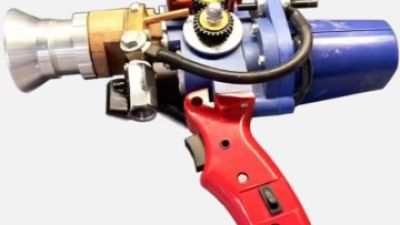
An Arc Spray Zinc Gun is designed to repair these damaged areas by feeding zinc wire into an electric arc, melting the metal, and spraying it onto the prepared weld seam. The resulting coating can restore sacrificial protection and help create a continuous barrier against corrosion. Proper surface preparation—including removal of slag, oil, rust, and loose scale—is essential for strong adhesion. Coating thickness should be checked according to the project specification and relevant standards, such as ISO 1461 or ISO 12944, depending on the application and exposure environment.

For tube mills, this equipment supports efficient in-line or offline maintenance while reducing the need to replace otherwise serviceable pipes. Consistent wire feeding, adjustable spray parameters, and controlled deposition help operators achieve uniform coverage around seams, edges, and other heat-affected zones. As a factory-supplied solution from China, the Arc Spray Zinc Gun provides a practical method for weld repair, extending service life and improving the long-term corrosion resistance of steel tube products.

FAQS

What does a ±0.5 mm accuracy target actually measure?

Define whether it covers outside diameter, width, height, or finished length. Each dimension needs its own gauge and acceptance range. Ambiguity causes trouble.

How should tube accuracy be tested during a machine trial?

Measure samples from the coil’s beginning, middle, and end. Check every 500 to 1,000 mm along each tube. Short samples can hide gradual dimensional drift.

Which measuring tools are suitable for checking tube dimensions?

Use calibrated digital calipers, micrometers, and suitable inspection gauges. Record the tool used with every sample result. Calibration matters.

Can a tube mill maintain accuracy after several production hours?

Not always. Roll wear, material hardness, temperature, and setup skill can change results. A tube may pass startup checks but fail later.

Why are forming stands and the sizing section important?

Stable roll alignment helps reduce diameter variation and tube twisting. The sizing section should produce consistent dimensions along the tube. Inspect corners carefully.

How does weld control affect finished tube accuracy?

Poor weld control may leave a raised seam. That seam can distort final measurements and interfere with accurate sizing. Check welded sections closely.

How should drive power be evaluated when choosing a tube mill?

Consider strip width, material thickness, steel grade, forming speed, and friction losses. Insufficient power can cause unstable shapes, overheated motors, and stoppages. Some reserve capacity is wise.

Does a higher pass count always improve tube quality?

No. More passes may improve corners and square accuracy, but increase length, energy use, and maintenance. Excessive forming can mark thin material or create unwanted stress.

Why is tooling changeover time important in real production?

A two-hour changeover can erase the benefit of a faster production line. Measure spacer, guide, shaft, and roll adjustments during a trial. Cleaning time is easy to underestimate.

What trial information should be requested before purchasing?

Request sample records, measured tolerances, correction steps, and repeatability data. Use the actual steel grade, thickness, and profile. Perfect numbers deserve questions.

Conclusion

Choosing the right Roll Forming Tube Mill starts with clearly defining the required tube profile, material grade, dimensions, and production range. The mill must be capable of handling the strip thickness, width, and yield strength of the selected material while providing a forming speed suited to expected output, typically between 20 and 120 m/min. Buyers should also confirm that the equipment can consistently meet dimensional targets, such as tube accuracy within ±0.5 mm.

Other important considerations include the welding system and its suitable ERW frequency, with some applications requiring performance up to 400 kHz. Drive power, forming pass count, tooling changeover time, maintenance access, and operator convenience all affect productivity and operating costs. Before purchase, verify that the machine and its documentation support applicable ASTM and ISO 9001 requirements, as well as essential workplace safety standards. A careful comparison of these factors helps ensure reliable production, stable quality, and long-term value.

Isabella

Isabella

Isabella is a seasoned marketing professional with a profound expertise in the tube mill industry, backed by over 20 years of experience at Yangzhou Mivi Machinery Manufacturing. As a key player within the company, she passionately advocates for Mivi's commitment to delivering reliable and......
Previous 10 Best Tube Mills for Global Buyers in 2026?