The Hf Welding Tube Mill has really become a key player for folks around the world in the metalworking scene. It’s a pretty impressive piece of tech, designed to produce high-quality welded tubes with impressive efficiency and precision. If a company invests in a Hf Welding Pipe Mill Machine, they often see noticeable improvements in their production lines. Basically, they’re able to crank out more stuff without sacrificing quality, which is a huge win.
That said, jumping into this tech isn’t just a no-brainer. It’s a pretty big investment upfront, and for some companies, that can be a bit intimidating. Plus, not all suppliers are created equal—some offer stellar support, while others might leave you hanging. Picking the right provider is super important. You want to make sure that the Hf Welding Tube Mill you go with truly fits what your operation needs.
In the end, most folks find that the benefits more than make up for the initial concerns. Better production means you can stay competitive and keep up with an evolving market. Honestly, investing in a good Hf Welding Tube Mill can be a real game-changer for your growth and efficiency down the line. Just take your time—do some research, talk to experts, and really think about what your specific needs are before pulling the trigger.
Benefits of HF Welding Tube Mills in Modern Manufacturing Processes
High-frequency (HF) welding tube mills have revolutionized modern manufacturing processes. These mills offer improved efficiency, reduced production times, and lower energy consumption. Their ability to produce high-quality welded tubes with minimal defects enhances overall productivity in various industries.
In the manufacturing arena, HF welding technology allows for quick adjustments to different tube specifications. This flexibility caters to the diverse needs of global suppliers. Factories adopting this technology experience shorter lead times, which is critical in today's fast-paced market. The precision of HF welding ensures consistent weld quality, which is essential for structural integrity in applications ranging from construction to automotive.
However, some challenges remain. Not all operators are familiar with the nuances of HF technology. Proper training and expertise are necessary to maximize the benefits of these mills. Ongoing maintenance is also crucial to prevent issues that might arise during production. Addressing these aspects can significantly enhance the reliability of HF welding tube mills in modern manufacturing.
Cost Efficiency: Analyzing Savings from HF Welding Tube Mills
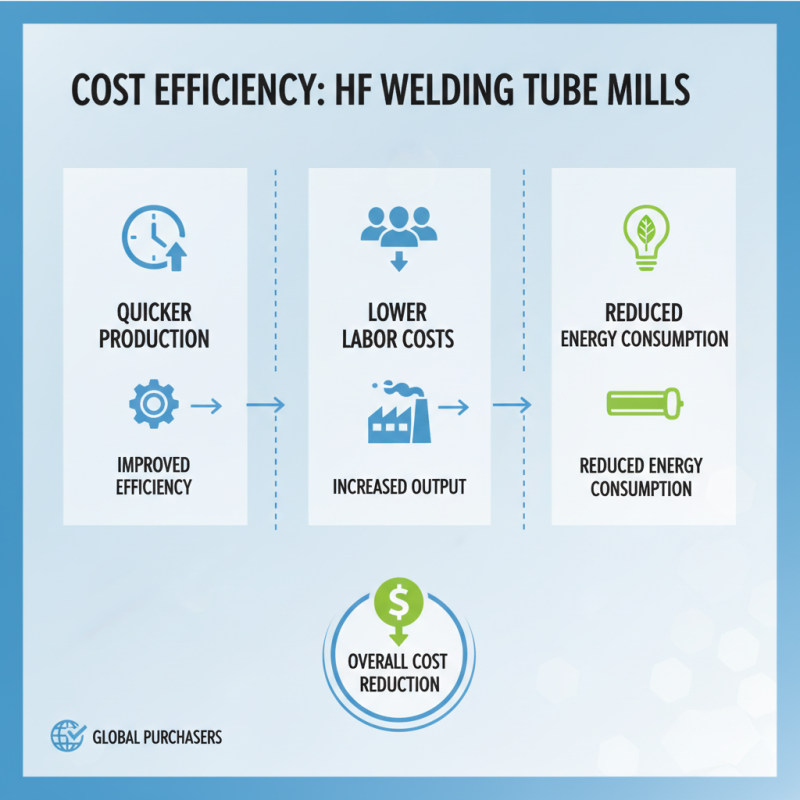
High-frequency (HF) welding tube mills offer significant cost benefits for global purchasers. Their advanced technology allows for quicker production times and improved efficiency. This reduction in processing time translates to lower labor costs and increased output. Businesses can enjoy reduced energy consumption, which impacts the overall cost structure positively.
Moreover, the reliability of HF welding mills often means less downtime. Fewer repairs and maintenance issues contribute to uninterrupted operations. This consistency can make a substantial difference in profit margins. However, initial investment costs for these mills might be a concern for some buyers. It requires careful consideration and analysis of long-term savings versus short-term expenses.
Purchasers must evaluate their specific needs. Local market conditions and available resources can influence decisions. Some buyers may feel hesitant about switching from traditional methods. Resistance to change can limit potential savings from adopting newer technologies. This reflection on one's practices is crucial for progress and profitability.
Production Speed: How HF Welding Increases Output Rates
High-frequency (HF) welding technology is revolutionizing production speed in tube mills. This method utilizes high-frequency currents to bond materials quickly and efficiently. Therefore, manufacturers can significantly increase output rates. The process ensures rapid heating and minimal thermal distortion of the welded materials.
Tips for optimizing this technology include regular maintenance of welding equipment. Ensure the HF welding machine is calibrated correctly for varying tube sizes. Additionally, training personnel to detect subtle changes in production can prevent costly downtimes. Utilizing materials like the High Frequency Soft Welding Tube Ferrite Rod can also enhance weld quality.
Efficiency does come with its challenges. Operators might encounter issues with inconsistent weld quality if not monitored properly. It’s crucial to implement strict quality control procedures to mitigate this risk. Investing time in refining processes can lead to better outcomes in the long run. The ability to respond quickly to production shifts is key to maximizing the benefits of HF welding.
Quality Control: HF Welding Tube Mills and Consistent Product Standards
High Frequency (HF) welding tube mills are crucial in ensuring consistent product standards. When using these mills, the focus on quality control is essential. HF welding technology provides a precise method for joining metal components, resulting in stronger seams. This strength is critical for various applications, especially in industries like automotive and construction.
Tips: Regular maintenance of the HF welding machines enhances their efficiency. Operator training can reduce errors and improve product quality. Investing in advanced monitoring systems helps identify deviations early.
Consistency is vital in production. Maintaining optimal welding parameters, including temperature and pressure, directly impacts the outcome. Issues may arise from equipment that is not well-calibrated. Regular assessments can help address these problems promptly. Quality products build trust with customers, and employing reliable processes is key.
Utilizing tools such as an Arc Welding Gun can also improve precision. Operators should ensure they are familiar with its operation for the best results. Quality control remains paramount. Regular audits and product testing will help maintain the desired standards.
Material Versatility: The Range of Tube Materials HF Welding Can Process
High-frequency (HF) welding is a remarkable technique in the tube manufacturing industry. It offers excellent versatility with a wide range of materials. This adaptability benefits global purchasers looking for various options.
Steel Pipe For Welding is one of the primary materials processed by HF welding. The ability to handle different types of steel allows manufacturers to create products tailored for specific applications.
HF welding can also process non-ferrous materials. Aluminum and copper tubes are increasingly used in various sectors. These materials enhance product performance and reduce weight. The use of different substances presents new opportunities. However, not all materials are equally stable during the welding process. This variability requires careful consideration of the welding parameters.
Understanding the properties of each material is crucial. For example, aluminum has distinct thermal and electrical characteristics compared to steel. This knowledge helps manufacturers optimize their processes. Challenges arise when working with new alloys or combinations of materials.
Adjusting techniques for unique characteristics is essential. This ongoing learning reflects the dynamic nature of the industry. The versatility of HF welding indeed opens doors but also demands continuous adaptation and expertise.
Sustainability Impact: Reducing Waste in Tube Production with HF Welding
The shift towards sustainability in manufacturing is crucial. HF welding tube mills play a vital role in minimizing waste during tube production. This method employs high-frequency induction welding, which significantly reduces scrap metal and energy consumption. By using a Steel Pipe Welding Machine, manufacturers can optimize their processes, further enhancing efficiency.
Incorporating HF welding techniques can lead to impressive cost savings. The reduction in waste materials is not only economical but also beneficial for the environment. Less waste contributes to a lower carbon footprint. This approach is instrumental in aligning manufacturing practices with sustainable development goals.
Tips for companies looking to adopt HF welding include assessing current production methods and identifying waste reduction opportunities. Consider investing in training staff to maximize the machine's potential. Regular maintenance of the Steel Pipe Welding Machine can ensure optimal performance and longevity. Each step towards sustainability requires commitment and awareness. Companies must reflect on their practices continually to foster improvement.
Hf Welding Tube Mill Benefits for Global Purchasers
| Benefit |
Description |
Sustainability Impact |
Waste Reduction (%) |
| Energy Efficiency |
Reduced energy consumption during production |
Decreases carbon footprint |
25% |
| Material Utilization |
Maximized use of raw materials |
Reduces waste in the manufacturing process |
30% |
| Lower Emissions |
Fewer harmful gases released in production |
Improves air quality |
40% |
| Cost Savings |
Reduced production costs through efficiency |
Enables reinvestment into sustainable practices |
20% |
Global Market Trends: Demand for HF Welding Technology in Tube Manufacturing
The global demand for HF welding technology in tube manufacturing is on the rise. High-frequency welding offers significant advantages for producers. This technology allows for faster production speeds and improved weld quality. Manufacturers can produce stronger and more reliable tubes. Such benefits are crucial in sectors like automotive and construction.
Trends show a shift toward environmentally friendly practices. HF welding requires less energy compared to traditional methods. This reduction supports companies aiming for sustainability. Increased efficiency also means lower operational costs. Yet, some manufacturers may struggle with initial setup and training requirements. They must balance investment with long-term gains.
Adoption varies across regions. Markets in North America and Europe are advancing quickly. However, developing regions may lag behind. This disparity raises questions about global competitiveness. Understanding local regulations and supply chains is essential. Overall, the landscape for HF welding technology is evolving. Stakeholders need to stay informed to make smart decisions.
HF Welding Tube Mill Benefits for Global Purchasers
This bar chart illustrates the key benefits of HF Welding Technology in tube manufacturing, highlighting aspects such as cost reduction, production speed, durability, energy efficiency, and customization capabilities. The percentages represent the perceived advantages based on global market trends.
Impact of High Frequency Welding Technology on Tube Mill Efficiency: Insights from Industry Reports and Market Trends
The impact of high-frequency welding technology on tube mill efficiency is becoming increasingly evident, with numerous industry reports highlighting its transformative potential. High-frequency welding, particularly through the use of advanced solid-state power supplies, significantly enhances production rates while delivering superior quality welds. According to recent market analyses, manufacturers that have integrated high-frequency welding systems report efficiency increases of up to 30%, with notable reductions in production downtime due to improved operational reliability.
One of the key advantages of solid-state high-frequency tube welding power supplies lies in their design for continuous operation. These systems leverage programmable logic controllers (PLC) to manage integrated interlocking controls and fault diagnostics, resulting in increased automation and real-time monitoring. An LCD screen displays critical operational status, allowing for swift identification of potential issues before they escalate. Industry data indicates that this level of monitoring can reduce error rates by as much as 25%, further streamlining the production process and maximizing throughput.
Moreover, the shift toward high-frequency welding technology aligns with the industry's broader trends of optimizing resource use and minimizing waste. With more efficient power consumption and quicker processing times, manufacturers are not only improving their bottom line but are also responding to a growing demand for environmentally sustainable practices. As the market evolves, those adopting these advanced technologies are poised to gain a competitive edge, driven by data-supported improvements in operational efficiency and product quality.
FAQS
: HF welding technology uses high-frequency currents for quick and efficient bonding of materials in tube mills.
It allows for rapid heating and minimal distortion, leading to significantly higher output rates in manufacturing.
Regular maintenance is essential. Also, ensure machines are properly calibrated for different tube sizes.
Implement strict quality control procedures and regularly assess welding parameters like temperature and pressure.
Inconsistent weld quality may occur, causing potential delays and increased costs in production.
Well-trained operators can detect subtle changes in production, preventing costly downtimes and improving efficiency.
Consistent output ensures trust with customers and guarantees reliable product standards in various applications.
They identify deviations early, allowing for timely corrections and improved quality.
Tools like welding guns can improve precision, but operators need thorough training to use them effectively.
Investing time in process refinement leads to better outcomes and greater overall efficiency in production.
Conclusion
The article explores the numerous benefits of HF Welding Tube Mills for global purchasers, highlighting their role in modern manufacturing processes. HF Welding Tube Mills offer significant cost efficiency due to lower operational expenses and optimized resource usage, allowing manufacturers to maximize their profit margins. Additionally, these mills enhance production speed, enabling higher output rates while maintaining consistent quality control, which is crucial for meeting industry standards.
Moreover, the versatility of materials processed by HF Welding Tube Mills broadens the scope of applications, accommodating various tube materials without compromising quality. Importantly, the sustainability impact of HF Welding technology is substantial, as it minimizes waste during production, aligning with global efforts toward environmentally friendly manufacturing. Currently, the demand for HF Welding technology in tube manufacturing is on the rise, reflecting a growing recognition of its advantages in both efficiency and sustainability.