Leave Your Message
-
Phone
-
E-mail
-
Whatsapp
-
Wechat

Choosing the right Pipe Rolling Mill isn’t just about comparing prices. It’s more about taking a practical look at your production goals, the types of materials you'll work with, the tolerances you need, energy consumption, and also the support you'll get after the sale. You know, things that really matter in the long run.
Did you know that the World Steel Association reported about 1.89 billion tonnes of crude steel produced worldwide in 2023? And that steelmaking accounts for roughly 7 to 9% of global CO2 emissions? These numbers kinda make you realize that mill efficiency isn't just a technical detail anymore — it’s a serious business concern. Ideally, your mill should reduce unnecessary passes, keep heating stable, and cut down on scrap during shaping. Those small improvements can add up and make a big difference.
According to the OECD’s Steel Market Developments report, the demand for steel, capacity, costs, and efforts to decarbonize are all under constant pressure. So, when you’re shopping around, don’t just fall for glossy brochures. Ask to see production records for pipes similar in diameter and wall thickness to what you need. Find out how the mill controls roll alignment, manages temperature swings, keeps surface defects at bay, and maintains accurate dimensions. And honestly, a good test run should give you a look at the finished pipe—not just data on a control screen.
Standards matter too. Organizations like ASTM International and ASME set guidelines for material quality, testing, and dimensions. But frankly, standards alone don’t guarantee you'll get consistent results. Stuff like operator training, having spare parts on hand, how quickly maintenance is done, and how smoothly the startup process goes – those are just as important.
Be realistic and willing to compromise. The fastest mill might use more energy or need costly tooling. The lowest bid might skip on sensors, installation, or operator training. It's smart to look at the total cost of ownership over a few years, not just the upfront price. Good decision-making comes from mixing verified data with hands-on experience, and always leaving room to question assumptions that seem obvious at first glance.
How to Choose the Best Pipe Rolling Mill?
Define the Pipe Rolling Mill’s Production Role and Capabilities
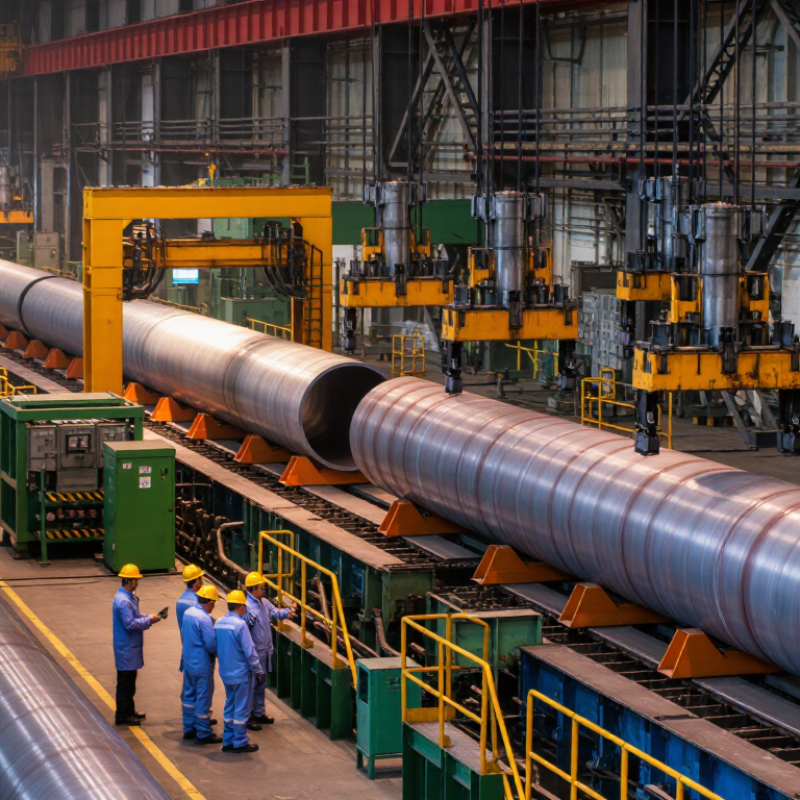
A pipe rolling mill should match your production role before you compare machine prices. Decide whether it will form welded tubes, reduce diameter, improve roundness, or support a complete line. Each role requires different tooling, drive power, and control accuracy. A mill designed for light structural tubing may struggle with thick-wall process pipes. That mismatch creates delays and unnecessary maintenance.
Start with the actual product range. Record material grades, outside diameters, wall thicknesses, coil widths, and target output. Then check the mill’s working range against those figures. In production reviews, I examine the forming stands, roll adjustment, motor capacity, and cooling layout. Small details matter. A rough roll surface can leave visible marks. Poor alignment can cause unstable weld tracking and repeated scrap.
Speed deserves careful judgment. Higher output sounds attractive, but it may reduce dimensional stability during frequent size changes. Ask for measured tolerances, changeover times, and trial-production records. Confirm how operators access rolls, sensors, and lubrication points. A reliable design should also provide clear alarms and usable maintenance instructions. I have seen equipment selected from impressive brochures, only to expose weaknesses during night shifts. That experience changed my view: published capacity is useful, but verified performance is more valuable. Leave room for future products, but do not pay for capability your workshop cannot support.
| Production Role | Suitable Mill Configuration | Typical Product Range | Representative Capability | Best-Fit Applications | Key Selection Check |
|---|---|---|---|---|---|
| High-volume welded pipe production | Continuous forming mill with roll forming, high-frequency welding, sizing, cutting, and online inspection. | Approximately 20–610 mm outside diameter; wall thickness commonly about 0.8–16 mm, depending on the line design. | Continuous production with line speeds commonly ranging from approximately 20 to 120 m/min, depending on diameter, thickness, steel grade, and finishing requirements. | Construction pipe, structural sections, water-service pipe, mechanical tubing, and general industrial products. | Confirm the required diameter-thickness combination, welding power, accumulator capacity, speed at the target size, and changeover time. |
| Small-diameter precision tubing | Multi-stand cold-forming mill with precision sizing, controlled welding, straightening, and optional drawing or annealing equipment. | Typically about 6–114 mm outside diameter, with thin-to-medium wall sections selected according to material and tolerance requirements. | Designed for stable dimensional control, repeatable weld quality, and tight outside-diameter and wall-thickness tolerances. | Automotive components, furniture tubing, heat-exchanger tubes, appliances, and precision mechanical parts. | Check tolerance requirements, weld-bead removal method, straightness, surface finish, tooling repeatability, and inspection frequency. |
| Large-diameter longitudinal pipe | Forming line using press forming or three-roll forming, followed by submerged arc welding, expansion, testing, and finishing. | Commonly about 406–1,422 mm outside diameter, with wall thickness often in the approximate range of 6–40 mm. | Batch-oriented production with high forming force, controlled seam alignment, ultrasonic inspection, hydrostatic testing, and end finishing. | Water transmission, piling, structural engineering, energy infrastructure, and large-scale industrial projects. | Evaluate maximum plate width and thickness, forming force, seam-welding procedure, pipe length, testing standards, and handling capacity. |
| Seamless pipe rolling | Rotary piercing and hot rolling line with plug or mandrel rolling, reheating, sizing, heat treatment, and nondestructive testing. | Typical commercial ranges may cover approximately 20–660 mm outside diameter, with wall thickness determined by the pass schedule and steel grade. | Suitable for hot working of carbon, alloy, and selected stainless steels; production capacity depends heavily on billet size, heating, and finishing equipment. | Boiler tubes, pressure-service pipe, line pipe, mechanical tubing, and high-temperature applications. | Verify billet dimensions, piercing ratio, maximum rolling load, temperature control, heat-treatment capability, and applicable product standards. |
| Stainless and alloy pipe production | Dedicated or flexible forming mill with corrosion-resistant tooling, controlled-atmosphere heat treatment, precision welding, and surface finishing. | Often about 10–600 mm outside diameter, depending on the alloy, wall thickness, surface specification, and forming process. | Requires stable forming conditions, low-contamination tooling, accurate temperature control, and reliable control of weld sensitization and surface defects. | Food processing, chemical processing, pharmaceutical equipment, architectural tubing, and heat-transfer systems. | Check material compatibility, tooling cleanliness, annealing atmosphere, pickling or polishing requirements, and surface roughness targets. |
| Flexible multi-size production | Quick-change roll-forming mill with cassette tooling, automatic pass-line adjustment, recipe control, and integrated quality monitoring. | Usually selected for a defined family of sizes rather than the full market range; a practical range may be about 20–219 mm outside diameter. | Shorter changeover time and improved repeatability, although the maximum speed and product range may be lower than those of a dedicated high-volume line. | Contract manufacturing, mixed-order production, service centers, and plants serving several end-use sectors. | Compare tooling investment, changeover duration, available storage space, recipe management, operator skill requirements, and utilization rate. |
| Heavy-wall or high-strength pipe | High-power forming and welding line with reinforced stands, robust drive systems, controlled cooling, and advanced nondestructive testing. | Commonly medium-to-large diameters with wall thicknesses from approximately 12 mm upward, subject to equipment and material limits. | Prioritizes forming force, seam penetration, dimensional stability, and defect detection rather than maximum line speed. | Structural supports, piling, pressure systems, industrial frames, and demanding infrastructure projects. | Confirm forming load, weld penetration capability, cooling capacity, edge preparation, straightening force, and test coverage. |
| Project-specific pipe mill | Engineered line combining forming, welding, heat treatment, coating, testing, end finishing, and material-handling modules. | Defined by the required product standard, diameter range, wall thickness, pipe length, steel grade, and annual production target. | Capability is optimized for the buyer’s product mix; a wider range normally increases tooling, handling, adjustment, and quality-control complexity. | Specialized infrastructure, energy projects, defense-related engineering, and custom industrial pipe orders. | Start with an approved product matrix, annual tonnage, operating shifts, quality standards, available floor space, utilities, and expansion plans. |
| Quality and automation requirements | Mill equipped with PLC or industrial control, automatic gauge control, laser or vision measurement, weld monitoring, and production data recording. | Applicable across welded and seamless lines; measurement range must cover the largest and smallest planned products. | Typical controls monitor outside diameter, wall thickness, line speed, temperature, weld condition, length, straightness, and traceability data. | Plants requiring consistent quality, reduced scrap, documented compliance, and repeatable production across multiple shifts. | Check sensor accuracy, calibration procedures, data retention, alarm handling, remote diagnostics, cybersecurity, and integration with laboratory testing. |
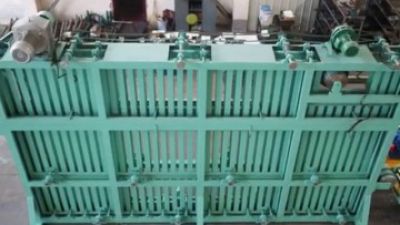
A high-frequency welded pipe making machine accumulator is a key component in continuous steel pipe production. Designed to store a substantial quantity of steel strip, it supplies the main forming and welding line with material while the strip head or tail is being prepared and welded. This buffer helps prevent frequent line stoppages, supports stable production speeds, and improves coordination between coil handling and pipe forming operations.
The need for dependable continuous-production equipment is reinforced by the scale of the steel industry. According to the World Steel Association’s *Short Range Outlook 2024–2025*, global steel demand was forecast to reach approximately 1.79 billion tonnes in 2024 and grow further in 2025. At this production level, even short interruptions can affect output, labor efficiency, and delivery schedules. A properly configured accumulator allows operators to maintain strip availability during coil changes and welding procedures, helping the main machine operate with fewer disruptions.
As a China-based factory and supplier, we focus on accumulator solutions designed for practical plant integration, reliable strip storage, and consistent material delivery. The equipment can be matched to production-line speed, strip width, thickness, and required storage capacity, enabling manufacturers to maintain a smoother workflow and meet production targets more efficiently.
Start with the pipe material, not the advertised production speed. Carbon steel, stainless steel, and aluminum require different forming forces. Aluminum also needs gentle handling and careful surface protection. Actual coil trials are essential.
Small chemistry changes can alter yield strength, ductility, and springback. These changes affect roll geometry, motor torque, and welding settings. Material certificates provide useful background data. However, actual coils reveal behavior more honestly.
Confirm the minimum and maximum outside diameters. A mill designed for 20-millimeter tubing may struggle with 100-millimeter pipe. Thin walls require controlled tension and accurate strip guidance. Thick walls need stronger stands, higher torque, and dependable cooling.
Run trials long enough to expose heat buildup and dimensional drift. Short samples can look excellent while hiding continuous-production problems. Check scratches, roundness, straightness, weld bead height, and wall variation. The attractive sample may be misleading.
Two-roll forming suits stable production and simple profiles. Three-roll systems provide better control during diameter or thickness changes. Cage forming can reduce deformation stress, but adjustment becomes more demanding. No method is perfect.
An inline line connects forming, welding, sizing, testing, and cutting. It saves handling time and floor space. Yet one failure can stop the complete line. Offline inspection or cutting offers more flexibility for mixed orders.
No. Speed must match material thickness, pipe diameter, cooling, cutting, and inspection capacity. A line rated at 80 meters per minute may run near 55 meters with thicker steel. Changeover losses can erase paper-based efficiency. I once underestimated this issue.
Request measured tolerance data instead of broad performance claims. Check roll-change time, bearing access, spare-roll storage, and calibration methods. Operator training, safety guarding, and documented procedures also matter. Flexible tooling can be more valuable than peak speed.
Choosing the best Pipe Rolling Mill begins with a clear understanding of its role in your production process and the capabilities required for your target output. Evaluate whether the mill can handle your pipe materials, diameter ranges, wall thicknesses, and expected production volume. Compare forming methods, line layouts, and operating speeds to find a configuration that balances efficiency, flexibility, and product quality. The right choice should also support precise dimensional control and consistent performance across different production requirements.
Automation, inspection systems, energy consumption, maintenance demands, and total operating costs are equally important. Advanced controls can improve repeatability, reduce material waste, and simplify production monitoring, while effective quality inspection helps identify defects at an early stage. Before making a decision, assess the supplier’s technical support, training, spare-parts availability, safety practices, and ability to provide future upgrades or expansion. A well-matched mill should deliver reliable productivity, manageable long-term costs, and room for your business to grow.