request to quote
Leave Your Message
0%

Picking out a Steel Pipe Making Machine isn’t just about comparing prices, honestly. You really need to make sure it fits your specific needs — stuff like the pipe diameter range, wall thickness, steel grade, and how much you actually plan to produce. For example, a machine designed for thin carbon steel might not handle thicker stainless steel very well. If it doesn’t, you could end up damaging rollers, facing more weld defects, and slowing down your entire process. That’s a headache nobody wants.

W. Edwards Deming, a manufacturing quality guru, once said, “Quality comes not from inspection, but from the improvement of the production process.” Honestly, that’s so true, especially when choosing a Steel Pipe Making Machine. It’s important to look beyond just specs — check things like forming accuracy, how stable the high-frequency welding is, the precision of cutting, and whether it has automatic controls. And don’t just go by what you see in brochures — ask about real changeover times, too. Little details can make a big difference. It’s also smart to ask for samples, maintenance records, and references from other factories similar to yours. A trustworthy supplier should be able to clearly explain things like motor power, roller materials, electrical parts, and how easy it is to get spare parts — and they shouldn’t hide behind confusing tech talk.

Another thing to consider is who’s actually operating the machine. Sometimes a fancy touchscreen interface might look impressive, but in reality, it could lead to mistakes, especially during late-night shifts. And when a weld line goes haywire at 2 a.m., you’ll want quick service support — that can save you tons of headaches. I’ve seen buyers get obsessed with speed, only to later regret not checking on tech support or total downtime costs. That’s a rough lesson, but it’s a reminder — no machine is perfect, and really, a careful evaluation can save you from a lot of avoidable trouble.

This guide, “7 Tips for Choosing a Steel Pipe Making Machine,” is all about helping you think through important factors before you seal the deal. From performance and durability to energy use, customization options, safety features, and long-term value — it’s all worth considering to make a smart choice that fits your needs.
7 Tips for Choosing a Steel Pipe Making Machine

Define Your Steel Pipe Production Requirements

Define Your Steel Pipe Production Requirements

Before choosing a steel pipe making machine, define the product precisely. World Steel Association data reports 1,888 million tonnes of crude steel production in 2023. That scale can mislead small and medium manufacturers. Start with the pipe’s outside diameter, wall thickness, length, steel grade, and surface condition. Then identify whether you need ERW, spiral-welded, or another forming process. Specify the required standards, such as ISO 3183 or ASTM A53, when your market demands them.

Production volume must be measurable. Record target tonnes per month, operating shifts, expected yield, and acceptable scrap rates. A machine rated for maximum speed may perform poorly during frequent size changes. Ask about tooling time, roll replacement, welding stability, and line speed at your actual thickness range. Real output matters more than brochure speed. Small details matter.

Energy and floor space also shape the decision. The International Energy Agency identifies energy efficiency as a major improvement area for the iron and steel sector. Measure available electrical capacity, compressed air, cooling water, material storage, and crane access. Include inspection equipment for weld quality and dimensional accuracy. A perfect forecast is impossible. Still, vague targets are expensive. Recheck your figures against customer orders, not optimism. One overlooked requirement, such as a narrow tolerance or short batch, can change the entire machine configuration.

7 Tips for Choosing a Steel Pipe Making Machine: Define Your Steel Pipe Production Requirements

Typical outside-diameter ranges by steel pipe manufacturing process

Before selecting a machine, define the pipe diameter, wall thickness, steel grade, production volume, welding method, and required dimensional accuracy. Seamless lines commonly serve smaller and medium diameters, ERW lines cover many general-purpose applications, while spiral welded lines are often selected for large-diameter pipes.

The ranges shown are typical industry production ranges in millimeters, not universal machine limits. Actual capabilities depend on equipment configuration, tooling, material grade, and applicable standards.

Compare Pipe Forming Technologies and Machine Types

7 Tips for Choosing a Steel Pipe Making Machine

Compare Pipe Forming Technologies and Machine Types

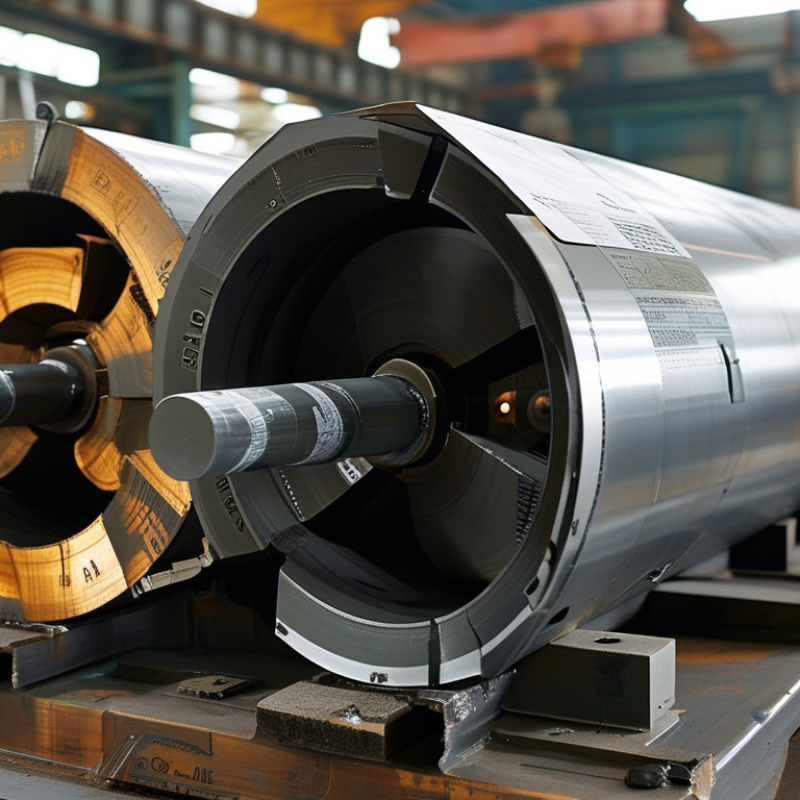
Choosing a steel pipe making machine starts with the forming technology. ERW lines suit many small and medium diameter pipes. They form strip steel through rollers, weld the seam, and cut pipes continuously. This process offers high speed and consistent dimensions. Spiral welded machines handle larger diameters with fewer strip-width restrictions. However, their slower forming cycle may affect delivery targets. Seamless pipe equipment uses piercing and hot rolling, requiring greater investment, energy, and process control.

Match the machine to your steel grade, pipe diameter, wall thickness, and tolerance requirements. Check the forming stands, sizing section, welding unit, flying saw, and inspection equipment. A line with quick roll changes can reduce downtime during frequent size changes. Automatic weld monitoring improves reliability, but it still needs skilled operators. Do not judge a machine by speed alone. A fast line may produce more scrap when alignment is poor.

I once saw a workshop choose a compact line without measuring its finished pipe range. The machine performed well, but later upgrades became expensive. Leave space for coil storage, maintenance access, cooling systems, and testing stations. Compare motor efficiency, spare-part availability, control-system training, and technical support. Ask for verified production data on similar steel grades. Real factory references matter more than impressive brochures. Some specifications remain unclear until trial production begins.

7 Tips for Choosing a Steel Pipe Making Machine - Compare Pipe Forming Technologies and Machine Types

Tip Pipe-Making Technology / Machine Type Typical Product Range Typical Production Characteristics Main Advantages Main Limitations Best Selection Guidance
1. Define the required pipe size and wall thickness first High-frequency electric resistance welding (ERW) pipe mill Commonly about 20–630 mm outside diameter, depending on the mill; light to medium wall thicknesses are typical. Continuous strip forming and high-frequency welding; line speed often ranges from approximately 20–120 m/min, depending on size, material, and quality requirements. High productivity, relatively compact layout, good dimensional repeatability, and efficient material utilization. Very large diameters and heavy wall sections may require a different process; weld quality depends strongly on strip preparation, heat control, and inspection. Choose ERW when the product range is mainly small- to medium-diameter structural, mechanical, water, or general-purpose pipe.
2. Match the forming process to the target diameter Spiral submerged arc welded (SSAW) pipe machine Commonly about 219–3,000 mm outside diameter, with wall thickness frequently in the approximately 5–25 mm range. Steel strip is formed helically and welded, normally using submerged arc welding; production speed is generally lower than small-diameter ERW lines. One production line can cover a comparatively broad diameter range by adjusting forming conditions and strip width. The spiral weld is longer than a longitudinal weld, and strict control is needed for alignment, weld geometry, and non-destructive testing. Select SSAW for large-diameter water transmission, piling, structural, and low- to medium-pressure applications where flexibility in diameter is valuable.
3. Consider heavy-wall and high-integrity requirements Longitudinal submerged arc welded (LSAW) pipe forming line Often used for approximately 406–1,422 mm outside diameter, with medium to heavy wall thicknesses; actual limits depend on the forming press and welding system. Plate is formed using U-ing and O-ing presses or equivalent forming equipment, followed by longitudinal submerged arc welding. Suitable for thick-wall pipe, demanding dimensional control, and applications requiring extensive weld inspection and traceability. Higher equipment cost, larger floor-space requirements, slower production cycles, and more handling than many continuous strip mills. Use LSAW when heavy wall, controlled plate properties, strict specifications, or large-diameter transmission-pipe requirements are more important than maximum throughput.
4. Decide whether a seamless process is truly necessary Seamless pipe production line with rotary piercing and elongation equipment Commonly produces hot-finished seamless pipe in a broad range, often from roughly 20 mm to more than 400 mm outside diameter. Solid round billets are heated, pierced, elongated, sized, and heat-treated as required; the process is generally more energy-intensive than welded production. No longitudinal weld seam and strong suitability for many pressure, mechanical, and high-temperature service applications. High capital investment, greater energy consumption, more complex process control, and usually higher production cost. Choose seamless equipment only when the applicable standard, service conditions, fatigue requirements, or customer specification justify the additional investment.
5. Evaluate material compatibility and surface quality Stainless-steel or high-alloy tube mill with precision forming and welding controls Frequently used for small- and medium-diameter tubes, with size capability determined by the tooling set and material grade. Requires controlled strip tension, clean forming rolls, stable welding energy, and often online bead removal or surface finishing. Can produce corrosion-resistant, sanitary, decorative, and precision tubes with controlled appearance and dimensional accuracy. Alloy materials can be sensitive to contamination, heat input, roll marking, and weld discoloration; tooling and maintenance standards are higher. Specify material grades, surface finish, weld method, bead treatment, and cleaning requirements before approving the machine configuration.
6. Compare automation, changeover time, and actual output Quick-change ERW or tube mill with automated sizing and cut-off Best suited to manufacturers producing multiple sizes from the same material family and requiring frequent product changes. Features may include motorized roll adjustment, automatic width or diameter settings, flying or cold saw cut-off, and production data monitoring. Reduces manual adjustment, improves repeatability, and can increase available production time when changeovers are frequent. Higher initial cost and greater dependence on sensors, drives, control software, and operator training. Compare guaranteed output using saleable tonnes per hour, not only the maximum line speed shown in a technical quotation.
7. Verify quality control, maintenance, and lifecycle cost Pipe mill with integrated inspection and finishing equipment Applicable to welded or seamless lines, depending on the required inspection plan and product standard. Typical systems may include weld monitoring, ultrasonic or eddy-current testing, dimensional measurement, hydrostatic testing, end facing, threading, and coating. Improves traceability, reduces defective output, and supports compliance with relevant national or international pipe standards. Inspection and finishing equipment can add substantial capital cost, floor space, calibration work, and maintenance requirements. Assess total cost of ownership: tooling, energy, consumables, spare parts, calibration, operator skill, downtime, safety systems, and after-sales technical support.

Note: The size, thickness, and speed ranges are indicative industry ranges rather than universal machine limits. Final capability depends on steel grade, strip or plate width, welding method, applicable standard, tooling design, inspection requirements, and product mix.

Check Material Compatibility and Production Capacity

Choosing a Steel Tube Making Machine starts with material compatibility. Carbon steel, stainless steel, and galvanized strip behave differently during forming and welding. Confirm the machine’s supported grades, thickness range, width range, and tube diameter before comparing prices. Roll tooling must match the material’s yield strength. Stainless steel may also need cleaner contact surfaces and tighter heat control.

Check applicable requirements, such as ASTM or ISO specifications, for tube dimensions and weld quality. In field evaluations, small mismatches often create edge cracks, scratches, or unstable weld seams. Surface finish matters. A polished strip can still leave marks when rolls are poorly aligned. Fit matters.

Production capacity needs a practical calculation, not only a headline speed. The World Steel Association reported global crude steel production of about 1.88 billion tonnes in 2024. This enormous output supports strong demand, but it does not mean every line should run at maximum speed. Compare rated speed with usable speed after coil changes, tooling adjustments, maintenance, and rejected tubes. A line advertised at 80 meters per minute may deliver much less in daily operation.

Ask for output figures using your actual grade, thickness, and tube size. Request data on changeover time, weld stability, scrap rate, and continuous operating hours. Capacity is not speed. A common mistake is choosing a faster line that cannot handle your material consistently. I would also test sample coils before purchase. The test may reveal an uncomfortable truth: the cheaper machine may require more downtime.

Evaluate Machine Quality, Precision, and Automation

Choosing a steel pipe making machine requires more than comparing prices. Study machine quality, precision, and automation together. A strong frame should resist vibration during high-speed forming. Inspect welded joints, rollers, bearings, and electrical cabinets closely. Small weaknesses become expensive problems later.

Tip 1: Ask for measurable quality evidence. Review material certificates, inspection records, and factory testing procedures. During a site visit, check whether surfaces remain stable after continuous operation. Look for clean cable routing and accessible maintenance points. These details often reveal the maker’s engineering discipline.

Tip 2: Test precision under realistic conditions. Run different pipe sizes through the Steel Pipe Making Process, not only one sample. Measure diameter, wall alignment, weld position, and length tolerance. Use calibrated tools, and request recorded results. A machine may appear accurate during a short demonstration. That can be misleading.

Tip 3: Evaluate automation with practical judgment. Automatic sizing, welding control, cutting, and fault alarms can reduce operator errors. However, complicated software may slow production when troubleshooting is needed. Ask how quickly settings can be changed between orders. Confirm whether operators receive documented training and technical support. I have seen impressive systems become underused because the interface felt confusing. Automation should simplify decisions, not hide them.

Review Energy Use, Maintenance, and Operating Costs

When selecting a Pipe Making Machine, treat energy as a production cost, not brochure efficiency. Ask for measured kWh per tonne at your target diameter, wall thickness, and line speed. Request idle-load readings too; they expose hidden consumption during changeovers. The U.S. Department of Energy reports that motor-driven systems use more than half of industrial electricity. Drive efficiency, motor sizing, and standby controls therefore matter. Compare actual load profiles, not only rated power. A smaller motor is not automatically efficient.

Inspect forming stands, weld heads, bearings, and cooling circuits during a trial. Ask how quickly common wear parts can be changed. The DOE Operations & Maintenance Best Practices Guide reports that predictive maintenance can reduce costs by 8–12% compared with reactive maintenance. Install vibration, temperature, and current monitoring where practical. Keep lubrication intervals visible beside the machine. This sounds basic. It is often missed. ISO 55001 principles can connect maintenance records with asset risk, downtime, and replacement decisions.

Calculate operating cost per tonne, including electricity, consumables, labor, coolant, scrap, planned service, and unplanned downtime. Energy prices vary, so test several tariff scenarios. Include compressed-air leakage and welding-gas losses. The International Energy Agency identifies industrial efficiency as a major route to lower energy demand in Energy Efficiency 2023. Ask for service response times and spare-part lead times in writing. A payback model may look precise, yet interruptions remain uncertain. Challenge your assumptions after a 30-day trial. The cheapest quote can age badly.

Assess Supplier Expertise, Support, and Spare Parts

7 Tips for Choosing a Steel Pipe Making Machine

Assess Supplier Expertise, Support, and Spare Parts

A machine’s price rarely shows its real operating cost. Supplier expertise matters more during installation, adjustment, and unexpected production problems. Ask how many similar pipe projects the supplier has completed. Request evidence, such as production records, test videos, or customer references. A competent supplier should explain forming, welding, sizing, and cutting settings in practical terms.

Inspect the supplier’s technical team before signing. Can engineers visit your factory? Do they provide commissioning plans, operator training, and troubleshooting procedures? Ask for response times during urgent failures. A phone promise is not enough. Written service terms are safer. I once underestimated remote support and lost several production hours because instructions were unclear. That mistake changed how I evaluate suppliers.

Spare parts deserve equal attention. Request a detailed list for rollers, bearings, sensors, welding components, seals, and electrical modules. Confirm material specifications and compatibility with your exact machine configuration. Check whether critical parts are stocked locally or shipped from another country. Ask for normal lead times, emergency delivery options, and clear part numbers. Keep essential consumables on site. Not every supplier recommends this, but downtime makes the lesson expensive. Manuals should include diagrams, maintenance intervals, lubrication points, and replacement procedures. A reliable supplier also records machine changes, because small modifications can affect future repairs.

Verify Safety Standards, Installation, and Future Upgrades

Choosing a Galvanized Pipe Making Machine requires more than checking output speed. Safety must be verified before production targets. The International Labour Organization reported 2.93 million work-related deaths and 395 million non-fatal injuries annually in its 2023 estimates. A machine’s emergency stops, fixed guards, interlocks, and electrical panels deserve documented inspection.

Ask for risk-assessment records based on ISO 12100 and control-system evidence aligned with ISO 13849. IEC 60204-1 is also relevant to machine electrical safety. Do not accept a certificate without checking its scope, test date, and issuing body. During installation, leave clear access around the forming line, galvanizing section, and maintenance points. Mark hot surfaces visibly. Confirm ventilation, grounding, noise control, and lockout procedures with the installer and your safety team.

Future upgrades should be planned before the foundation is poured. Reserve cabinet space, network capacity, and physical room for sensors, inspection cameras, or automatic thickness measurement. The International Energy Agency notes that industrial motor systems account for a significant share of industrial electricity use, so efficient drives can influence long-term operating costs. Still, efficiency claims need measured data, not attractive brochures. I would also question my first assumption: a faster line is not always a better investment. Spare-part availability, software access, training, and upgrade compatibility may matter more after the first difficult maintenance shift. Get everything in writing.

Carbon Steel Pipe Machines: Market Outlook & Supplier Guide from Grand View Research and Mordor Intelligence

Global demand for steel pipes continues to expand alongside construction, infrastructure, energy, and industrial manufacturing. Recent market outlooks from major research firms project the steel pipe sector to grow at approximately 4–6% annually through 2030, while manufacturers are increasingly investing in automated forming and sizing equipment to improve consistency and reduce labor dependence. This trend is particularly relevant for carbon steel pipe producers seeking flexible solutions for smaller-diameter products.

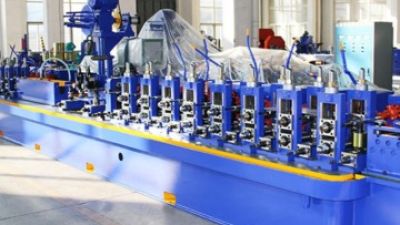
The MG series Pipe Making Machine is designed to manufacture both round and square steel pipes with pipe sizes ranging from Ф7 to 25 mm and thicknesses from 0.3 to 1.0 mm. Its PLC-controlled system supports automatic feeding, forming, sizing, and cutting, helping streamline production and enhance dimensional accuracy. This configuration is suitable for manufacturers serving diverse applications while maintaining efficient material handling and repeatable output.

Built in China, the machine includes a one-year warranty, with customized spare-parts options available to support different operating requirements. Machine colors can also be tailored to customer preferences. With its compact product range, automated controls, and adaptable configuration, the MG series offers a practical option for businesses evaluating equipment upgrades in line with the steel pipe market’s projected expansion.

FAQS

: What information should I define before choosing a steel pipe machine?

: Define outside diameter, wall thickness, length, steel grade, and surface condition. Specify the forming process and required dimensional standards. Be precise.

Which forming process suits different pipe requirements?

ERW lines suit many small and medium diameter pipes. Spiral-welded equipment supports larger diameters and wider production flexibility. Seamless equipment requires higher investment, energy, and process control. The cheapest option may not fit your product range.

How should I calculate realistic production capacity?

Record monthly tonnes, operating shifts, yield, scrap, and actual working hours. Include coil changes, tooling adjustments, maintenance, and rejected pipes. Rated speed is not daily output. Real output matters more.

Why should I test sample coils before purchasing?

Sample testing reveals weld instability, edge cracks, scratches, and alignment problems. Use your actual steel grade, thickness, and tube size during testing. The result may be uncomfortable. A cheaper machine may create longer downtime.

What material compatibility details require careful checking?

Confirm supported steel grades, thicknesses, strip widths, and finished tube diameters. Carbon steel, stainless steel, and galvanized strip behave differently during forming. Roll tooling must match the material’s yield strength. Fit matters.

Which machine components deserve close inspection?

Review forming stands, sizing rolls, welding equipment, flying saws, and inspection tools. Check weld monitoring, dimensional accuracy, and roll-change arrangements. Poor alignment can increase scrap on a fast line. Speed alone proves little.

What factory conditions must the machine support?

Measure electrical capacity, compressed air, cooling water, crane access, and floor space. Reserve areas for coil storage, maintenance, testing, and finished pipes. Leave room for repairs. Crowded layouts create practical delays.

How can I reduce downtime during multiple size changes?

Ask for verified changeover times and quick roll-replacement procedures. Check spare-part availability, operator training, and technical support. Compare continuous operating hours using similar materials. Some details appear only during trials.

Which questions should I ask about product quality?

Request data on weld stability, dimensional tolerance, surface marks, and scrap rates. Confirm inspection methods for weld quality and finished dimensions. A polished strip can still receive scratches from misaligned rolls. Small defects matter.

Conclusion

Choosing the right Steel Pipe Making Machine begins with clearly defining your production requirements, including pipe diameter, wall thickness, material types, output targets, and expected product applications. Compare suitable forming technologies and machine configurations to ensure they match your manufacturing process. Check whether the equipment can handle your raw materials consistently and deliver the required production capacity. It is also important to evaluate machine quality, dimensional precision, control systems, and automation features, as these directly affect productivity and product consistency.

Beyond initial performance, review energy consumption, maintenance needs, operating costs, and the availability of replacement parts. A reliable supplier should offer strong technical expertise, responsive support, clear documentation, and practical training. Before purchasing, verify that the machine includes appropriate safety features and complies with applicable standards. Confirm that installation, testing, and operator guidance are provided, and consider whether the system can be upgraded in the future to support changing production demands.
Sophia

Sophia

Sophia is a seasoned marketing professional at Yangzhou Mivi Machinery Manufacturing, bringing over 20 years of industry expertise to the table. Passionate about the tube mill sector, she plays a pivotal role in showcasing the company’s innovative products and services to a global audience. With a......
Previous Best Pipe Mill in China for Global Buyers?