


Hot Products
0102030405
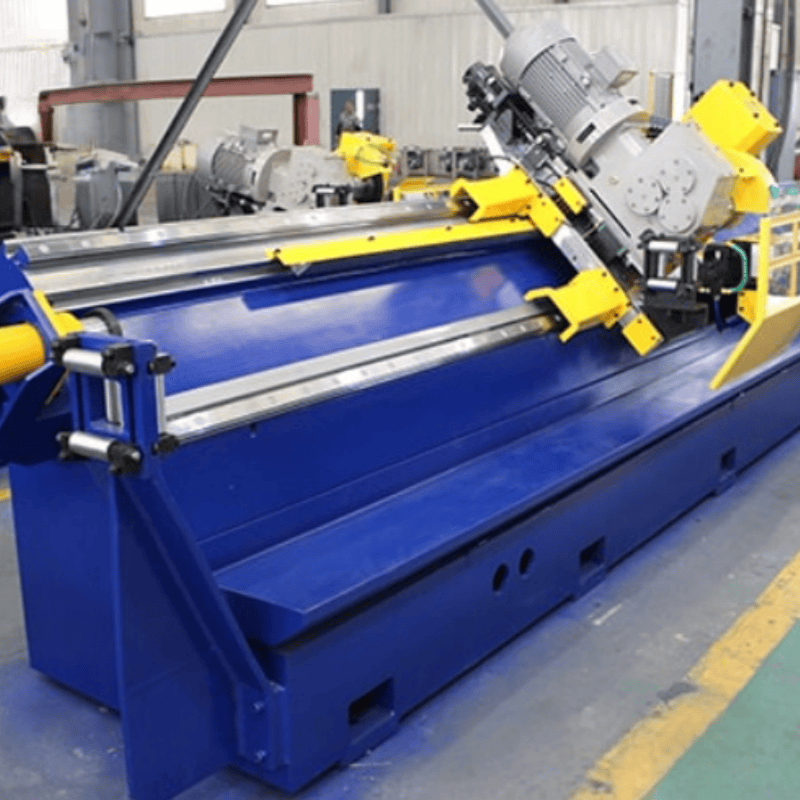
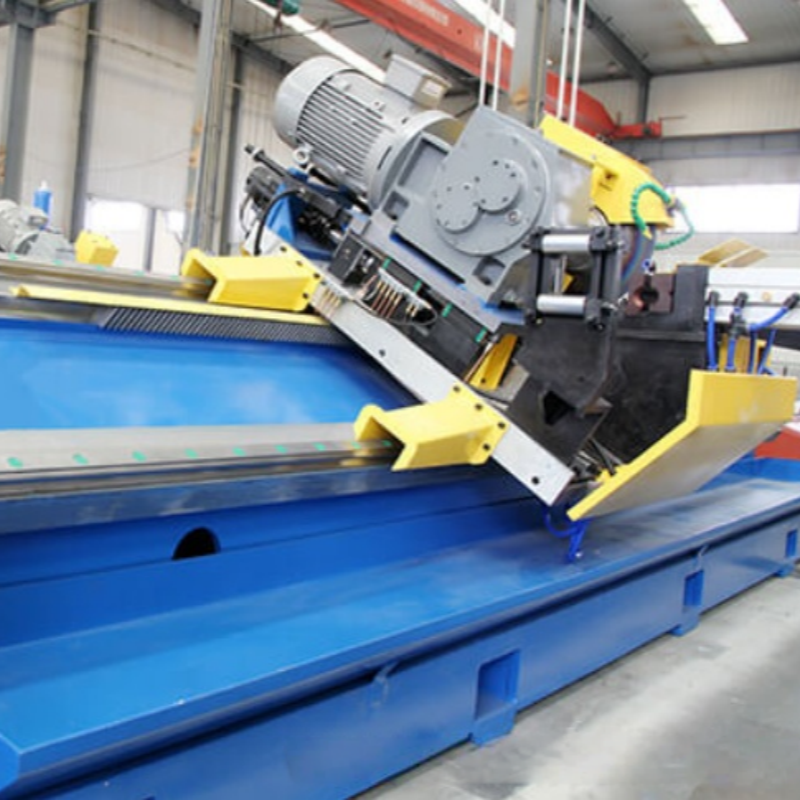
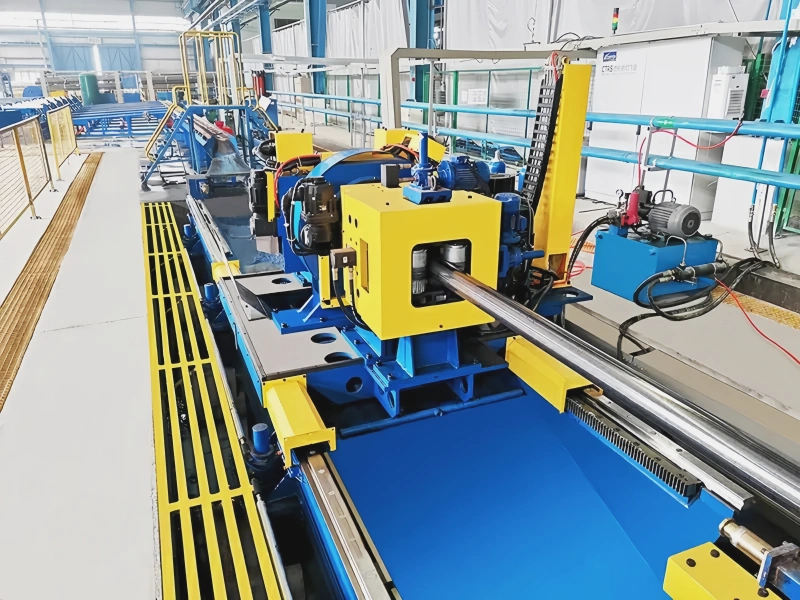
High Frequency Welded ERW Tube Mill Cold Saw - Reliable China Suppliers and Factory for Precision Cutting Solutions
Product Description
Cold cutting saw is based on the principle of cold milling. Carbide saw blades are used to cut materials at a controllable speed and feed rate, similar to milling in mechanical processing. Using servo systems to achieve synchronous movement of the saw blades and steel pipe. In the cutting process, the temperature is low and there is no heat-affect zone, which avoid material changes. The saw blades has a long life, which can be reused. Also energy consumption is reduced more over 50%. With no burrs inside and outside, the incision is smooth. And this pipe can be directly used in high precision scenes, such as automotive oil pipe, medical equipment pipe, eliminating subsequent processing. Also dry cut and trace cooling methods reduce the pollution; no sparks, no noises(less than 80 dB), the saw blades is evenly stressed and has low risk of breakage.
The Advantage of Cold Saw
-
Using servo systems to achieve synchronous movement of the saw blades and steel pipe. In the cutting process, the temperature is low and there is no heat-affect zone, which avoid material changes.
-
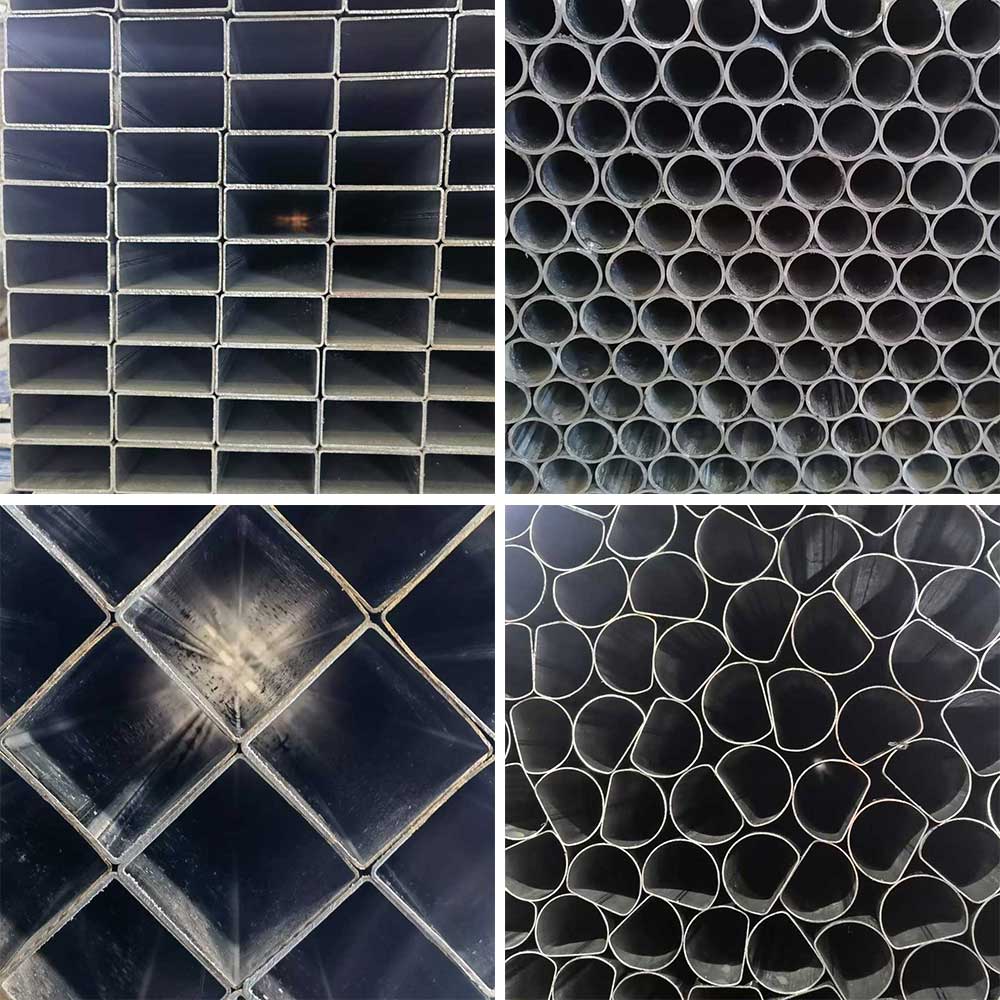 Compared to flying saw, the incision is smooth with no burrs inside and outside. And this pipe can be directly used in high precision scenes, such as automotive oil pipe, medical equipment pipe, eliminating subsequent processing.
-
Also dry cut and trace cooling methods reduce the pollution; no sparks, no noises(less than 80 dB), the saw blades is evenly stressed and has low risk of breakage.
The Difference Between Flying Saw and Cold Saw
| Comparison Dimensions | Computerized Saw (Hot Cutting Saw) | Cold Cutting Saw |
|---|---|---|
| Core Principle: Friction Cutting | A high-speed rotating saw blade (mostly tungsten steel) generates high temperatures through friction, "burning" through the welded pipe. | Cold milling: Using a lower speed and higher feed rate, metal is cut off like a milling cutter, resulting in a lower temperature rise during the process. |
| Cutting effect | The end face has oxidation discoloration (blue-purple), large burrs, and the tube opening is easily deformed. | The end face is flat and smooth, burr-free, and does not deform, and usually requires no secondary processing. |
| Process characteristics | High speed, high temperature, large sparks, loud noise, and smoke. | Low speed, low temperature, virtually no sparks, low noise, more environmentally friendly and safer |
| Equipment and Costs | The structure is relatively simple, and the initial investment is low; the saw blade has a low cost but wears out quickly. | The equipment is complex (servo-controlled) and requires a high initial investment; specialized saw blades are expensive but have a long lifespan and can be resharpened multiple times. |
| Production efficiency | While it offers fast single-cutting speed, subsequent deburring and other processes are required, impacting overall efficiency. | While the single cutting time is slightly longer, the high quality of the cut eliminates the need for subsequent processes, resulting in high overall efficiency. |
How to Choose Flying Saw?
In summary, the choice between these two types of equipment mainly depends on your production needs and requirements for pipe quality:

In short, if you prioritize pipe quality and long-term benefits, a cold saw should be used; if you prioritize the lowest initial investment and don't have high requirements for the appearance of the pipe ends, a computer-controlled saw remains an economical choice.
If you can provide the specific production materials (such as carbon steel or stainless steel) and the specific requirements for the cut, I can provide you with a more detailed analysis.
If you can provide the specific production materials (such as carbon steel or stainless steel) and the specific requirements for the cut, I can provide you with a more detailed analysis.
Frequently Asked Questions (FAQ)
1. What is the cutting principle of a cold cutting saw?
The cold cutting saw operates on the principle of cold milling. Carbide saw blades cut through the pipe at a controlled speed and feed rate using servo systems for synchronous movement, generating low heat without creating a heat-affected zone or altering material properties.
2. Does a cold cutting saw produce burrs or require secondary processing?
No, cold cutting saws produce smooth, flat incisions with no internal or external burrs and zero tube deformation, eliminating subsequent deburring and secondary processing.
3. In what applications can pipes cut by cold saws be directly used?
Due to the precise, burr-free end faces, the cut pipes are ready for high-precision scenarios including automotive oil pipes and medical equipment piping.
4. How does cold saw cutting improve workshop safety and environmental protection?
It uses dry cutting and trace cooling methods to lower pollution, produces no sparks or smoke, maintains low noise levels below 80 dB, and lowers energy consumption by more than 50%.
5. How does the blade life and cost compare between cold saws and friction saws?
Computerized friction saw blades are low-cost but wear out quickly. Cold saw carbide blades have a higher initial cost but feature an evenly stressed cut, low breakage risk, long working life, and can be resharpened and reused multiple times.
6. How should I choose between a cold cutting saw and a computerized flying saw?
Choose a cold saw if you prioritize high pipe quality, clean end faces, and long-term production benefits. Opt for a computerized friction saw if your priority is minimal initial equipment investment with less stringent pipe end appearance requirements.
Inquire Now!
For inquiries about our products or pricelist, please leave your email to us and we will be in touch within 24 hours.