


 Tube Mill Consumables: Inspection & Replacement Guide


Ferrite Rod for Tube Mills: Types, Benefits, Wear Signs and Selection
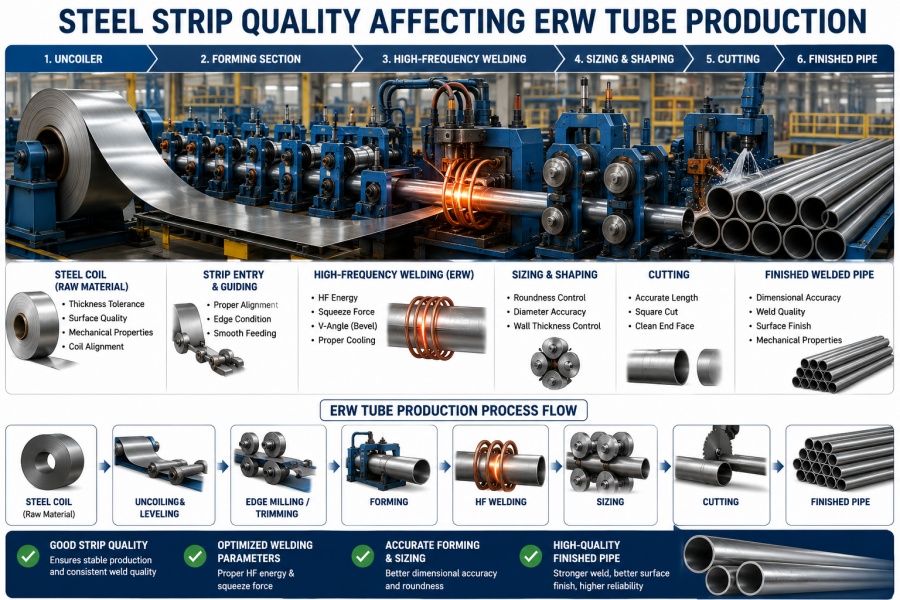
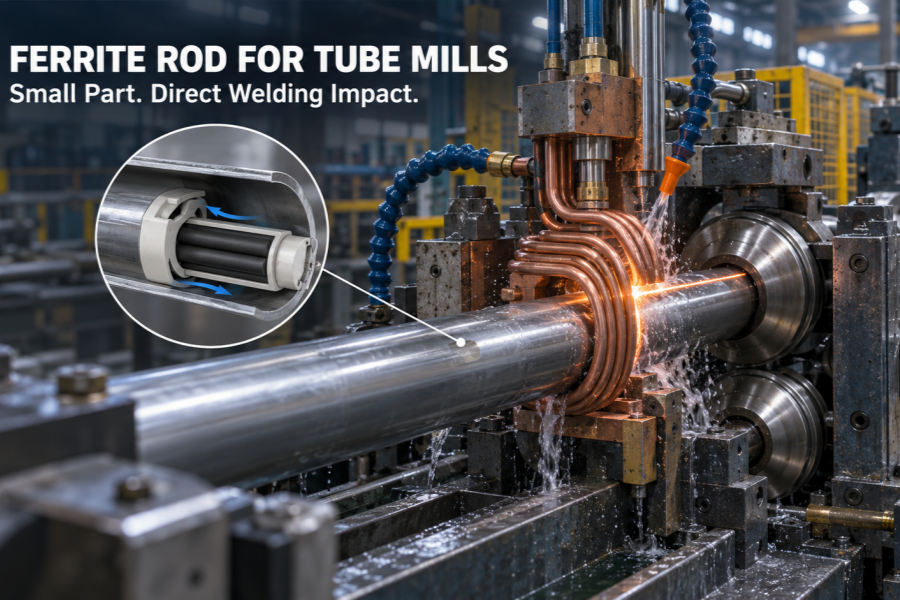
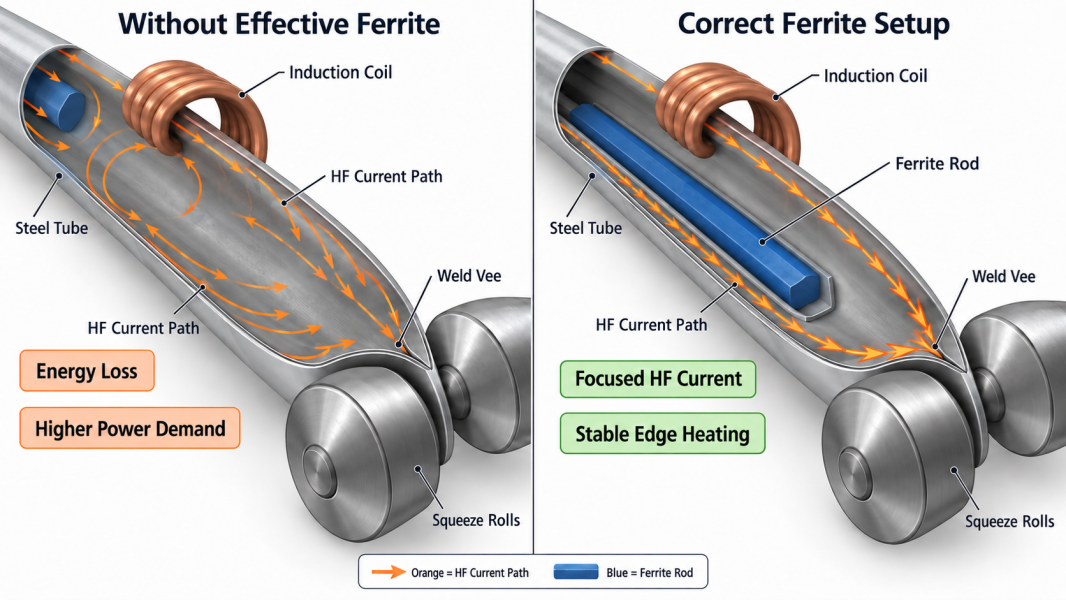
A ferrite rod improves HF welding efficiency by increasing impedance along the inside of the open tube and helping guide more high-frequency current toward the weld vee. When its material, size, position and cooling condition match the ERW tube mill, less energy is wasted in unwanted current paths. The result is a more stable welding process, a wider adjustment window and, in many cases, lower power demand at the same production speed.
For a purchaser, however, knowing how a ferrite rod works is only the beginning. The harder question is whether a particular rod will perform consistently inside the existing impeder.
Two ferrite rods may look almost identical on a quotation. Their performance on the mill can be very different.
Why Can a Cheap Ferrite Rod Cost More in Production?
The unit price is easy to compare. The operating cost is not.
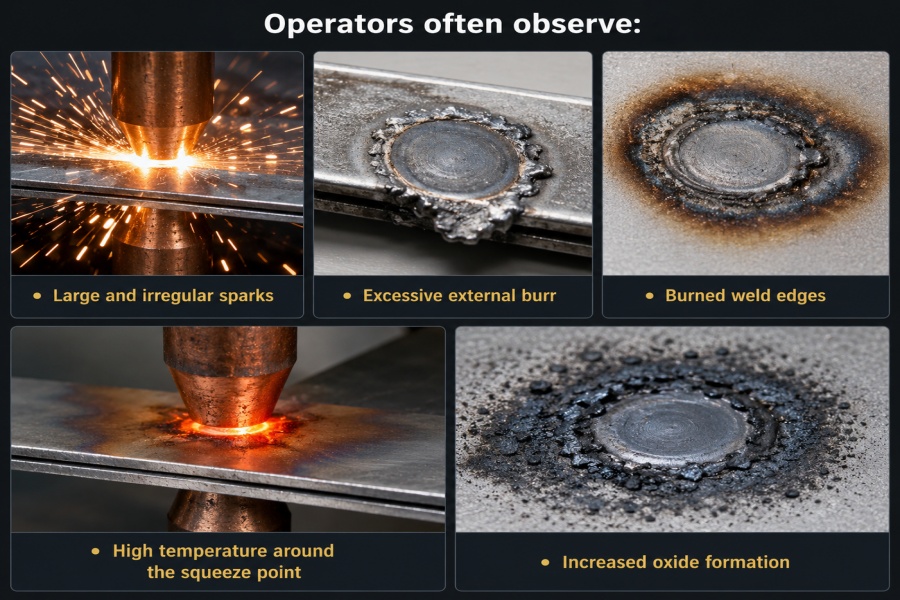
An unsuitable ferrite rod may still produce a welded tube, so the problem is not always obvious during the first shift. Operators may gradually increase HF power to maintain the weld temperature. They may reduce the line speed when the seam becomes unstable or make frequent adjustments whenever the strip condition changes.
Production continues, but efficiency has already been lost.
The true cost can include additional electricity, slower output, more setup time and a higher risk of weld defects. If the ferrite cracks or overheats early, there is also the cost of replacing it during production.
This is why purchasing decisions should not be based only on price per piece.
A ferrite rod that costs slightly less but requires more power every day may be the more expensive option. The same applies to a rod with poor batch consistency. If one delivery performs well and the next behaves differently under the same settings, operators have to troubleshoot a process that should have remained stable.
How Does a Ferrite Rod Improve HF Welding Efficiency?
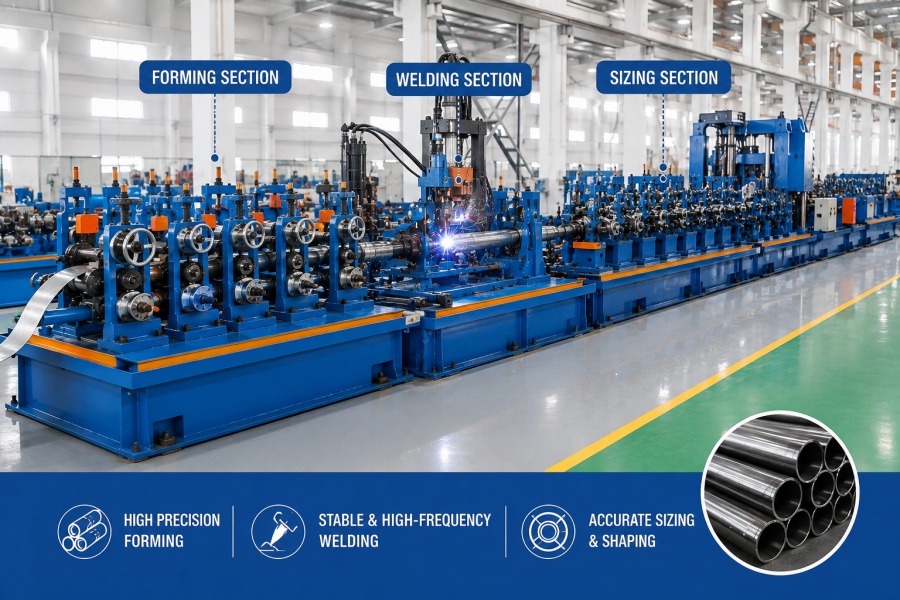
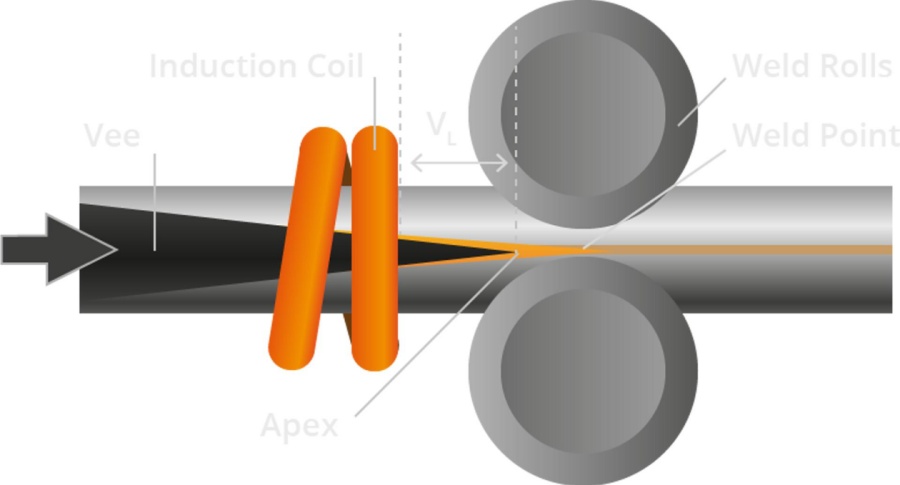
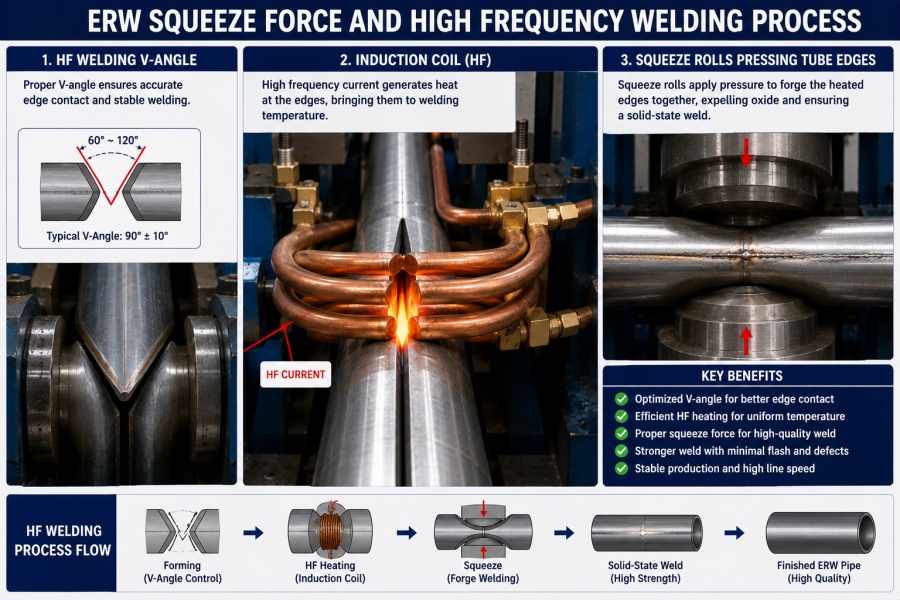
During HF induction welding, current naturally travels along the tube surfaces. The ferrite inside the impeder increases the impedance of an unwanted internal current path and helps concentrate the useful current around the strip edges approaching the weld vee.
This allows the edges to reach the welding temperature more efficiently before the squeeze rolls bring them together.
The ferrite rod does not work alone. Its performance depends on the complete welding arrangement:
-
Ferrite material and magnetic properties
-
Effective ferrite length
-
Rod diameter and shape
-
Impeder casing
-
PTFE tube
-
Cooling-water flow
-
Induction-coil position
-
Weld-vee geometry
-
Mill speed and HF power
A high-quality rod cannot compensate for a blocked cooling passage or an incorrectly positioned impeder. Likewise, replacing the ferrite may not solve an unstable weld if the induction coil is damaged or the strip edges are entering the welding section incorrectly.
Purchasers should therefore treat the ferrite rod as part of the HF welding system rather than as an isolated ceramic component.
Which Type of Ferrite Rod Should You Select?
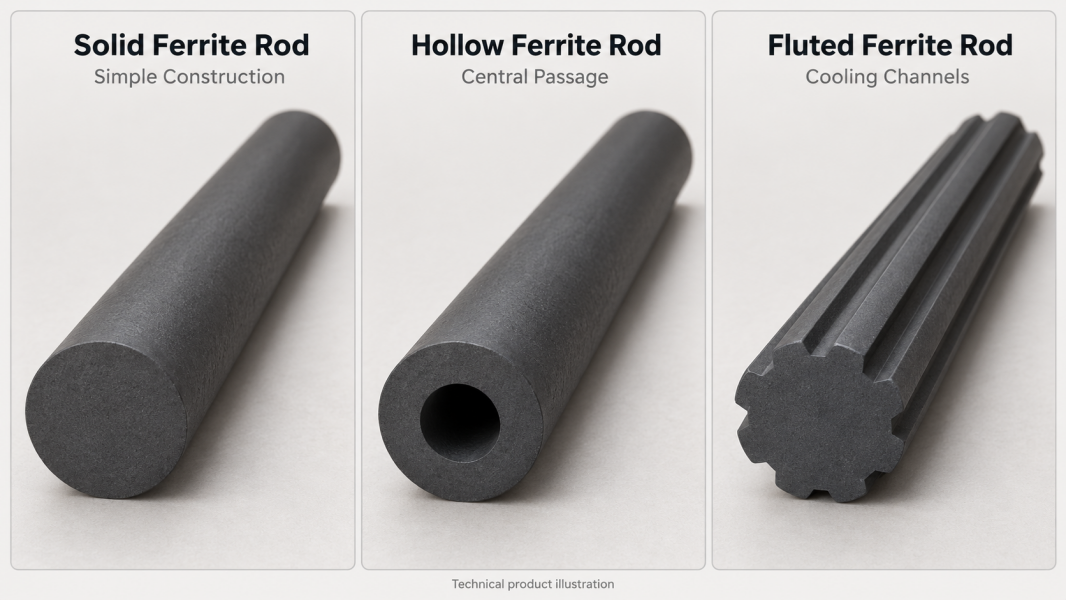
Ferrite rods for ERW tube mills are generally supplied in solid, hollow or fluted forms. Each design serves a different combination of space, cooling and assembly requirements.
| Ferrite type | General characteristic | What the purchaser should confirm |
|---|---|---|
| Solid | Simple construction with no central passage | Available space, cooling route and required magnetic cross-section |
| Hollow | Central bore can support particular cooling or assembly designs | Inside diameter, outside diameter and compatibility with the PTFE tube |
| Fluted | External grooves provide additional coolant paths and exposed surface area | Groove design, casing clearance and coolant circulation |
Send a sample when measurements are uncertain.
There is no universal “best” type.
A hollow ferrite is not automatically better than a solid one, and a larger rod is not always more efficient. The correct choice depends on the pipe diameter, wall thickness, steel grade, production speed, welding frequency, available HF power and internal space within the formed tube.
Existing impeder construction is especially important. A ferrite rod that is only slightly too large can restrict cooling or damage the casing during assembly. One that is too small may fail to provide the expected magnetic effect.
“Almost the same size” is not a safe purchasing specification.
What Are the Early Signs of Ferrite Rod Wear or Damage?
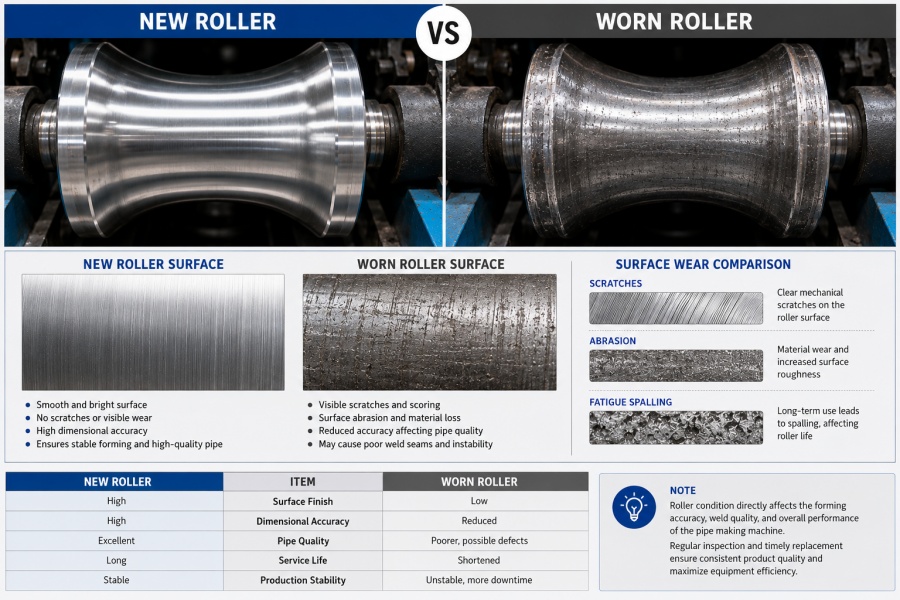
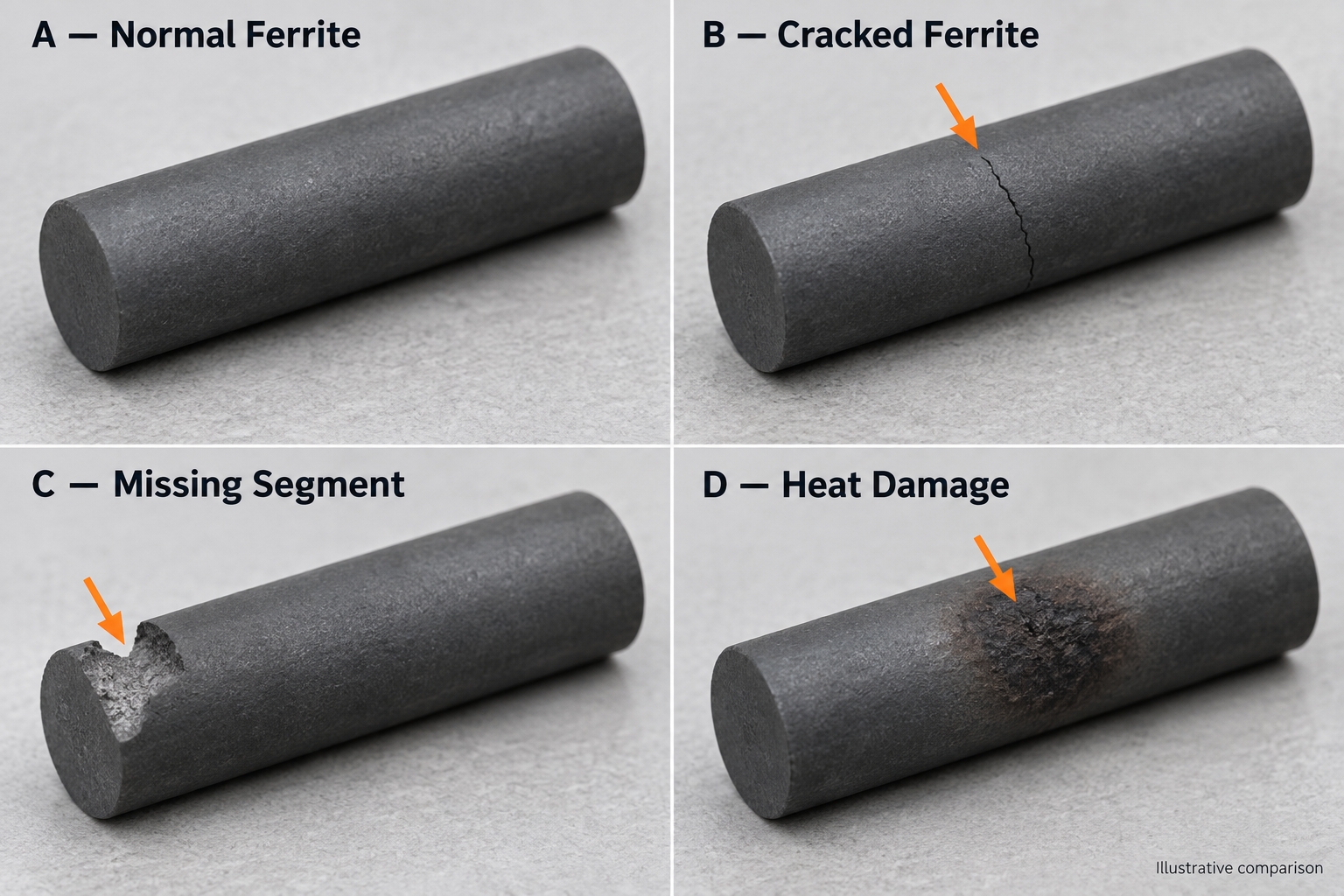
Ferrite is a brittle ceramic material. It can be damaged during transportation, unpacking, installation or impeder maintenance, even before it returns to the welding line.
A completely broken rod is easy to find. Gradual performance loss is harder to recognize.
Possible warning signs include:
-
HF power rising for the same pipe specification and speed
-
More frequent power adjustments during a production run
-
A narrower stable welding window
-
Unexplained overheating or underheating
-
Reduced production speed
-
Cracks along the ferrite body
-
Missing or chipped segments
-
Abnormal discoloration or local surface damage
-
Service life becoming shorter than earlier batches
One warning sign does not prove that the ferrite is the root cause. Rising power demand can also come from coil condition, impeder position, cooling problems or changes in the raw material.
The useful approach is comparison. Check the current power, speed and cooling condition against a stable production record for the same tube specification. Then inspect the ferrite and the rest of the impeder assembly together.
If a new rod fails much earlier than expected, do not immediately install another one and restart. Look for restricted water flow, rough handling, insufficient internal support, incorrect sizing or contact with the moving tube. Otherwise, the replacement may develop the same damage.
What Information Should a Purchaser Send to the Supplier?
A serious supplier should ask for more than the required quantity.
Before ordering a ferrite rod for HF tube welding, prepare the following information:
-
Tube outside diameter and wall thickness
-
Steel grade or material type
-
Main product range
-
Normal and maximum line speed
-
HF welder power and operating frequency
-
Current ferrite length, diameter and shape
-
Solid, hollow or fluted construction
-
Impeder casing dimensions
-
PTFE tube dimensions
-
Cooling method
-
Drawings or clear photos of the existing assembly
If the current ferrite performs well, sending an undamaged sample is often more useful than sending measurements alone. It allows the supplier to compare dimensions, construction and other relevant characteristics before recommending a replacement.
For a new project, provide the expected production range rather than only one pipe size. A supplier needs to understand which sizes will run most often and which ones are occasional.
How Should Buyers Evaluate Ferrite Rod Quality?
Appearance matters, but it is not enough.
Check dimensional consistency, surface condition, straightness and packaging. Ask how the supplier controls batch-to-batch quality and whether the recommended material is suitable for the operating conditions of your mill.
Packaging deserves attention because ferrite rods can crack during transport. Each rod should be protected from impact and movement. A package that looks undamaged on the outside may still contain chipped pieces if the rods were allowed to strike one another.
For initial cooperation, a controlled trial order is often more useful than committing to a large quantity immediately. Record HF power, production speed, cooling condition, service time and the reason for replacement. These figures give the purchasing team a practical basis for comparing suppliers.
Choose Stable Production, Not Just a Replacement Part
A ferrite rod is small compared with the rest of an ERW tube mill, yet its condition can influence welding power, speed and seam stability across an entire shift.
The right rod should match the impeder, receive stable cooling and maintain repeatable performance from one batch to the next. It should also arrive properly protected and be supported by a supplier who asks enough technical questions before quoting.
For purchasing teams, the final comparison should cover more than price:
-
Compatibility with the existing mill
-
Welding efficiency
-
Power demand
-
Expected service stability
-
Batch consistency
-
Packaging
-
Technical support
-
Replacement lead time
The cheapest ferrite rod is not always the one with the lowest quotation. It is the one that allows the tube mill to keep producing stable pipe without unnecessary power, adjustment or downtime.