


 Tube Mill Consumables: Inspection & Replacement Guide

From Pipe Specifications to the Right Tube Mill Solution
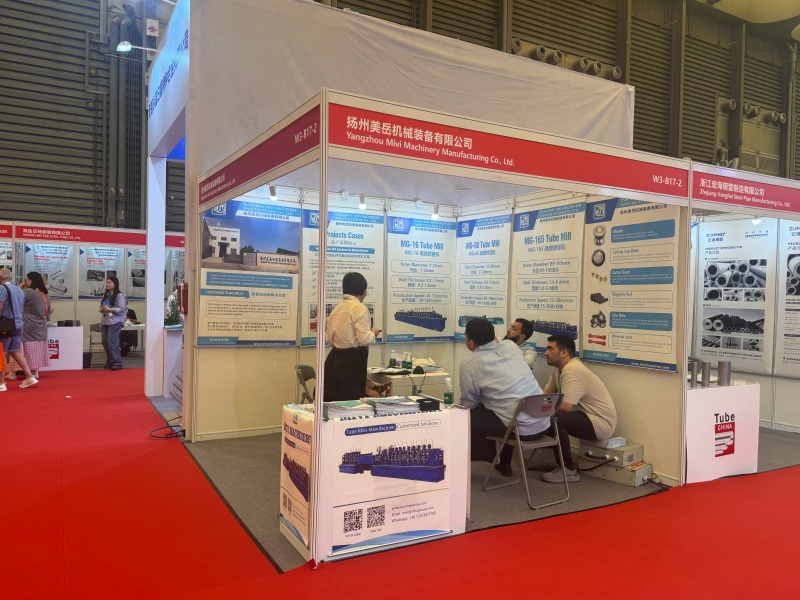
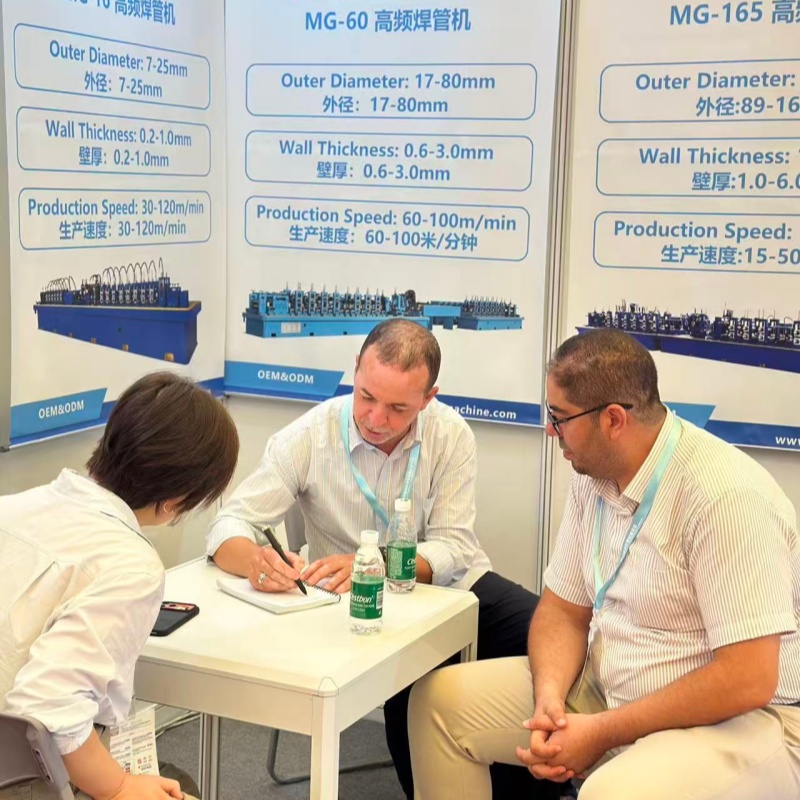
Day 3 of Tube China 2026 continues at the MIVI booth in Shanghai.
After meeting tube manufacturers, engineers and industry partners during the exhibition, one thing becomes clear: there is no single tube mill configuration suitable for every factory.
Two manufacturers may produce similar steel pipes but require very different production lines.
Why?
Because pipe dimensions are only the beginning.
What Do We Need to Know Before Designing a Tube Mill?
When a customer asks MIVI for an ERW tube mill, our engineers first need to understand the actual production requirements.
Important information includes pipe diameter, square or rectangular tube dimensions, wall thickness, steel grade, production speed and the sizes that account for most of the factory's output.
We also consider available factory space, required automation and future production plans.
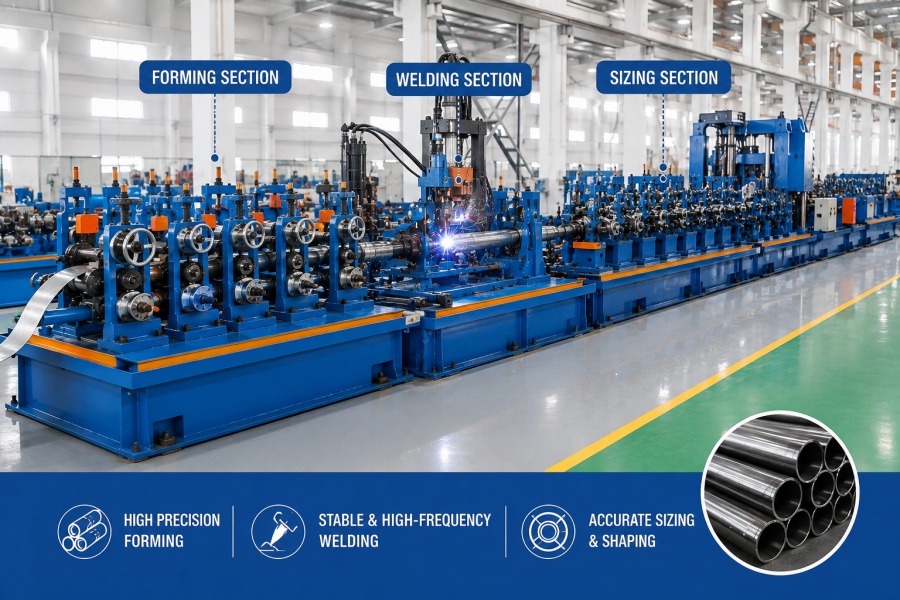
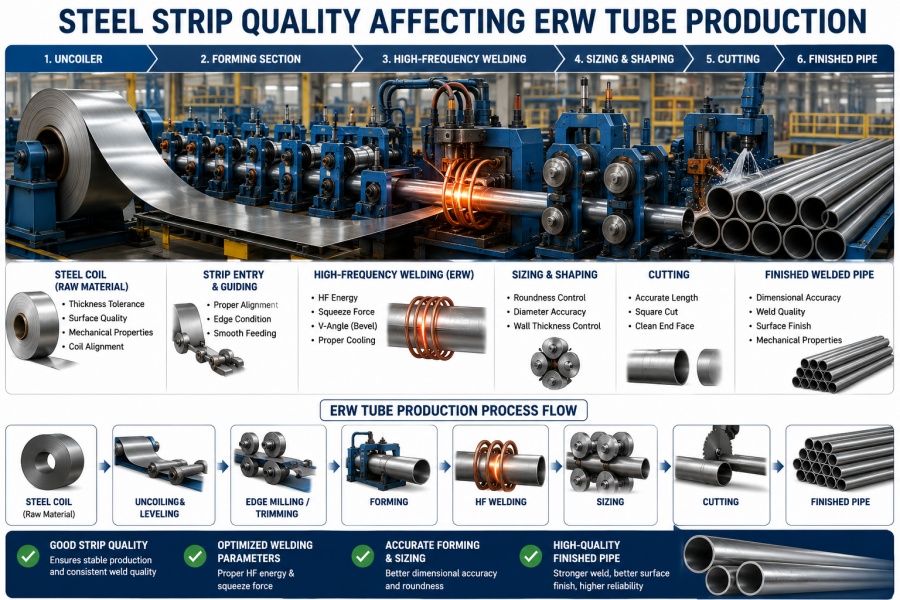
These details help determine the appropriate forming section, HF welding system, sizing section, cutting system, roll tooling and auxiliary equipment.
Existing Tube Mills Need Technical Support Too
Not every conversation at Tube China is about purchasing a completely new pipe making machine.
Many manufacturers already operate tube mills and are looking for ways to improve their existing lines.
Common topics include:
- Unstable weld seams
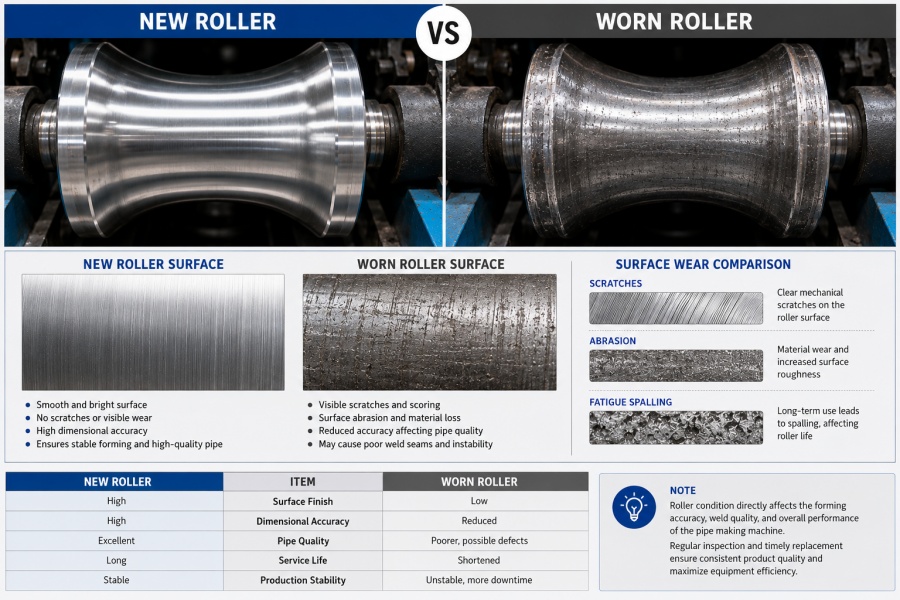
- Excessive roller wear
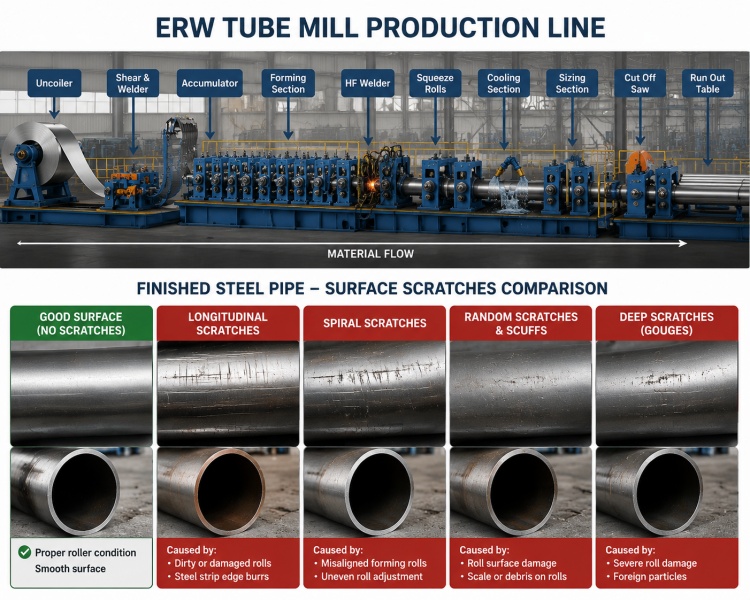
- Tube surface scratches
- Frequent saw blade replacement
- Unstable production speed
- High scrap rates
- New square or rectangular tube sizes
- Tube mill spare parts and consumable replacement
In these situations, understanding the root cause is more important than simply replacing components.
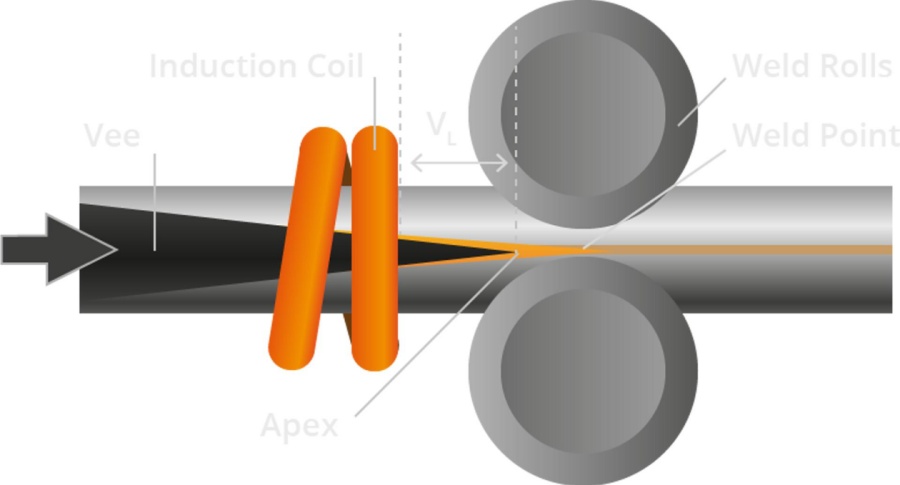
For example, a welding problem may involve the relationship between HF power, weld vee condition, squeeze pressure, ferrite performance and production speed.
A forming problem may require checking roll design, alignment, roll wear and incoming strip conditions.
Bring the Problem, Not Just the Specification
If you operate an existing tube mill, photos and production information can often help us understand your situation more quickly.
Bring your pipe samples, drawings, machine photos or production specifications to our booth.
Our engineers can discuss the problem with you and explore possible solutions.
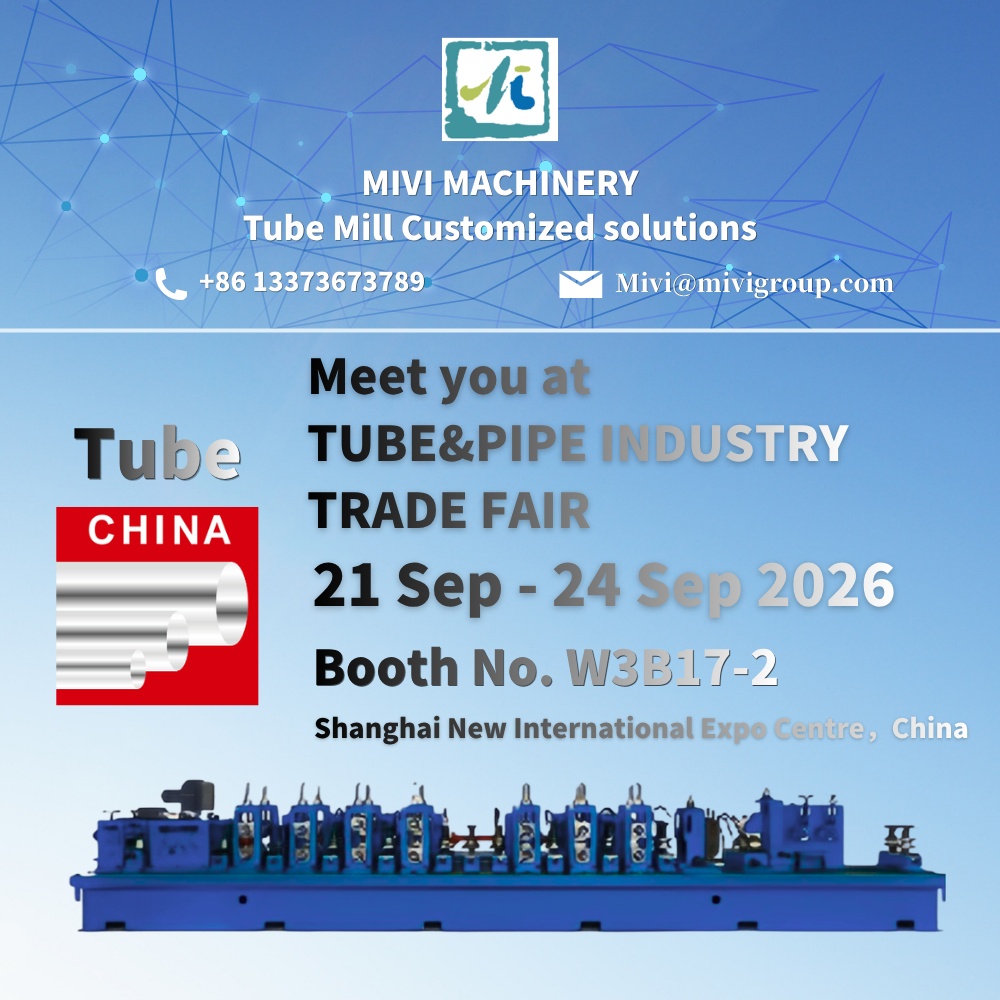
Tube China 2026 | Shanghai
September 21–24, 2026
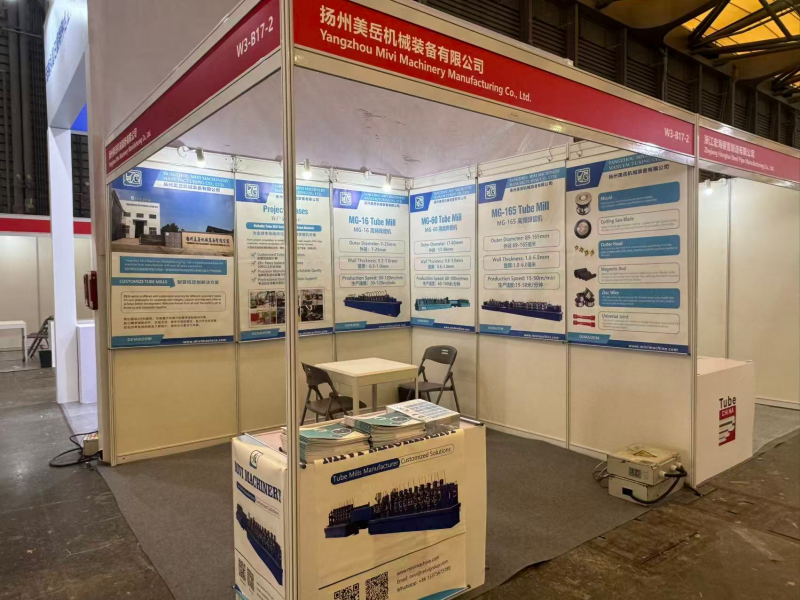
MIVI Booth W3B17-2
A good tube mill supplier should not only tell you what machine to buy.
It should also understand why your production line behaves the way it does.
Come and talk with the MIVI team at Booth W3B17-2.