


 Tube Mill Consumables: Inspection & Replacement Guide

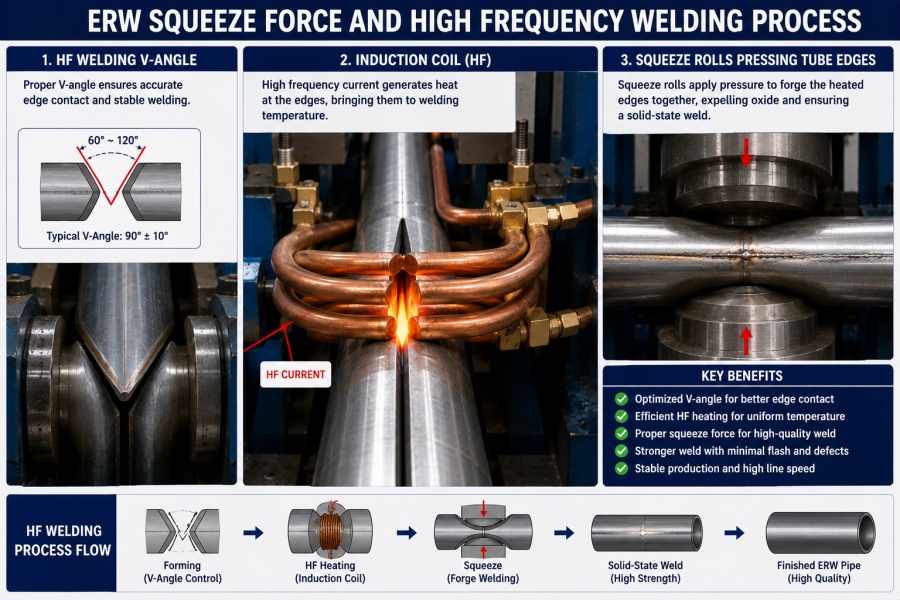
Steel Strip Quality Problems: Causes of Flattening Test Cracks in ERW Tube Production
Steel Strip Quality Problems in ERW Tube Production: Causes, Inspection and Solutions
Quick Answer
Steel strip quality problems are one of the most overlooked causes of poor ERW tube quality. Variations in carbon content, phosphorus segregation, strip edge burrs, and non-metallic inclusions can reduce weld stability, increase scrap rates, and cause flattening test failures even when welding parameters appear correct. Before adjusting your tube mill, verify the quality of the incoming steel strip. Failure analysis has shown that phosphorus-rich centre-line segregation can remain hidden until flattening tests reveal brittle cracking.
Key Takeaways
✔ Carbon fluctuation causes unstable weld penetration.
✔ Phosphorus segregation reduces ductility and may cause flattening test cracks.
✔ Strip edge burrs reduce HF welding quality.
✔ Poor raw material increases squeeze roll wear.
✔ Incoming steel inspection is as important as welding parameter optimization.
✔ Stable raw material is the foundation of stable ERW tube production.
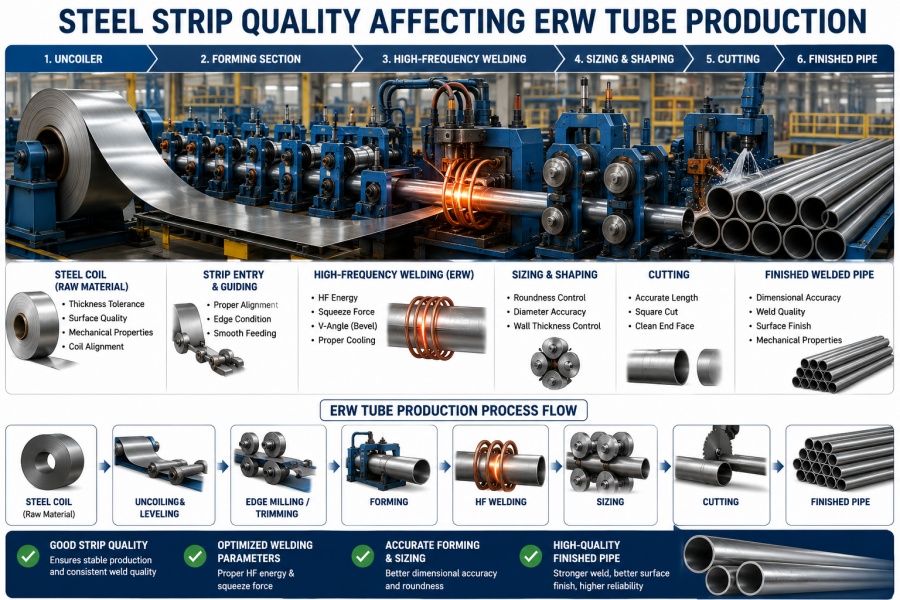
Incoming steel strip quality directly influences forming accuracy, welding stability, and finished pipe quality.
Introduction
Many manufacturers believe that weld defects originate from the tube mill itself. As a result, they repeatedly adjust welding power, replace squeeze rolls, or modify forming parameters.
However, experienced tube mill engineers know that many production issues begin long before the strip enters the forming section.
Raw material quality determines the stability of the entire manufacturing process. Even the most advanced ERW Tube Mill cannot consistently produce high-quality pipes if the incoming steel strip contains chemical segregation, uneven hardness, excessive edge burrs, or dimensional inconsistencies.
In modern ERW tube production, raw material defects often appear as:
- Weld seam cracking
- Flattening test failure
- Hydro test leakage
- Pipe deformation
- Poor weld appearance
- Excessive roll wear
- Unstable welding current
Many of these problems are incorrectly attributed to equipment settings, when the actual root cause lies in the steel strip itself.
This article explains how steel strip quality affects every stage of tube production and how manufacturers can identify defects before they become expensive production failures.
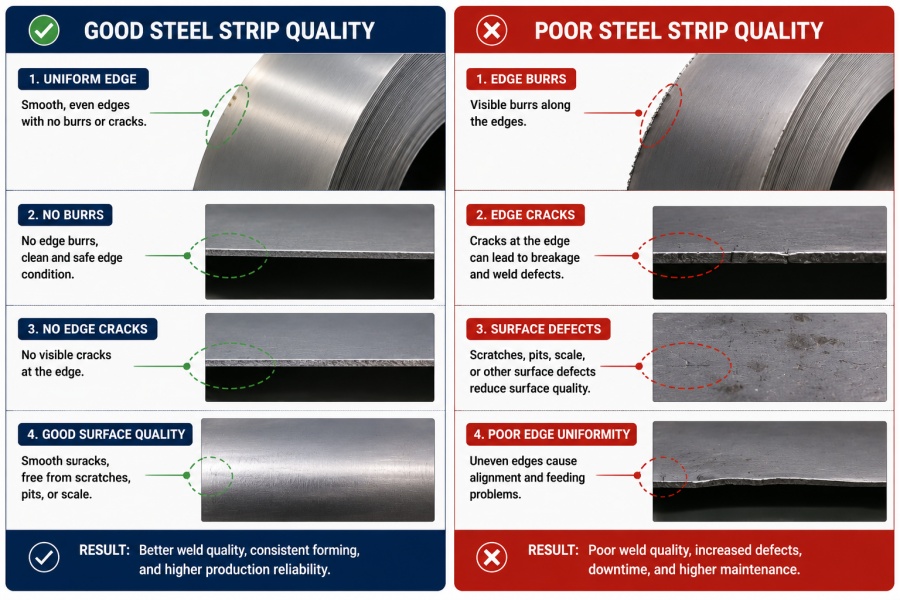
Small raw material defects can become major production problems during forming and welding.
What Are Steel Strip Quality Problems?
Steel strip quality problems refer to defects in the incoming coil that negatively affect the forming, welding, sizing, and testing stages of ERW tube manufacturing.
Unlike machine failures, raw material defects often remain hidden until the tube reaches the welding or inspection process.
Common steel strip quality issues include:
- Carbon content fluctuation
- Phosphorus segregation
- Sulfur segregation
- Strip edge burrs
- Non-metallic inclusions
- Uneven strip thickness
- Edge waviness
- Surface scratches
- Residual scale
- Coil crown variation
These defects influence three critical aspects of production:
1. Formability
Inconsistent material properties cause unstable strip deformation, making it difficult to maintain a symmetrical forming profile.
This often leads to:
- Strip wandering
- Roll misalignment
- Uneven V-angle
- Poor edge matching
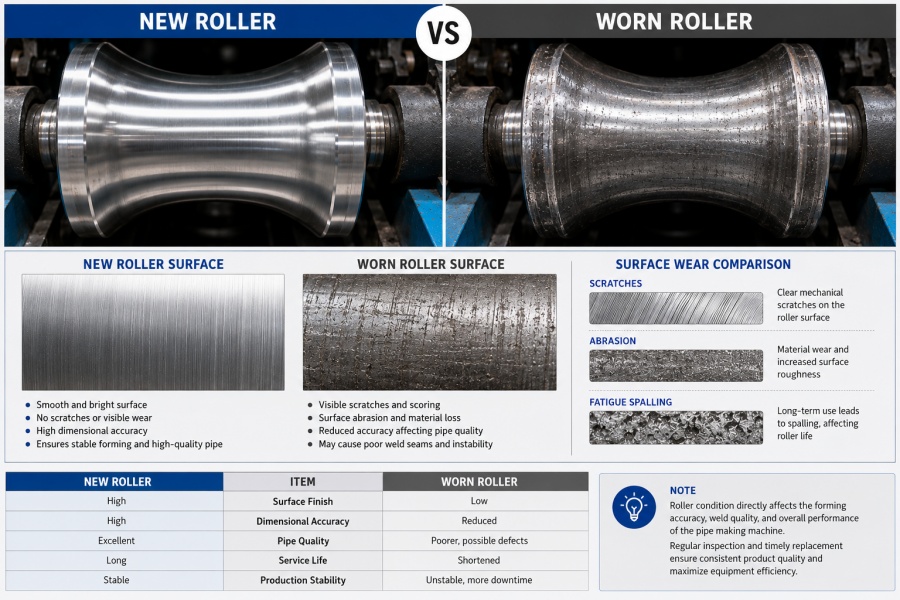
Before modifying the forming section, inspect your Tube Mill Rollers together with the incoming strip quality to distinguish equipment issues from material-related problems.
2. Weldability
During high-frequency welding, heat generation depends on electrical resistance and edge contact.
If the steel composition varies along the coil:
- Heating becomes inconsistent
- Current distribution changes
- Weld penetration varies
- Heat-affected zones become unstable
Even with a high-performance High Frequency Welding Machine, inconsistent steel chemistry can produce uneven weld quality.
3. Mechanical Performance
A pipe may appear visually acceptable but still fail mechanical testing.
Typical failures include:
- Flattening cracks
- Hydro leakage
- Ring expansion failure
- Reduced impact toughness
Research on ERW API pipes found that centre-line segregation enriched with phosphorus can remain undetected until flattening tests, where brittle cracking occurs despite an apparently sound weld.

Steel strip quality affects forming, welding, inspection, and the long-term performance of the finished pipe.
How Does Carbon Fluctuation Affect Welding?
Carbon is one of the most important alloying elements affecting the weldability of steel strip. Even when the chemical composition meets the specification, excessive variation in carbon content within the same coil can significantly reduce welding stability.
During high-frequency (HF) welding, the strip edges must be heated to a plastic state and forged together under squeeze pressure. If one section of the strip contains a higher carbon level than another, its electrical resistance, hardenability, and cooling behavior change accordingly.
As a result, the weld no longer behaves consistently.
Manufacturers often observe the following symptoms:
- One pipe passes the hydrostatic test, while the next develops a weld leak.
- Weld bead appearance changes without any adjustment to machine settings.
- The heat-affected zone (HAZ) varies in width.
- Weld penetration becomes inconsistent.
- Scrap rates increase even though the High Frequency Welding Machine is operating normally.
Carbon-rich areas also tend to form harder microstructures after rapid cooling. These regions are less ductile and more susceptible to cracking during subsequent forming or mechanical testing. Studies of ERW bondlines have shown that local carbon partitioning and segregation influence the final weld microstructure and mechanical properties.
Engineering Recommendation
Before increasing welding power or squeeze force, verify the incoming coil chemistry.
Recommended checks include:
- Carbon consistency across the coil
- Mill Test Certificate (MTC)
- Coil-to-coil chemical variation
- Hardness distribution
A stable steel strip allows the ERW Tube Mill to operate with repeatable welding parameters, reducing both downtime and scrap.
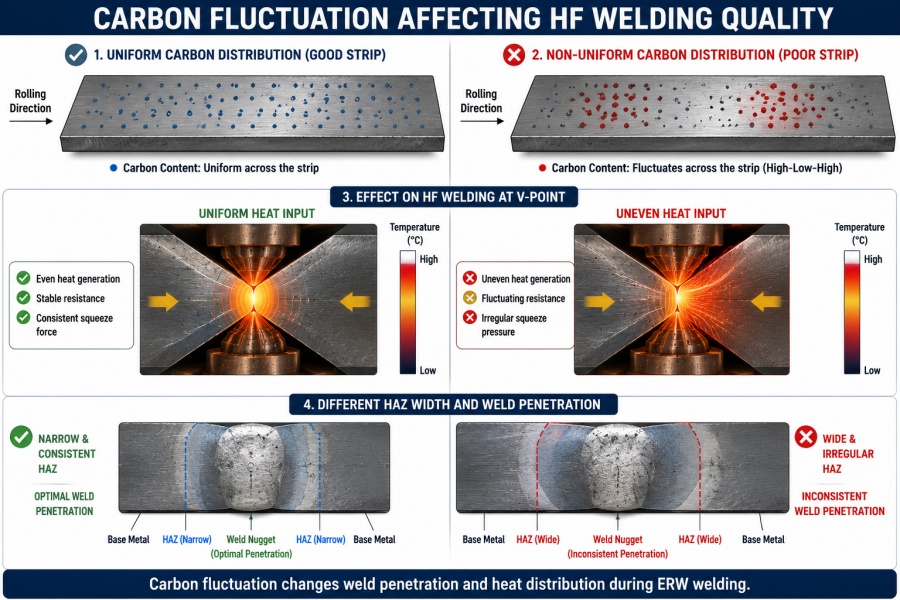
Carbon fluctuation changes weld penetration and heat distribution during ERW welding.
Why Does Phosphorus Segregation Cause Flattening Test Cracks?
Among all raw material defects, phosphorus segregation is one of the most difficult to identify because it is usually invisible during normal production.
The pipe may appear perfectly welded.
The weld bead may pass visual inspection.
The hydrostatic test may even be successful.
However, when the pipe undergoes a flattening test, brittle cracks suddenly appear.
This phenomenon has been widely reported in ERW pipe manufacturing.
What Is Phosphorus Segregation?
During continuous casting, phosphorus tends to concentrate in the centerline segregation band of the slab.
Hot rolling cannot completely eliminate this segregation.
As a result, the steel strip already contains localized brittle regions before it enters the tube mill.
During forming and HF welding, the segregation band is reoriented toward the weld region.
When flattening pressure is applied, these brittle areas cannot deform uniformly.
Instead, cracks propagate rapidly along the segregation band.
Failure analysis of API ERW pipe has shown that phosphorus-rich centre-line segregation can remain hidden after welding yet trigger brittle fracture during the ring flattening test, even when the weld itself is metallurgically sound.
Typical Symptoms
- Flattening test cracking
- Crack beside the weld instead of through the weld
- Brittle fracture surface
- Good visual appearance but failed mechanical test
- Customer complaints after delivery
Many factories mistakenly:
❌ Increase welding power
❌ Replace squeeze rolls
❌ Adjust V-angle
None of these changes solve the problem because the defect originates in the raw material rather than the welding process.
Engineering Recommendation
When flattening failures repeatedly occur:
- Review the steel supplier's quality records.
- Check phosphorus (P) levels and centerline segregation.
- Compare metallographic sections of failed and qualified pipes.
- Verify whether cracks initiate in the base metal or the weld.
If the crack starts away from the bondline, focus first on raw material quality before modifying welding parameters.
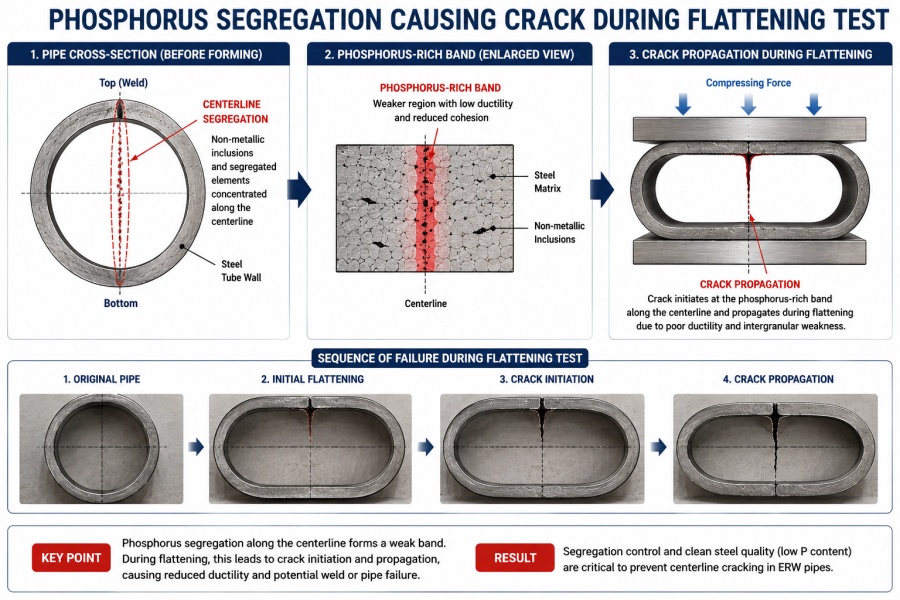
Centre-line phosphorus segregation can cause brittle cracking during flattening even when the weld is intact.
How Do Strip Edge Burrs Affect HF Welding?
Strip edge quality is often overlooked, yet it directly influences current concentration, oxide expulsion, and weld consistency.
During slitting, worn knives or incorrect clearance can leave excessive burrs on the strip edge.
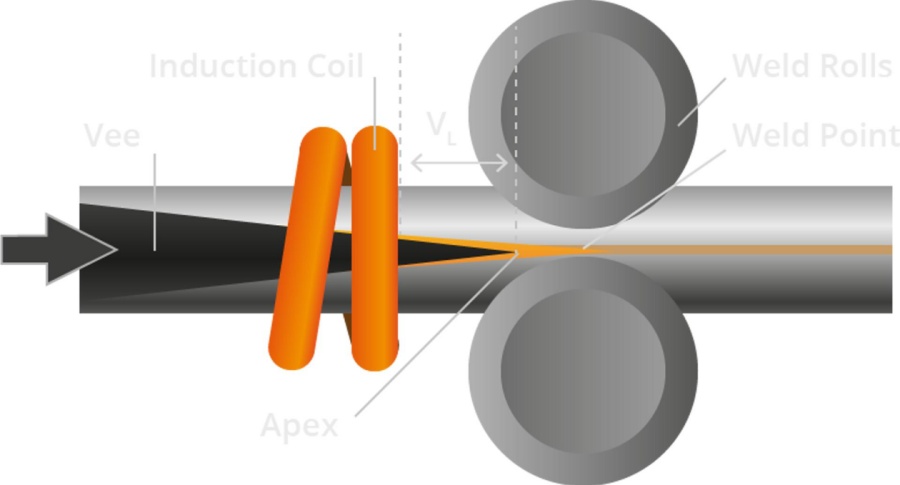
These burrs change the contact condition between the two strip edges before they enter the V-point.
Common production problems include:
- Uneven heating
- Arc instability
- Oxide entrapment
- Poor forge welding
- Hook cracks
- Reduced weld toughness
Industry guidance also notes that burrs, damaged edges, and poor edge preparation can disturb current flow and oxide removal, increasing the risk of weld defects and flattening-test failures.
Common Symptoms
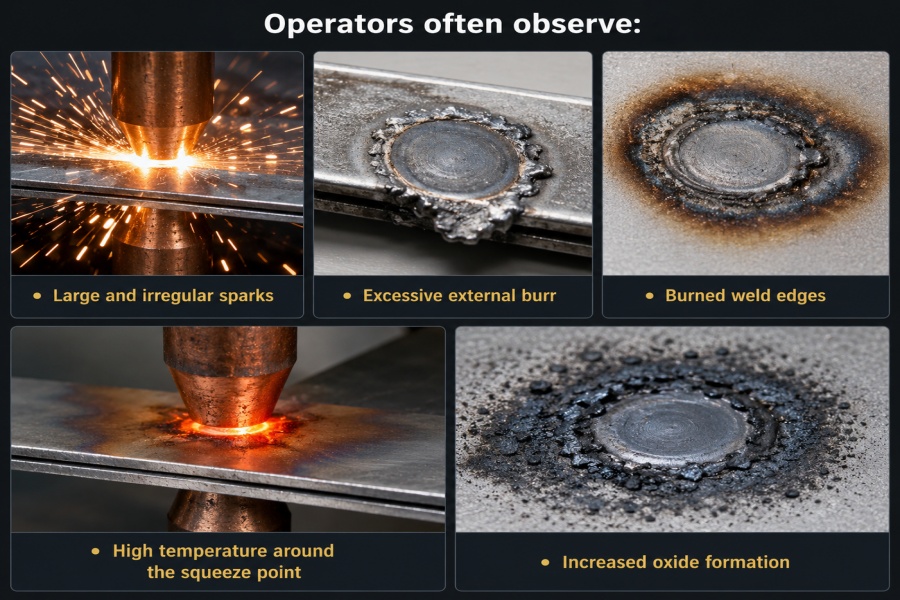
- Heavy outside weld bead
- Excessive inside burr
- Frequent sparks
- Weld line offset
- Increased squeeze roll wear
- Poor ultrasonic inspection results
Engineering Recommendation
To minimize burr-related defects:
- Inspect slitting knives regularly.
- Maintain proper knife clearance.
- Measure burr height before production.
- Keep strip edges clean and free of rust.
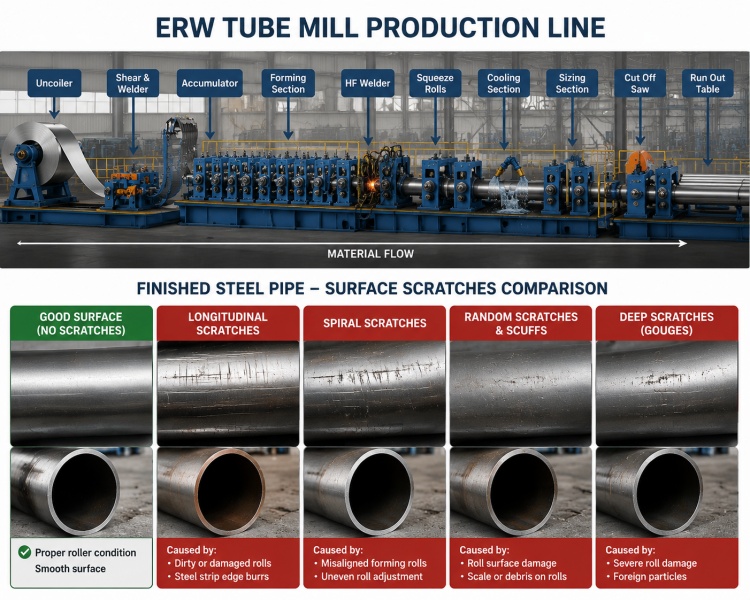
- Ensure stable strip feeding through the Accumulator.
- Verify alignment of the Tube Mill Rollers before the strip reaches the welding station.
A consistent strip edge improves weld quality, reduces roll wear, and increases production stability.
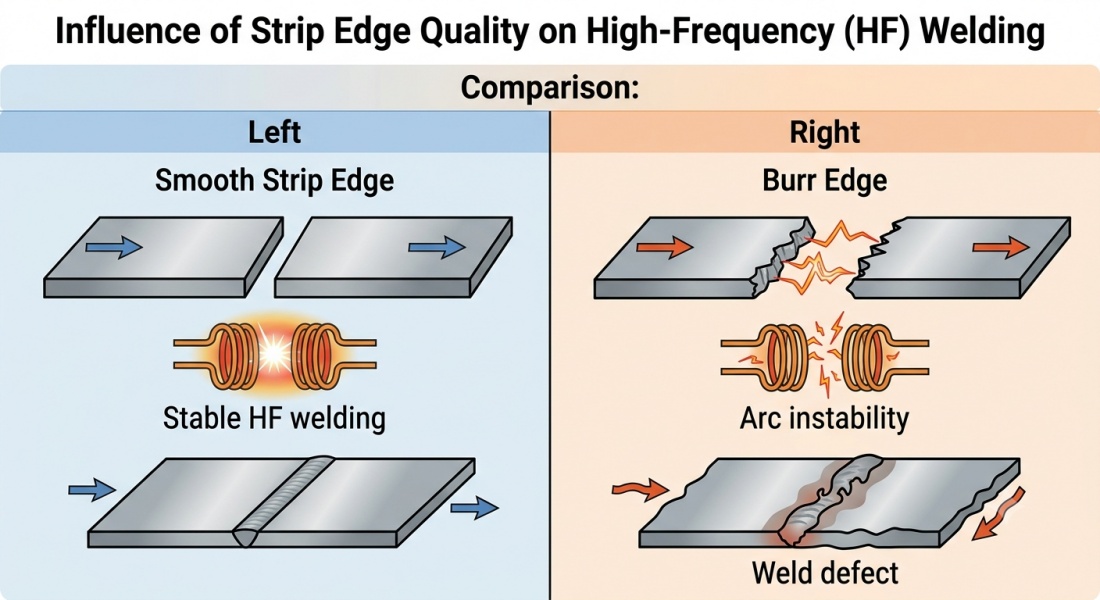
Clean strip edges promote stable current flow and improve weld integrity.
Anchor Text
| High Frequency Welding Machine | Carbon Fluctuation |
| ERW Tube Mill | Carbon Fluctuation |
| Accumulator | Strip Edge Burrs |
| Tube Mill Rollers | Strip Edge Burrs |
How to Inspect Steel Strip Quality Before Tube Production
Many weld defects can be prevented before production begins if the incoming steel strip is inspected systematically.
Instead of waiting until pipes fail during hydrostatic or flattening tests, manufacturers should establish a raw material inspection process covering chemical composition, dimensions, edge condition, and internal defects.
A typical inspection workflow includes the following steps:
Incoming Steel Coil
↓
Chemical Composition Verification
↓
Dimensional Inspection
↓
Strip Edge Inspection
↓
Surface Defect Inspection
↓
Trial Production
↓
Hydro Test
↓
Flattening Test
↓
UT Inspection
↓
Qualified Production
1. Chemical Composition Verification
Always verify the supplier's Mill Test Certificate (MTC) before loading a coil into the production line.
Key elements to monitor:
- Carbon (C)
- Phosphorus (P)
- Sulfur (S)
- Manganese (Mn)
Pay particular attention to:
- Carbon consistency
- Phosphorus segregation
- Heat number traceability
Using different heats with inconsistent chemistry in the same production batch increases the risk of unstable weld quality.
2. Strip Edge Inspection
Inspect every coil before it enters the Accumulator.
Check for:
- Burr height
- Edge waviness
- Rust
- Mechanical damage
- Slitting quality
Poor strip edges disturb current concentration at the V-point and may cause unstable HF welding. Guidance on ERW flattening performance similarly emphasizes that burrs, rust, uneven thickness, and damaged edges can interfere with oxide expulsion and increase weld defects.
3. Hydrostatic Test
Hydrostatic testing verifies whether the weld can withstand internal pressure.
Typical failure symptoms include:
- Pinhole leakage
- Longitudinal weld leaks
- Burst pressure below specification
If failures occur randomly rather than continuously, investigate raw material consistency before changing welding parameters.
Hydrostatic testing is a standard stage in ERW pipe quality control and is commonly combined with other destructive and non-destructive inspections.

Hydrostatic testing confirms the pressure integrity of welded pipes before shipment.
Flattening Test
The flattening test evaluates ductility and weld integrity.
Possible observations include:
| Crack Position | Possible Cause |
| On weld seam | Welding parameters |
| Heat-affected zone | Excessive heat input
|
| Base material | Steel strip quality |
| Edge | Burrs or segregation |
If cracks consistently occur outside the weld, investigate the steel strip before adjusting the HF welder.
Flattening remains one of the most effective methods for revealing material brittleness and weld-related problems in ERW production.
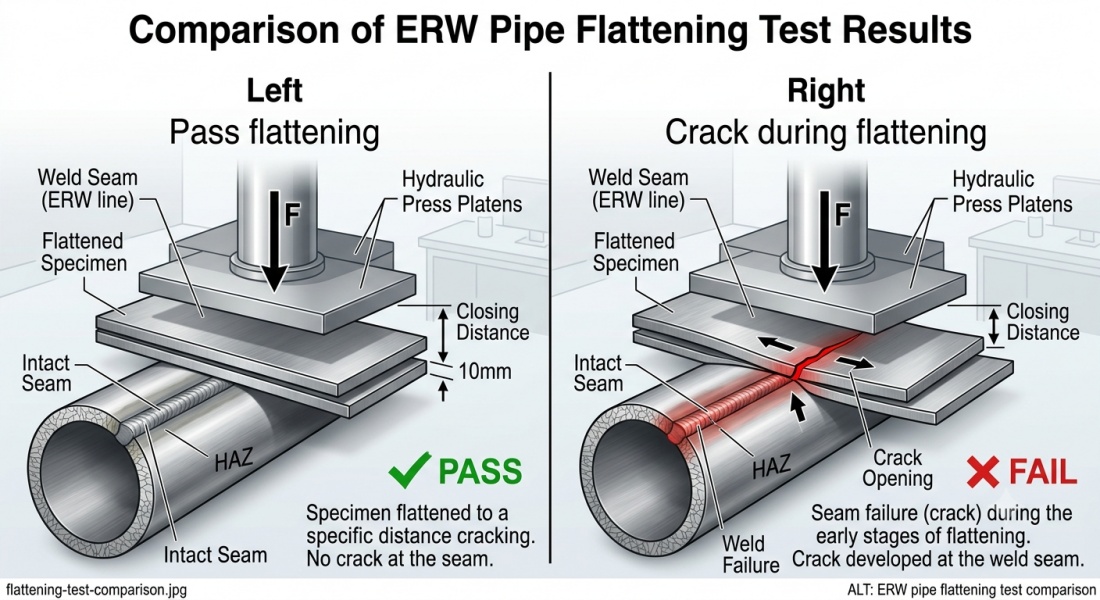
The flattening test can distinguish welding defects from raw-material-related failures.
5. Ultrasonic Testing (UT)
Ultrasonic Testing (UT) detects internal defects that are invisible during visual inspection.
UT is commonly used to identify:
- Lack of fusion
- Lamination
- Internal inclusions
- Hook cracks
- Internal porosity
Modern ERW production increasingly performs UT on both the incoming strip and the finished weld to detect laminations and hidden discontinuities before products reach customers.
Best Solutions for Steel Strip Quality Problems
The most effective strategy is not simply increasing welding power.
Instead, successful manufacturers optimize the entire production chain.
Improve Raw Material Selection
Choose suppliers that provide:
- Stable chemistry
- Low phosphorus
- Low sulfur
- Consistent hardness
- Certified MTC
Optimize Process Parameters
After confirming material quality, optimize:
- V-angle
- Welding speed
- HF power
- Squeeze force
- Cooling rate
These adjustments help maximize weld consistency but cannot compensate for poor raw material.
Upgrade Production Equipment
Modern production lines improve stability through:
- Precision roll alignment
- Automatic welding control
- Online monitoring
- High-speed cutting
- Digital process control
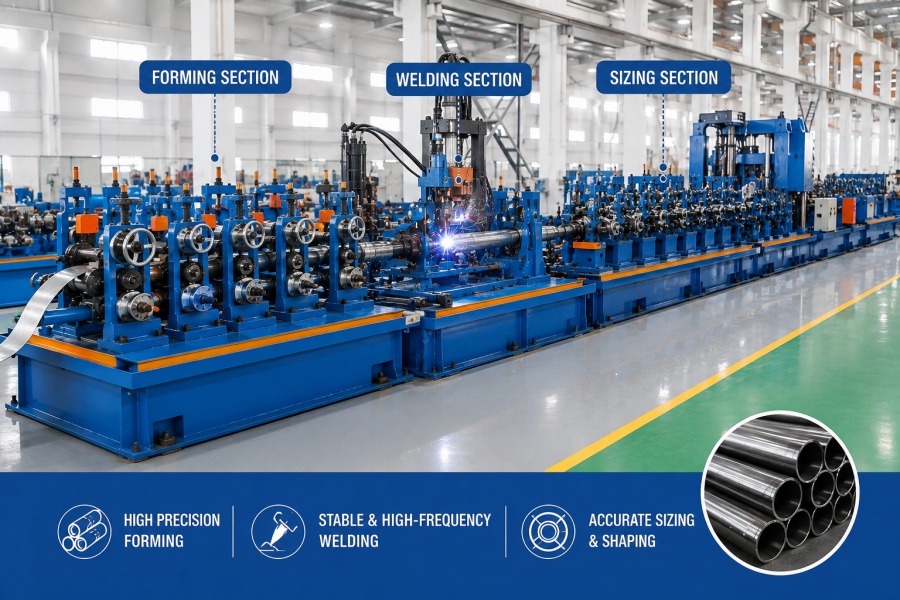
A complete production line should also include a reliable Flying Saw Machine, Tube Mill Mould, Ferrite Rod, and PTFE Tube to maintain stable welding performance and dimensional accuracy.
For manufacturers processing different steel grades every day, equipment stability becomes just as important as raw material quality.
A modern ERW Tube Mill with:
- PLC automatic control
- High-rigidity forming stands
- Precision roll alignment
- Stable HF welding system
- Servo flying saw
- Online inspection compatibility
can significantly reduce the influence of minor raw material variation while maintaining high productivity.
Frequently Asked Questions (FAQ)
1. What are steel strip quality problems?
They include carbon fluctuation, phosphorus segregation, strip edge burrs, inclusions, thickness variation, and surface defects that affect forming and welding.
2. Can poor steel strip cause weld seam cracking?
Yes. Inconsistent chemistry or edge quality can reduce weld stability and increase the likelihood of cracking.
3. Why does phosphorus segregation cause flattening test failure?
Phosphorus-rich segregation bands reduce ductility. During flattening, these brittle regions deform less than the surrounding steel and may initiate cracks.
4. How do strip edge burrs affect HF welding?
Burrs interfere with edge contact, disturb current flow, trap oxides, and reduce weld quality.
5. What tests should be performed before mass production?
Chemical composition verification, strip edge inspection, hydrostatic testing, flattening testing, and ultrasonic testing.
6. Can machine adjustment solve all weld defects?
No. If the root cause is poor raw material, parameter adjustment alone cannot eliminate recurring defects.
Conclusion
Steel strip quality is the foundation of successful ERW tube production.
Many weld defects, flattening failures, and hydrostatic leaks are symptoms rather than root causes.
By selecting high-quality steel strip, inspecting every incoming coil, optimizing welding parameters, and integrating reliable inspection systems, manufacturers can significantly reduce scrap, improve product consistency, and increase production efficiency.
Instead of asking:
"How should I adjust the welding machine?"
The better question is:
"Is my raw material capable of producing a reliable weld?"
That simple shift in thinking often delivers the greatest improvement in production quality.