


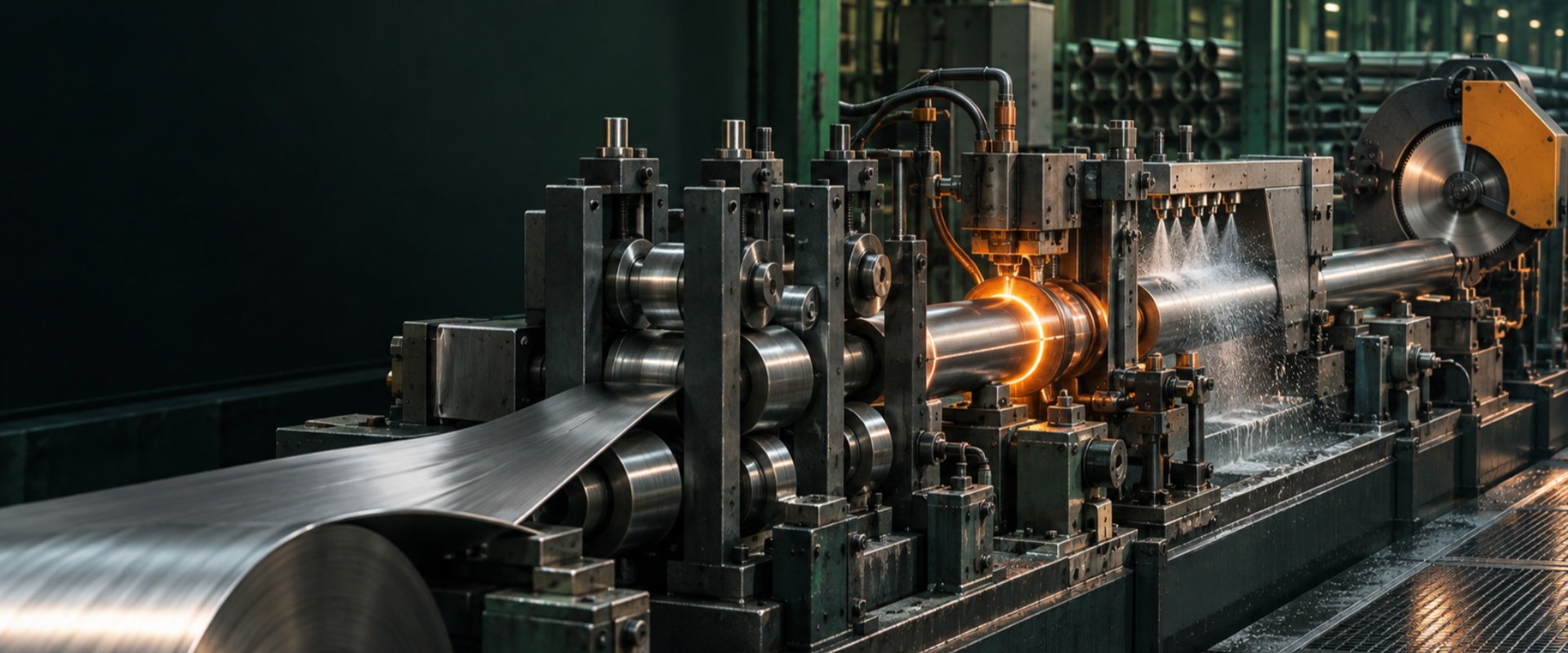
 Tube Mill Consumables: Inspection & Replacement Guide

What Manufacturers Should Prepare Before Installing a New Tube Mill
When a manufacturer decides to invest in a new tube mill, attention is naturally focused on the equipment itself.
Production capacity, tube dimensions, machine configuration and delivery schedule are usually the main topics during the early stages of discussion.
However, from the beginning of equipment preparation to final production, many other factors influence whether a project can move forward smoothly.
A successful tube mill installation is not only about delivering the machine.
It also depends on how well the production environment has been prepared before the equipment arrives.
Workshop Planning Is the First Step
Before installation begins, the workshop environment should be carefully evaluated.
The available space needs to accommodate not only the tube mill itself, but also material storage, coil handling, finished product movement and future maintenance activities.
In some factories, the existing layout was designed for different equipment or older production methods. When introducing a new tube mill, manufacturers often need to review whether the current arrangement supports efficient material flow.
A well-planned layout can reduce unnecessary movement and make daily operation more convenient after production starts.
Material Flow Should Be Considered Early
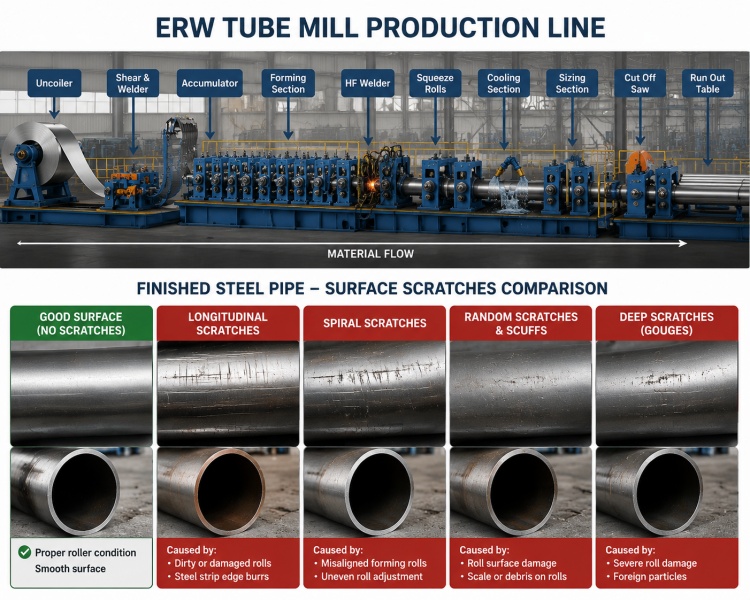
Steel tube production is a continuous process.
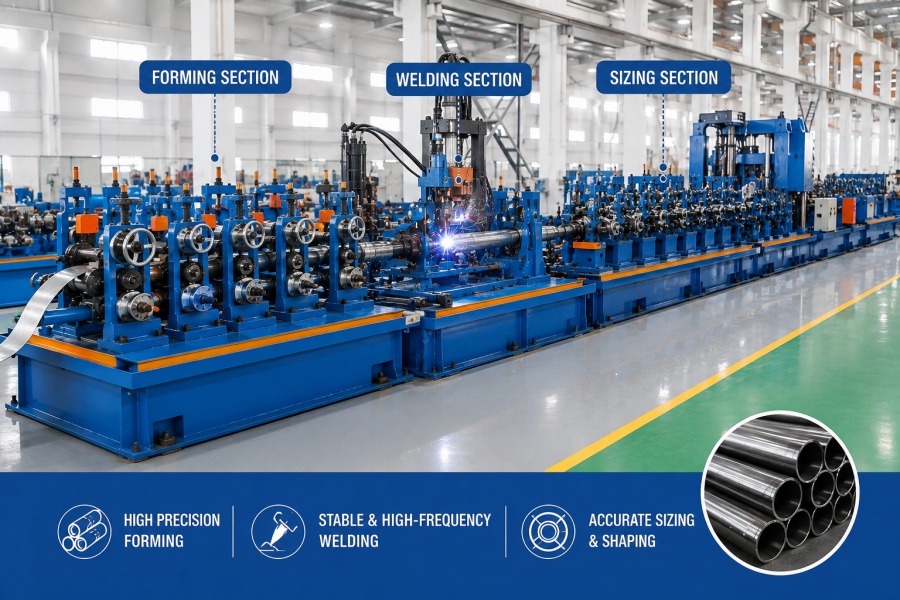
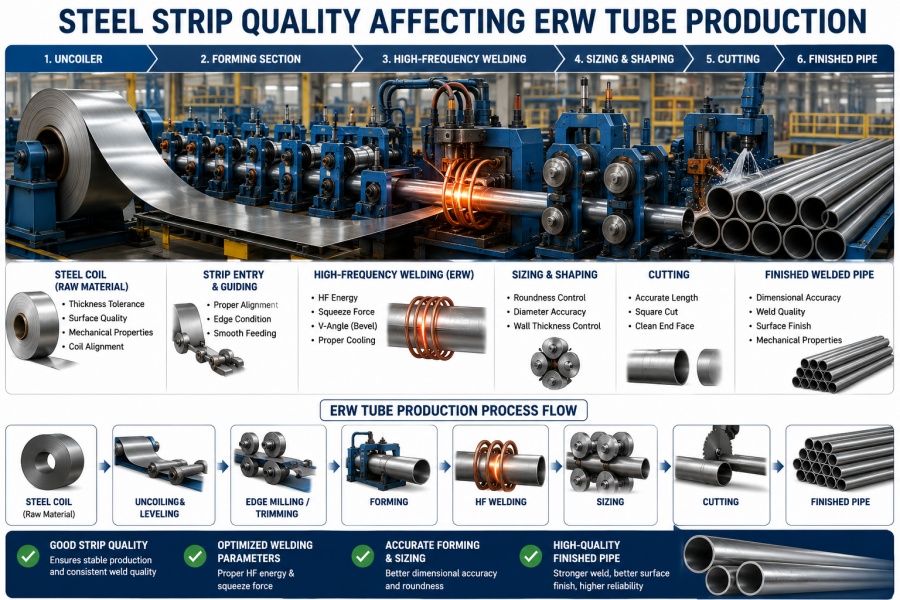
Material enters the production line, passes through forming and welding stages, and eventually moves to cutting and collection.
Because of this, the movement of raw materials and finished products should be considered before installation.
Questions such as:
- Where will coils be stored?
- How will material be transported to the production line?
- How will finished tubes be collected and transferred?
These practical details may seem separate from the tube mill itself, but they directly influence production efficiency.
Power Supply and Supporting Facilities Matter
Another important preparation area is the availability of supporting facilities.
A tube mill requires reliable power supply and suitable working conditions to maintain stable operation.
Before installation, manufacturers usually need to confirm electrical requirements, workshop conditions and other supporting systems according to the equipment configuration.
Early communication between the equipment supplier and the factory team can help identify potential issues before installation begins.
Operator Preparation Should Not Be Delayed
Equipment installation is only one stage of a production project.
After commissioning, operators will be responsible for daily production, adjustment and basic maintenance.
For this reason, operator preparation is an important part of the installation process.
Understanding basic equipment operation, production procedures and safety requirements before production begins can help shorten the adjustment period after commissioning.
In many cases, the people operating the machine every day have a significant influence on long-term production performance.
Communication During Installation Makes a Difference
Even with careful planning, questions will naturally appear during installation and commissioning.
Different factories have different production habits, workshop conditions and product requirements.
Continuous communication between the equipment supplier and the customer team helps solve practical issues more efficiently.
The purpose of installation is not only to place the machine in the workshop.
It is to create the conditions needed for stable production.
Preparing for Long-Term Operation
A tube mill is a long-term investment, and the preparation before installation can influence many years of operation.
A well-organized workshop, suitable material flow, trained operators and clear communication all contribute to more stable production after startup.
For manufacturers, preparation is not simply a requirement before receiving equipment.
It is part of building a reliable production system.
Final Thoughts
Installing a new tube mill involves much more than delivering and assembling equipment.
The success of a project depends on the cooperation between the machine, the factory environment and the production team.
Manufacturers who consider these factors early can often avoid unnecessary delays and create better conditions for future operation.
A successful production line begins before the machine starts running.